
Short answer
Is PPR pipe better than CPVC for hot water? Both are Indian-standard plastic pipes for hot and cold water. PPR is joined by fusion, which the standard names but does not describe. CPVC is joined with CPVC cement, and its standard gives joining guidance in an annex. Neither is better in every case. Check the marking, the pressure class and the maker's joining method, and ask your plumber which pipe the house needs.
On this page (11)
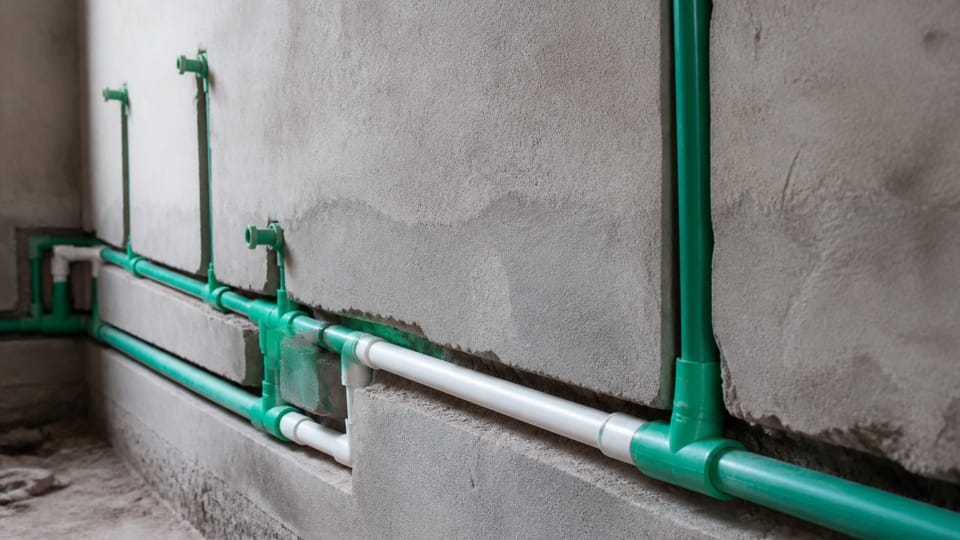
PPR and CPVC are the two plastic pipes most often proposed for the hot and cold water lines in a new house. Both have an Indian standard. They are joined in different ways, and the standards say different things about temperature. This page explains each pipe, what the standards say, how each is joined, and what to check. It gives no prices, no brands, no pipe sizes and no fusion or cure times, because the standards read do not give them.
What is PPR pipe?
PPR is polypropylene-random copolymer. IS 15801 is the Indian specification for these pipes for hot and cold water supplies. Its scope covers wall-concealed hot and cold water pipelines inside and outside buildings, and it says the pipes are UV stabilised. It also covers pipelines for solar water heating. The standard’s clause 4.3(c) says PPR pipes are recommended for a maximum water temperature up to 95 °C.
What is CPVC pipe?
CPVC is chlorinated polyvinyl chloride. IS 15778 is the Indian specification for CPVC pipes for potable hot and cold water distribution. Its scope says the pipes are intended for water service up to and including 82 °C. A note under the classification says the pipes are recommended for water from 1 to 90 °C, and that the working pressure must be reduced at the higher temperatures, as shown in the standard’s Figure 1. The two statements differ. Ask the plumber which temperature the maker’s data sheet gives for your pipe.
PPR vs CPVC at a glance
| Point | PPR (IS 15801) | CPVC (IS 15778) |
|---|---|---|
| What it is | Polypropylene-random copolymer pipe for hot and cold water | Chlorinated PVC pipe for potable hot and cold water |
| Temperature in the standard | Clause 4.3(c): recommended up to 95 °C | Scope: up to and including 82 °C; note: recommended from 1 to 90 °C, with working pressure reduced at higher temperatures (Fig. 1) |
| How it is joined | Socket fusion. The standard requires the maker to show the pipe and fittings are fusible (cl 9.2), but does not describe the method | CPVC cement (solvent). Annex E-2.4 says use only CPVC cement recommended by the maker |
| Colour | As agreed between buyer and seller, with UV stabiliser (cl 5) | Off-white (cl 9.1) |
| Marking to check | Maker’s name, PPR pipe, SDR, outside diameter and wall thickness, lot or batch number with date and machine number (cl 12.2) | Maker’s name, outside diameter, class and pressure rating, batch or lot number (cl 12.1) |
The table lists what each standard says. It does not say which pipe is better for your house.
How is PPR pipe joined?
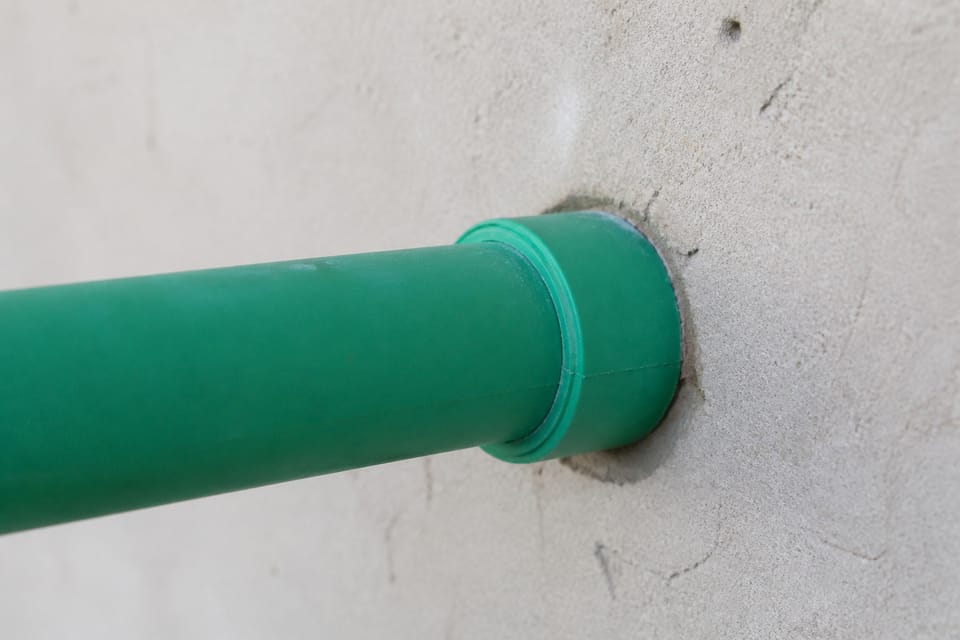
IS 15801 clause 9.2 says the manufacturer shall show that the pipe and the fittings are fusible, by testing a socket fusion joint. The standard does not describe how to make a fusion joint. The method comes from the maker’s joining instructions and tool, so ask the plumber for the maker’s written method and check that it is followed.
How is CPVC pipe joined?
IS 15778 Annex E is recommendatory guidance on storage and installation. The foreword says so. The annex says:
- Use only CPVC cement that the manufacturer recommends (E-2.4). Other solvent cements are not for this pipe.
- Apply the cement with care. Put a heavy, even coat on the pipe end and a thin coat inside the fitting socket. Too much cement can clog the waterway, and excess cement that puddles can weaken the pipe wall and cause possible pipe failure when the system is pressurised (E-2.6).
- Hold the joint. Once the pipe end is seated, hold it for 5 s to 10 s to let the joint set (E-2.7). This is a holding time, not a cure time. The cement maker’s cure time decides how long to wait before pressure.
- Use a transition fitting where CPVC meets metal, or a CPVC male threaded adapter where possible. Do not over-torque plastic threads (E-2.8).
What about heat and expansion?
Annex E-2.9 says to hang or strap CPVC loosely to allow for thermal expansion, and not to use metal straps with sharp edges. Annex E-2.11 says CPVC should not be within 50 cm of a gas water heater flue, and where the heater has no reliable temperature control, the distance may be up to 1 m, and a metal nipple or flexible appliance connector should be used there.
IS 15801 names no expansion or support rule for PPR. Ask the maker for the clip spacing and the expansion allowance for your pipe.
What should I check when the pipe arrives?
- The marking on the pipe: maker’s name, the pipe type (PPR or CPVC), the size, the pressure class and the batch or lot number.
- The colour: PPR colour is agreed by the buyer and seller, so colour is not a test. CPVC is off-white.
- The cement or fusion kit: CPVC needs CPVC cement (E-2.4). For PPR, practice is to use the maker’s fusion tool and written method, because IS 15801 does not describe the method. Do not mix them.
What mistakes should I avoid?
These are points for the plumber to check. They are practice, not standard clauses.
- Using PVC or UPVC solvent cement on CPVC. The standard says use CPVC cement only (E-2.4).
- Metal straps with sharp edges on CPVC. The standard warns against them (E-2.9).
- Over-tightening plastic threads. The annex says hand tight plus one-half turn should be adequate (E-2.8).
- Running CPVC close to a gas water heater flue. Keep to the distance in E-2.11.
- Mixing pipe types without a transition fitting. Ask the plumber to use the maker’s transition fitting.
Frequently asked questions
Is PPR pipe good for hot water?
IS 15801 recommends PPR pipes for a maximum water temperature up to 95 °C (cl 4.3(c)). Ask the maker for the pressure rating at your hot water temperature.
Is CPVC good for hot water?
IS 15778 scopes CPVC for water up to and including 82 °C, and notes it is recommended from 1 to 90 °C, with working pressure reduced at higher temperatures (Fig. 1). Ask the maker for the rating at your temperature.
Can I glue CPVC with UPVC cement?
No. IS 15778 Annex E-2.4 says to use only CPVC cement that the manufacturer recommends.
How long must a CPVC joint be held?
For CPVC, Annex E-2.7 gives 5 s to 10 s to hold the joint in place. The cement maker’s cure time decides how long to wait before the pipe is pressurised. For PPR, the standards read give no fusion or cooling time; ask the maker.
Related guides
- CPVC vs UPVC pipes for home plumbing
- Types of pipes in a house: water, drainage, rainwater and gas
- GI pipe vs CPVC and UPVC for house plumbing: what each is made of and the IS mark to check
This guide is general information. Read the disclaimer. A licensed plumber decides the pipe and the joining method for your house.
Sources
- IS 15801:2008, Polypropylene-Random Copolymer Pipes for Hot and Cold Water Supplies, Specification (amendment 1, 2009), cl 1, 4.3(c), 5, 9.2 and 12.2. Read from an archive copy (OCR); check the printed copy.
- IS 15778:2007, Chlorinated Polyvinyl Chloride (CPVC) Pipes for Potable Hot and Cold Water Distribution Supplies, Specification, cl 1, the note under cl 5, 9.1, 12.1 and Annex E (recommendatory per the foreword), E-2.4 to E-2.11. Read from an archive copy (OCR).
General information only. It is not a structural design or professional advice. Ask a licensed structural engineer or architect to check your plans and site.