
Short answer
What is the difference between a pressure reducing valve and a pressure relief valve? A pressure reducing valve (PRV) keeps the water pressure after it at a steady set level. A pressure relief valve opens to let water out when pressure goes too high. IS 9739:1981 covers PRVs for domestic water supply. No Indian standard read for this page sets a relief valve for a house, so ask your plumber what is fitted on your main and your geyser.
On this page (9)
A plumber may say “you need a PRV” and mean a pressure reducing valve. A shop may sell a “pressure relief valve” for the same pipe. The two are not the same device. One sets the pressure a house gets in normal use. The other lets water out when pressure rises past a safe point. This page explains each one, what the Indian standards read for it say, and what it does not say. It gives no set pressure, no price and no brand.
What is a pressure reducing valve?
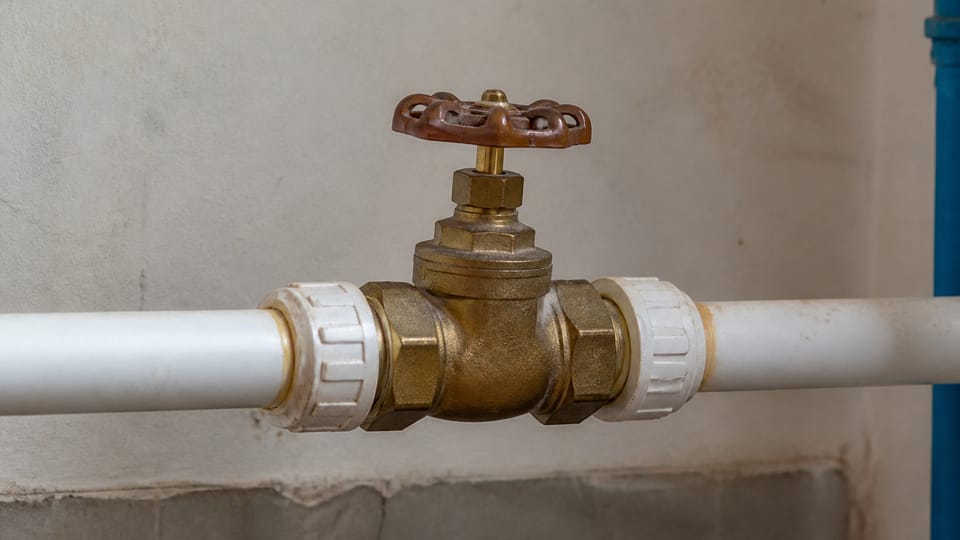
A pressure reducing valve (PRV) sits on the supply line and reduces the pressure of the water that comes in, so the pipes after it see a steady, lower pressure. IS 9739:1981 is the Indian specification for these valves for domestic water supply. It says:
- The valves covered are “self-contained, direct acting, single seat, diaphragm type” (clause 1.2).
- “The pressure adjusting shall be effected by a diaphragm loaded with a spring” (clause 4.4).
- “In case of failure of any part of the valve, it shall be capable of maintaining a continuous flow of water to the system” (clause 4.6).
So a PRV’s job is to hold the outlet pressure steady. It does not open to release water when the pressure rises. The standard does not use the word “relief” anywhere.
What is a pressure relief valve?
A pressure relief valve is a safety device. It stays shut in normal use and opens to let water or steam out when the pressure, or on a water heater the temperature, goes above a safe level. The valve then closes again. It is a last line of protection, not a way to set the everyday pressure.
For a house, the Indian standards read for this page do not set a relief valve for the main line. IS 9739 has no relief or safety-valve clause, and IS 2065 has none either. The geyser standard IS 2082:2018 says its safety requirements are in IS 302-2-21 (with its 2019 amendment), which was not read for this page. So any relief valve on a geyser should follow the geyser maker’s instructions and the safety standard the maker quotes, and your plumber should confirm them.
How do the two compare?
| Pressure reducing valve | Pressure relief valve | |
|---|---|---|
| Main job | Holds the outlet pressure at a steady, lower level | Opens to let water out when pressure goes too high |
| Normal running | Stays open and passes water, keeping the outlet steady | Stays shut |
| When pressure is too high | Reduces it, as long as the valve works | Opens and discharges |
| Where it usually sits | On the main supply line into the house | Usually on a water heater or a closed hot-water system |
| Indian standard read for this page | IS 9739:1981 | None for a house main; IS 302-2-21 for geysers not read |
Why do the names get mixed up?
Both are called “PRV” by some sellers, and the letters do not always say which device is meant. In general usage, a third term, pressure safety valve, is also used for the relief type. Ask for the device by its job: “a valve that holds the pressure after it” or “a valve that opens if the pressure gets too high”. Then check the marking on the body and the maker’s manual. This is practice.
What do the codes say about the water supply in a house?
IS 2065:1983 is the code of practice for water supply in buildings. Two of its clauses matter for the water supply:
- Clause 7.3 says there must be no possibility of backflow into the source “whether by siphonage or otherwise”, and that “reflux or non-return valves shall not be relied upon to prevent such backflow”. IS 2065 does not name a PRV as a backflow safeguard. Keep the non-return valve for the job it is made for, as the non-return valve page explains.
- Clause 12.1 says that, for a combination tap or mixing valve with one outlet, cold water “should not be supplied directly from a service pipe” because of the scald risk if the service pressure fails unexpectedly. It is about the mixing fittings, not about PRVs.
What mistakes should I avoid?
- Buying by name. Check the job the valve does and the marking on the body, not only the word “PRV”. This is practice.
- Fitting a relief valve to control everyday pressure. A relief valve opens only when something has gone wrong. It does not hold a steady pressure. This is practice, not a code rule.
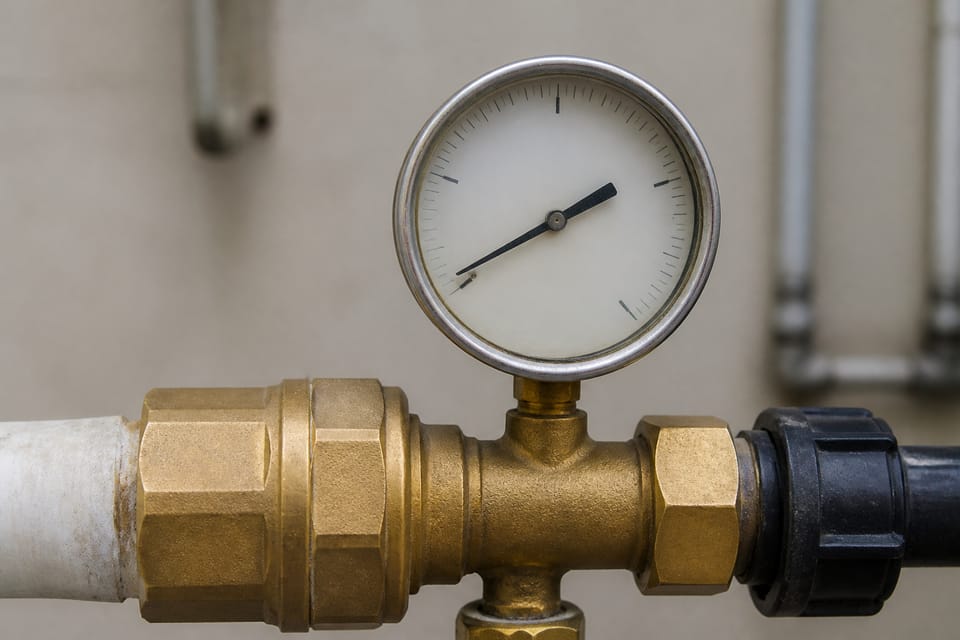
- Setting a PRV by guesswork. A plumber should set the outlet with a gauge and record the setting. The setting depends on the house and the supply. This is practice.
- Expecting a PRV to fix low pressure upstairs. A PRV lowers pressure; it does not raise it. The low water pressure page covers the opposite problem.
- Forgetting the water-hammer side. Water hammer is a separate problem with its own fixes. The water hammer page lists them.
Frequently asked questions
Is a PRV required by law for a house in India?
No source read for this page makes a PRV compulsory for a house. IS 9739 is the specification for the valve, and IS 2065 is the code for the water supply. Whether a house needs one depends on the supply pressure, and a plumber can check that.
Does a geyser need a relief valve?
Ask the geyser maker and your plumber. The geyser standard IS 2082:2018 refers its safety requirements to IS 302-2-21, which was not read for this page. The geyser safety page lists what to ask.
Can one valve do both jobs?
Ask the maker to name the function of each part and to show the standard it was made to. A fitting that does two jobs still needs each job checked. This is practice.
Which valve should I ask my plumber about first?
Ask what valve is fitted on the main inlet, what it is for, and how its outlet pressure was set and recorded.
Related guides
- Water hammer in house pipes: why pipes bang when a tap shuts
- Low water pressure on the upper floor or in the shower: causes and fixes
- Non-return valve (check valve): what it does and where it goes on a pump line
This guide is general information. Read the disclaimer. Your plumber and the maker’s instructions decide what valves your house needs and how they are set.
Sources
- IS 9739:1981, Pressure Reducing Valves for Domestic Water Supply Systems: clauses 1.1 and 1.2 (scope and valve type), 4.4 (pressure adjusted by a spring-loaded diaphragm), 4.6 (continuous flow on failure). The standard has no clause on relief or safety valves. Read in its reprinted form with Amendment No. 1 and Amendment No. 2 incorporated; the BIS record was not accessible for this page.
- IS 2065:1983, Code of Practice for Water Supply in Buildings (second revision, reaffirmed 2001): clause 7.3 (no backflow; reflux or non-return valves not to be relied upon) and clause 12.1 (combination taps and mixing valves, scald risk). It has no clause on pressure reducing or relief valves. Edition check: the BIS record shows no later revision.
- IS 2082:2018, Stationary Storage Type Electric Water Heaters: clause 8.1 refers the safety requirements to IS 302-2-21. IS 302-2-21 was not read for this page, so no relief valve requirement is quoted here.
General information only. It is not a structural design or professional advice. Ask a licensed structural engineer or architect to check your plans and site.