
Short answer
What are the types of wire for house wiring, and is copper or aluminium better? IS 694:2010 covers PVC insulated single-core and multi-core cables and cords, unsheathed and sheathed, with rigid or flexible copper or aluminium conductors. NBCS 2026 asks for copper conductors for internal wiring, because aluminium in small sizes may cause termination problems. No standard says which brand is better, and the electrician sizes each circuit.
On this page (12)
- What is the difference between wire, cable and cord?
- Which kinds does IS 694 name?
- What do the standards say about copper and aluminium?
- What about solid or stranded?
- Can I use a flexible cord as fixed wiring?
- How are the cores identified?
- What do the standards not say?
- What should I check and ask? (practice)
- What mistakes should I avoid? (practice)
- Frequently asked questions
- Related guides
- Sources
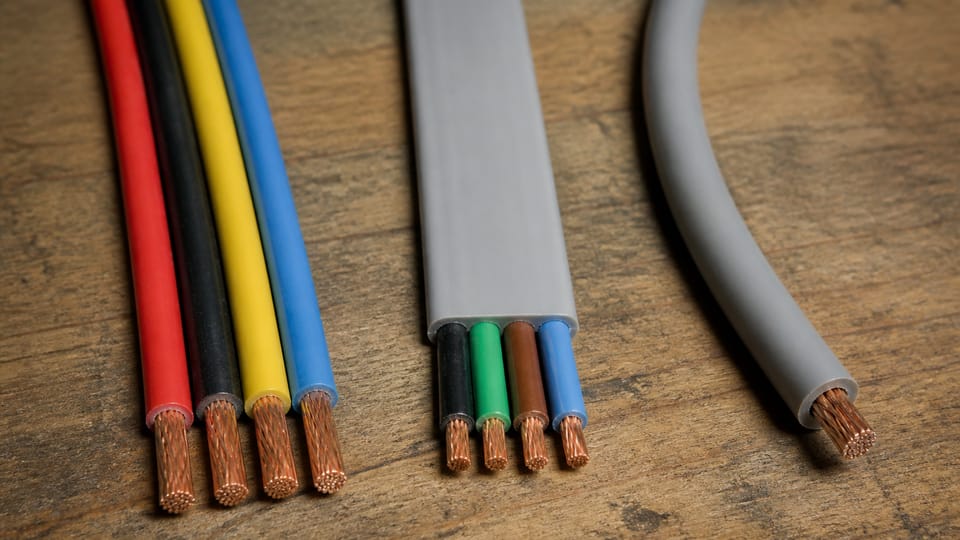
“Which wire is better for house wiring?” is asked as if there were one answer. There are several different products with different jobs: the single wires pulled through conduit to lights and sockets, the flexible cords that go to appliances, the sheathed multi-core cables used for services and outdoor runs, and the armoured cable laid underground. This page separates them using the Indian standards, says what the standards say about copper and aluminium, and says what no standard decides. It gives no circuit-by-circuit wire size, no current rating, no price and no brand. For the IS marks to look for on a wiring job, the stages of the work and the protection devices, see electrical work in a house build: stages and inspection points.
What is the difference between wire, cable and cord?
No standard we read defines “wire” and “cable” separately. IS 694 uses “cables/cords” throughout, and its only formal distinction is that the term cord “is used for the flexible cables up to 5 cores covering the sizes up to 2.5 mm²” (clause 1.1, Note 1). The common house meanings, which are usage and not definitions, are:
- Wire: a single insulated conductor, usually drawn through conduit, for lights, fans and sockets. IS 694 calls it a single-core non-sheathed cable.
- Cable: a sheathed cable, with one or more insulated cores inside a common outer sheath.
- Cord: a flexible lead to an appliance such as a geyser or an iron.
IS 694:2010 is the standard for these. Its title is “PVC insulated unsheathed and sheathed cables/cords with rigid and flexible conductor” for a stated rated voltage: the copy we read, with Amendment 1 (2012), says up to and including 450/750 V, and BIS now lists the title as up to and including 1 100 V after later amendments that we could not read. The clauses below are from the 2012 print; check the current text with your supplier. Clause 1.1 says it covers “single and multicore cables/cords with rigid as well as flexible annealed bare/tinned copper and aluminium conductor, insulated and sheathed (if any) with polyvinyl chloride”, for use in electric power and lighting.
Which kinds does IS 694 name?
| Kind | Where in IS 694 | What it is |
|---|---|---|
| Single-core, non-sheathed, rigid conductor | Clause 16 | Solid (Class 1) or stranded (Class 2) conductor, for general purpose. The usual house wire |
| Single-core, non-sheathed, flexible conductor | Clause 17 | Finely stranded (Class 5) conductor, for general purpose |
| Single and multi-core, sheathed, rigid conductor | Clause 18 | Round cable with insulated cores in a PVC sheath |
| Single and multi-core, sheathed, flexible conductor | Clauses 19 and 20 | Round sheathed cables and cords with Class 5 conductors |
| Twin cords | Clause 21 | Parallel and twisted twin flexible unsheathed cords |
| Flat sheathed cable | Clause 22 | Two and three core flat cables with sheath |
Conductor classes come from IS 8130:2013, which says conductors for fixed installations are Classes 1 and 2, and flexible ones are Classes 5 and 6. Class 1 is solid, Class 2 is stranded. IS 694 clause 1.1 Note 7 gives categories: indoor, outdoor, “FR” flame retardant and “FR-LSH” flame retardant low smoke and halogen. FR means flame retardant, not fireproof.
Heavier cables are in IS 1554 (Part 1):1988, which covers armoured and unarmoured PVC insulated and sheathed cables for electric supply and control “for rated voltages up to and including 1 100 V”.
NBCS 2026 clause 5.8.5.1 names the cable for each use: cross-linked polyethylene (XLPE) cable for mains, a copper conductor flame retardant low smoke halogen cable for internal wiring, halogen free flame retardant or fire survival cable for fire alarms, and PVC insulated, PVC sheathed armoured or XLPE cables for underground runs.
What do the standards say about copper and aluminium?
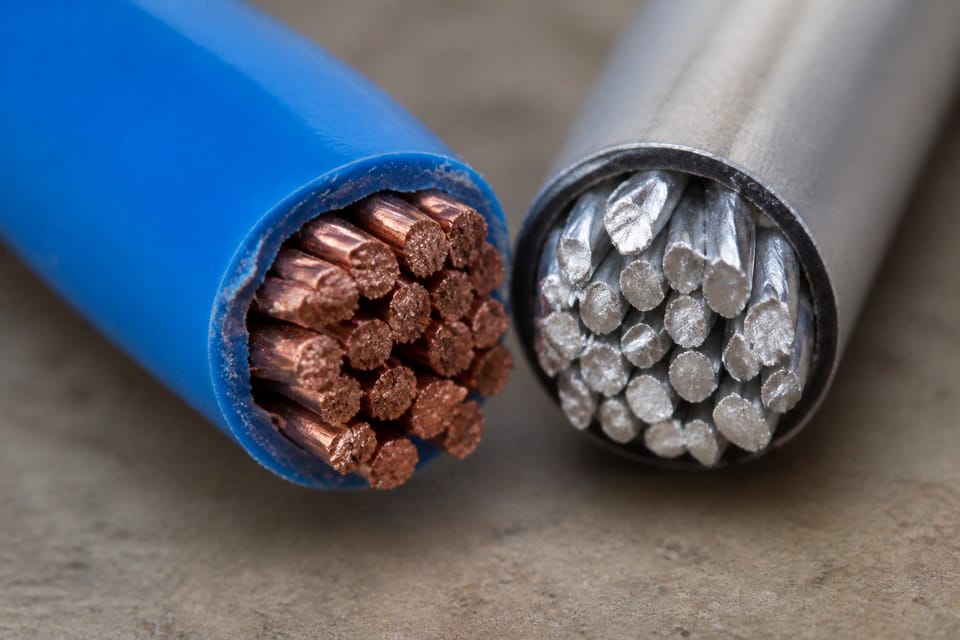
IS 694 clause 4.1 allows both: copper conductors of Class 1, 2 or 5 and aluminium conductors of Class 1 or 2 up to a stated size and stranded Class 2 above it. In IS 8130, the flexible classes 5 and 6 are copper only. A letter A in the cable code marks an aluminium conductor, and no letter is needed for copper (IS 694 clause 13).
NBCS 2026 is stricter for buildings. Clause 5.8.2 says: “For conductor sizes less than or equal to 25 mm², only copper conductor cables shall be used since aluminium conductor cables in sizes less than 25 mm² may cause termination problems leading to heating at the terminals and enhance the possibility of a fire.” Clause 6.5.1 says conductors “for all the internal wiring shall be of copper”, and recommends changing aluminium wiring to copper in existing buildings, because aluminium conductors “pose a number of hazards”. Clause 6.5.2 says flexible cables and cords shall be of copper and stranded.
IS 732:2019 does not ban aluminium. Its Table 9 sets minimum sizes for mechanical reasons, including for aluminium conductors in power circuits, with a note that connectors for aluminium “shall be tested and approved for this specific use”. IS 732 also says aluminium conductors shall not be used as earthing conductors (clause 5.4.2.3.1, text layer). Ask the electrician which rules apply to your supply.
What about solid or stranded?
NBCS 2026 clause 5.8.5.1 says cables above 1 mm² “shall have stranded conductors”. Clause 6.9.1(j) says conductors in conduit wiring “shall preferably be stranded”. The NBCS also asks for cables to be protected from mechanical damage, for example by enclosing them in PVC conduit or metal pipes, or by placing them where no extra protection is needed.
Can I use a flexible cord as fixed wiring?
IS 732 clause 5.2.4.9 says a flexible cable “may be used for fixed wiring where the provisions of this standard are met”, and that equipment intended to be moved in use is connected by flexible cables or cords. NBCS clause 6.5.2 says flexible cables and cords are copper, stranded and protected from damage. In practice, a cord is for appliance leads and portable equipment, and the fixed wiring in conduit uses the single-core wire. That is practice.
How are the cores identified?
IS 694 clause 12 and Table 2 give core colours for fixed wiring cables up to four cores, for example red and black for two cores, and red, yellow and blue for three. The fixed-wiring column of Table 2 lists no earth colour; clause 12.1.1 says yellow-green cores, used for earthing, have one of the two colours covering at least 30 and not more than 70 percent of the surface. Single wires have a colour on the whole core, and may have a stripe. The label gives the standard, the maker, the voltage grade, the number of cores and the size; the maker’s name is printed, indented or embossed along the cable (clauses 11 and 15.2). For the earth wire and its colour rule, see earthing for a house: what it is, earth vs neutral, and why it matters.
What do the standards not say?
We found no standard that says which wire or brand is better, and none that gives a price. IS 694 gives no circuit-by-circuit wire sizes and no current ratings. NBCS 2026 and IS 732 give minimum conductor sizes for mechanical reasons, which this page does not reproduce, because the size of each circuit depends on its load and its run, and the electrician or engineer decides it. The breaker is chosen to protect the wire: see MCB vs RCCB vs RCBO: what each protects against at home.
What should I check and ask? (practice)
This is practice, apart from the clauses named.
- At delivery: the maker’s name printed along the cable, the IS number, voltage grade and size on the label, a sealed coil, the core colours, and the standard mark with its licence details if the maker uses it. Do not accept a coil that has been opened or cut.
- Ask the electrician: which standard and category is on the wire (FR or FR-LSH if the engineer specified it), which circuits get which wire, where the joints are, and whether the earth wire runs to every socket.
- Ask the engineer whether the project specification calls for copper throughout, as NBCS 2026 does, and for any armoured cable on outdoor, pump or underground runs.
What mistakes should I avoid? (practice)
- Buying cheaper wire with no marking or licence details.
- Joining copper and aluminium without a proper connector.
- Hiding joints inside conduit. They belong in accessible boxes.
- Thin wire on a heavy load, or fitting a bigger breaker when it trips.
- Using a flexible cord as fixed wiring.
- Pulling wire through conduit that is not complete or has sharp bends.
- Cutting open bulk coils, or storing coils in damp places or in the sun.
- Thinking a heavier coil or a thicker wire is automatically better.
Frequently asked questions
What is the difference between wire and cable?
No standard we read defines them separately. IS 694 covers unsheathed and sheathed cables and cords. In common use, wire is a single insulated conductor, and cable has a sheath.
Is copper or aluminium better for house wiring?
NBCS 2026 asks for copper conductors in internal wiring and gives termination problems as the reason for small aluminium sizes. IS 732 does not ban aluminium but sets minimum sizes and requires approved connectors.
Is aluminium wiring banned?
We found no outright ban. NBCS 2026 asks for copper and recommends replacing aluminium wiring in existing buildings. Check your local rules.
Is flexible wire the same as single-core wire?
Not necessarily. IS 694 has single-core wires with rigid conductors and with flexible (Class 5) conductors, and cords for appliance leads.
What does FR mean on a wire?
Flame retardant. IS 694 lists FR and FR-LSH categories. It does not mean fireproof.
Related guides
- Electrical work in a house build: stages and inspection points
- Earthing for a house: what it is, earth vs neutral, and why it matters
- MCB vs RCCB vs RCBO: what each protects against at home
This guide is general information. Read the disclaimer. Your electrician and engineer decide the wire and cable for your house.
Sources
- IS 694:2010, PVC Insulated Unsheathed and Sheathed Cables/Cords with Rigid and Flexible Conductor (fourth revision), the archive.org copy with Amendment 1 (2012): clauses 1.1 and its notes, 4.1, 11, 12 and Table 2, 13, 16 and 17 (page images read). BIS lists it as in force, valid to 2030-11-24, with a title that now reads up to and including 1 100 V after later amendments (a BIS circular of 24 April 2020 implements Amendment 4). We could not read Amendments 2 to 4, so the clauses quoted are from the 2012 print and may have been amended.
- IS 1554 (Part 1):1988, PVC Insulated (Heavy Duty) Electric Cables, Part 1 for Working Voltages up to and Including 1 100 V: clauses 1.1 and 1.2 (page image read). BIS lists it as in force, valid to 2030-11-24. IS 8130:2013, Conductors for Insulated Electric Cables and Flexible Cords: clause 5.1 and 6.4.1 (page images read). BIS lists it as in force, reaffirmed 2018.
- SP 7:2026, National Building Construction Standards (NBCS) 2026, Part D Section 2, Electrical and Allied Installations: clauses 5.8.2, 5.8.5.1, 6.5.1, 6.5.2 and 6.9.1(j) (page images read). IS 732:2019, Electrical Wiring Installations: clause 5.2.7.1 and Table 9, and clause 5.2.4.9 and clause 5.4.2.3.1 (Table 9 page image read; the other clauses text layer). From an unofficial archive.org copy of the NBCS.
General information only. It is not a structural design or professional advice. Ask a licensed structural engineer or architect to check your plans and site.