
Short answer
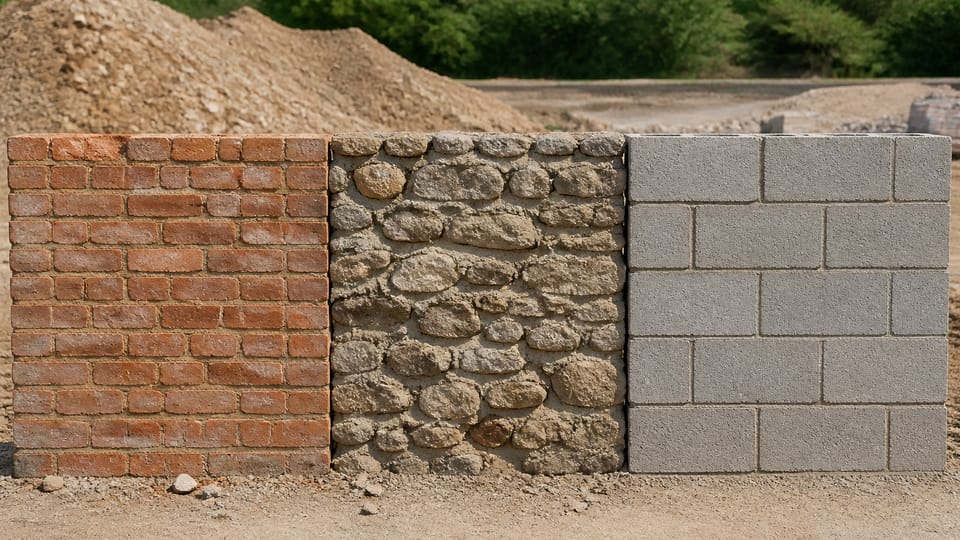
What are the types of masonry? IS 1905 defines masonry as an assemblage of masonry units properly bonded together with mortar. The Indian codes name the kinds by unit: brick (IS 2212), stone, rubble and ashlar (IS 1597), concrete block (IS 2572) and AAC block (IS 6041). No standard we read gives a three-types list or says which kind is best.
On this page (10)
“Types of masonry” is usually answered with three words: brick, stone, block. The Indian standards do not give that list. They give a definition of masonry itself, and then a separate code of practice for each kind of unit. This page sets out what the codes say, what a composite or faced wall is, and what no standard decides, such as which type is best. It gives no wall thickness, no mortar mix and no price. The pages for each material go deeper: see red brick vs fly ash brick vs AAC block: how to choose for walls.
What is masonry?
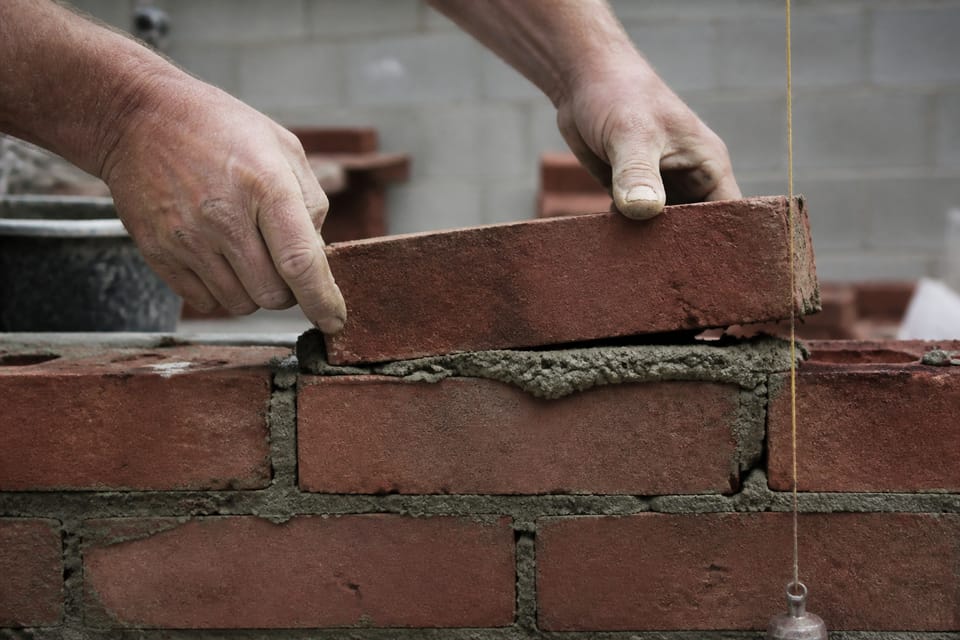
IS 1905:1987 clause 2.15, and NBCS 2026 clause 2.15 in the same words, define it: “An assemblage of masonry units properly bonded together with mortar.” A masonry unit (clause 2.16) is an individual unit “bonded together with the help of mortar to form a masonry element, such as wall, column, pier and buttress”. So masonry is the whole system: the units, the mortar and the bond between them. Brickwork is one kind of it. IS 2212, the brick code, says it “covers the construction of brick masonry in general and the erection of brick walls in particular”, and deals only with clay bricks (clause 1.2); use of unburnt (kachcha) bricks and mud mortar is not specifically covered. It does not define “brickwork” apart from “brick masonry”.
Which kinds does the code name?
| Kind | Code and scope clause | What the code says |
|---|---|---|
| Brick | IS 2212:1991, clause 1.1 | Construction of brick masonry and brick walls, with clay bricks only |
| Stone, rubble | IS 1597 (Part 1):1992, clause 1.1 | “the design and construction of rubble stone masonry”. Rubble walling is built of stones irregular as quarried, or squared and only hammer dressed |
| Stone, ashlar | IS 1597 (Part 2):1992, clause 1.1 | “the design and construction of ashlar stone masonry”: dressed square stone blocks laid in courses (Part 1, clause 3.1) |
| Concrete block | IS 2572:2005, clause 1 | Walls and partitions with precast hollow and solid concrete blocks |
| AAC block | IS 6041:1985, clause 1.1 | Load bearing and non-load bearing walls with autoclaved cellular (aerated) concrete blocks |
IS 1905 clause 1.1 lists the units for unreinforced walls: solid or perforated burnt clay bricks, sand-lime bricks, stones, concrete blocks, lime based blocks and burnt clay hollow blocks. NBCS 2026 clause 3.2.1 gives a longer list of masonry units, which adds fly ash bricks, pulverized fuel ash lime and cement bricks, autoclaved cellular concrete blocks, gypsum partition blocks, stabilized soil blocks and concrete stone masonry blocks, and allows other units “based on test results”.
IS 1597 (Part 1) clause 7.1 divides rubble into random rubble, squared rubble and polygonal rubble. Its text says the types are in “7.1.1 to 7.1.4”, but there is no 7.1.4, so we name three. Random rubble is “constructed of stones as they come from the quarry”. See stone masonry for plinths and walls: random rubble vs coursed rubble.
A hollow unit, in IS 1905 clause 2.9 and NBCS clause 2.9, is one whose net cross-sectional area in any plane parallel to the bearing surface is less than 75 percent of its gross area.
What are composite, faced, cavity and reinforced masonry?
No standard we read defines “composite masonry” as a wall type. IS 2119:1980 is a code for a brick-cum-lime concrete composite floor or roof (the Madras terrace), not a wall. The nearest wall ideas are in IS 1905 clause 2.21 and NBCS clause 2.21:
- Faced wall: “A wall in which facing and backing of two different materials are bonded together to ensure common action under load.”
- Veneered wall: a wall where the facing is attached to the backing “but not so bonded as to result in a common action under load”.
- Cavity wall: two leaves of masonry units separated by a cavity and tied together so that the two leaves act as one structural unit.
NBCS clause 8.1.15 defines reinforced masonry as “masonry which is reinforced … and grouted (if necessary) so that the two materials act together in resisting forces”. It names grouted cavity, pocket type and Quetta bond reinforced masonry. The NBCS also treats confined masonry as a structural system (NBCS clause 9). The engineer decides whether a house uses it.
What is the difference by role?
The codes also sort walls by what they carry, not what they are made of:
- Load bearing wall: “designed to carry an imposed vertical load in addition to its own weight, together with any lateral load” (IS 1905 clause 2.14).
- Partition wall: “an interior non-load bearing wall, one storey or part storey in height” (clause 2.17).
- Panel wall: “an exterior non-load bearing wall in framed construction, wholly supported at each storey but subjected to lateral loads” (clause 2.18).
Infill is not defined as a word in IS 1905 or NBCS Section 4. In practice, many Indian houses have an RCC frame carrying the load and masonry filling the panels between the columns and beams. Which walls of your house are load bearing is the engineer’s decision, not the mason’s. See which walls can be 4.5 inch? Load-bearing and partition walls.
Which type is best?
No standard says. IS 1905’s foreword names some of the factors that structural adequacy depends on, among them the quality and strength of units and mortars, workmanship, methods of bonding, unsupported height and the position and size of openings. IS 2572’s foreword says hollow concrete block is “an important addition to the types of masonry units” and names reduced mortar consumption, light weight and speed of work compared with brick masonry. That is the standard’s wording and not a recommendation for your house. A choice is made on local material, whether the structure is load bearing or framed, the climate, the seismic zone, the engineer’s specification and the test certificate of the units. This is practice.
What should I ask the engineer and mason? (practice)
This is practice, apart from the clauses named.
- Which walls are load bearing and which are infill or partitions?
- Which unit and which strength class for each wall, as shown on the test certificate?
- Which mortar for this unit? The codes point to IS 2250 for mortar (IS 2212 clause 5.2 for brick), and the stone code bases the choice essentially on local experience, the stone and the climate.
- What detail is used where two different materials meet, for example a brick wall meeting a block wall?
- Do the walls need bands or reinforcement in our seismic zone?
What mistakes should I avoid? (practice)
- Calling brickwork and masonry the same. Brickwork is one kind.
- Mixing unit types in one wall with no joint detail, which cracks at the junction.
- Using a mortar made for one unit on another.
- Choosing by the material’s name and not by the test certificate.
- Taking a type’s name as proof of structural safety. The engineer’s drawings decide.
Frequently asked questions
What are the 3 types of masonry?
Web lists usually say brick, stone and concrete block. The Indian codes name more kinds, by unit: brick, stone (rubble and ashlar), concrete block and AAC block, among others.
What is the difference between brickwork and masonry?
Masonry is units bonded with mortar. Brickwork is masonry made with bricks. IS 2212 uses the two words close together and does not define brickwork separately.
Is AAC block masonry?
Yes. IS 6041 is the code for AAC block masonry, covering load bearing and non-load bearing walls. Whether a particular house uses it for load is the engineer’s decision.
What is composite masonry?
Not a defined term in the standards we read. Faced and veneered walls are the codes’ nearest wall ideas. IS 2119 uses “composite” for a floor and roof system.
Related guides
- Red brick vs fly ash brick vs AAC block: how to choose for walls
- Stone masonry for plinths and walls: random rubble vs coursed rubble
- Which walls can be 4.5 inch? Load-bearing and partition walls
- Brick vs stone masonry: materials, bond, mortar and use
This guide is general information. Read the disclaimer. Your engineer decides the masonry type and the structural walls for your house.
Sources
- IS 1905:1987, Code of Practice for Structural Use of Unreinforced Masonry: clauses 1.1, 2.9, 2.14 to 2.21 and 3.1, and foreword 0.2 (page images read). BIS lists it as in force, valid to 2028-01-31.
- IS 2212:1991, Code of Practice for Brick Works, clauses 1.1, 1.2 and 5.2; IS 1597 (Part 1):1992, Construction of Stone Masonry, Rubble Stone Masonry, clauses 1.1, 3.1, 7.1 and 7.4; IS 1597 (Part 2):1992, Ashlar Masonry, clauses 1.1 and 7.1; IS 2572:2005, Construction of Hollow and Solid Concrete Block Masonry, clauses 1 and 6.9.3 and its foreword; IS 6041:1985, Construction of Autoclaved Cellular Concrete Block Masonry, clause 1.1 (scope clauses read on page images). IS 1597 Parts 1 and 2 are listed by BIS as valid to 2026-12-31: check the status again before relying on them.
- SP 7:2026, National Building Construction Standards (NBCS) 2026, Part C Section 4, Masonry: clauses 1.1 to 1.5, 2.9, 2.15 to 2.21, 3.2.1 and its note 2, 8.1.15 to 8.1.18 and 9 (page images read). From an unofficial archive.org copy.
Change log
- : Added Related guides link to newly published article(s): brick-vs-stone-masonry-materials-bond-mortar-and-use. No other text changed. Approved by the reviewing engineer (owner report, 2026-10-31).
General information only. It is not a structural design or professional advice. Ask a licensed structural engineer or architect to check your plans and site.