
Short answer
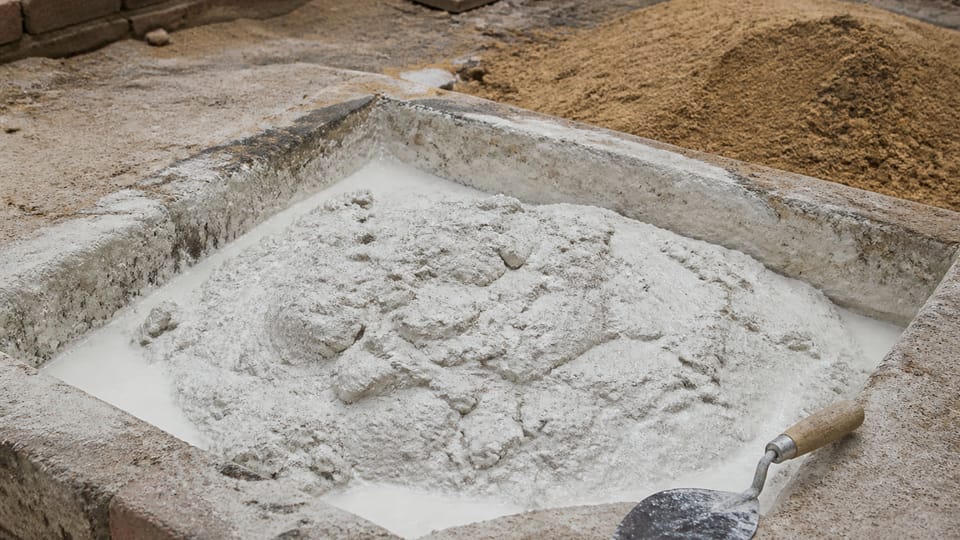
What is lime mortar and lime plaster, and how are they made? IS 2250 defines lime mortar as a mortar containing lime and sand. Lime plaster is plaster in which lime is the main binder (IS 2394). Quicklime is never used as it is: IS 1635 says it must be slaked first, usually into a putty that is matured and kept wet. The mix is usually ground with sand, as a rule used the same day, and cured.
On this page (11)
- What are lime mortar and lime plaster?
- What kinds of lime are there?
- How is lime made ready for use?
- How is lime mortar mixed and how does it behave?
- What does IS 2394 say about lime plaster?
- What do the standards not say?
- What should I ask the mason? (practice)
- What mistakes should I avoid? (practice)
- Frequently asked questions
- Related guides
- Sources
IS 712 notes that lime has been used in India as a material of construction “from very ancient days”. It is also easy to get wrong, because the lime on the site is not one material: quicklime, hydrated lime and putty behave differently, and some of them burn. This page explains what lime mortar and lime plaster are, how the Indian standards say lime is prepared, and what the standards say lime plaster suits. It is not an argument for or against cement. No standard we read says cement harms an old wall, and this page does not say so. It gives no mix ratio, thickness, price or brand. For brick mortar mixes, see mortar ratio for brick walls: 1:4, 1:5 or 1:6?.
What are lime mortar and lime plaster?
IS 2250 clause 2.2 defines lime mortar as “a mortar containing lime and sand”. The glossary IS 6508 says a lime mortar is “a mixture of lime, fine aggregate and water with or without addition of admixtures”, and a lime plaster is “a mixture of lime and other materials applied in substantial thickness to surfaces to form a protective and/or decorative coating”. IS 2394 covers the plastered finishes “in which lime constitutes the main binding material”. Where cement is added to lime, the standards call it composite mortar, or lime-cement mortar.
| Word | What IS 6508 says |
|---|---|
| Quicklime | “A calcined material, the major part of which is calcium oxide capable of slaking with water”, also called unslaked lime |
| Hydrated lime | “A dry powder obtained by treating quicklime with water enough to satisfy its chemical affinity for water …” |
| Slaking | “usually means addition of the requisite amount of water to quicklime so as to form dry slaked lime, putty or slurry” |
| Lime putty | “A plastic paste consisting of hydrated lime and free water” |
| Maturing | “The keeping of slaked lime until all particles of lime fatten up to lime putty”, also called fattening |
| White wash | Hydrated lime (or slaked quicklime), water and other materials used as a paint-like coating |
What kinds of lime are there?
IS 712:1984 clause 3.1 has six classes, each with a suggested use:
| Class | Kind of lime | Suggested use in IS 712 |
|---|---|---|
| A | Eminently hydraulic | Structural purposes |
| B | Semi-hydraulic | Masonry mortars, lime concrete and plaster undercoat |
| C | Fat lime | Finishing coat in plastering, white washing, composite mortars, and with pozzolanic materials for masonry mortar |
| D | Magnesium or dolomitic | Finishing coat in plastering, white washing |
| E | Kankar lime | Masonry mortars |
| F | Siliceous dolomitic | Undercoat and finishing coat of plaster |
The standard’s Note 2 says the uses are “only suggestive”. IS 6508 says an eminently hydraulic lime has “the property of setting and hardening under water”, while a fat lime is a pure non-hydraulic lime. Classes A and E are supplied only as hydrated lime. IS 2250 clause 4.3.1 says hydraulic and semi-hydraulic limes of classes A, B and E are “eminently suitable” for masonry mortar, while fat limes of classes C and D need mixing with burnt clay pozzolana or other pozzolanic materials.
IS 2250 and IS 2394 refer to the 1973 edition of IS 712. The edition in force is 1984, which added dolomitic limes, including Class F.
How is lime made ready for use?
IS 1635 says: “Quicklime can never be used as such for structural purposes; it must always be slaked first.” IS 2250 clause 4.3.2 says the same. The reason is in IS 2250: inadequately slaked particles “will continue to hydrate after the lime is used in the mortar and consequently lead to defects, such as popping, blowing, crack development, etc”. IS 6508 describes popping and pitting as craters or blisters on plaster surfaces caused by particles of unhydrated or incompletely hydrated lime.
IS 1635 describes two ways of slaking in the field:
- In a tank (“lime to water”): the quicklime is added to water in a water-tight tank, and the milk of lime is passed through a sieve into a second tank, where it settles and matures into putty. The standard says tank slaking is desirable, and that lime is added to water and not water to lime.
- On a platform (“water to lime”): the water is sprinkled in small quantities, the minimum needed for complete slaking, and the slaked lime is screened and kept in a dry place under cover. Putty can then be made from the dry slaked lime.
Putty is matured for a stated time, with a minimum for fat lime and a maximum for semi-hydraulic lime. It “should not be allowed to dry or stiffen till it is used” and “shall always be stored under water” (clause 7.2). Quicklime itself deteriorates on exposure and “should be slaked as soon as possible” (clause 5). The standard gives safety precautions: quicklime reacts violently with water and gives off a great deal of heat, the dust may be irritating if inhaled, and quicklime and hot freshly slaked lime may burn the skin, so goggles, respirators, gloves and gum boots may be provided (clause 8). In practice, slaking is work for trained workers.
IS 712 itself notes that practice differed across India: in the south, lime mortar was ground from slaked lime and sand in a bullock mill, and in Punjab, putty was mixed with sand and used directly. It also says defects from differences in burning, slaking, storing and using affected the quality of lime.
How is lime mortar mixed and how does it behave?
IS 2250 clause 8.3 says quicklime is slaked and, if necessary, run into putty in line with IS 1635. The putty and sand are mixed on a waterproof platform or in a mixer and, if necessary, ground in a mortar mill, raked continuously during grinding, with no more water than gives a working consistency, until every particle of the sand is coated. Only as much lime mortar is mixed as a day’s work needs. Where factory-made dry hydrated lime to IS 712 is used, grinding in a mortar mill is not necessary.
The standard describes some properties without ranking lime against cement:
- Lime mortars undergo only negligible volume change after setting and initial shrinkage, and harden slowly, so the mortar “is able to retain its bond with the masonry unit and be free from cracks” (clause 5.1.3.2).
- They take normal movements by internal accommodation (clause 5.1.3.3).
- The rate of hardening is slower than that of cement mortars, but “satisfactory for most of the normal building works, except where high strength is required” (clause 5.2).
- Incorporating cement or pozzolana in mixes made with Class B and Class E lime increases strength and rate of hardening (clause 5.3.2).
IS 6508 describes autogenous healing in lime mortars: calcium carbonate forms by absorption of carbon dioxide from the air, bridging minor cracks and air spaces at joints.
What does IS 2394 say about lime plaster?
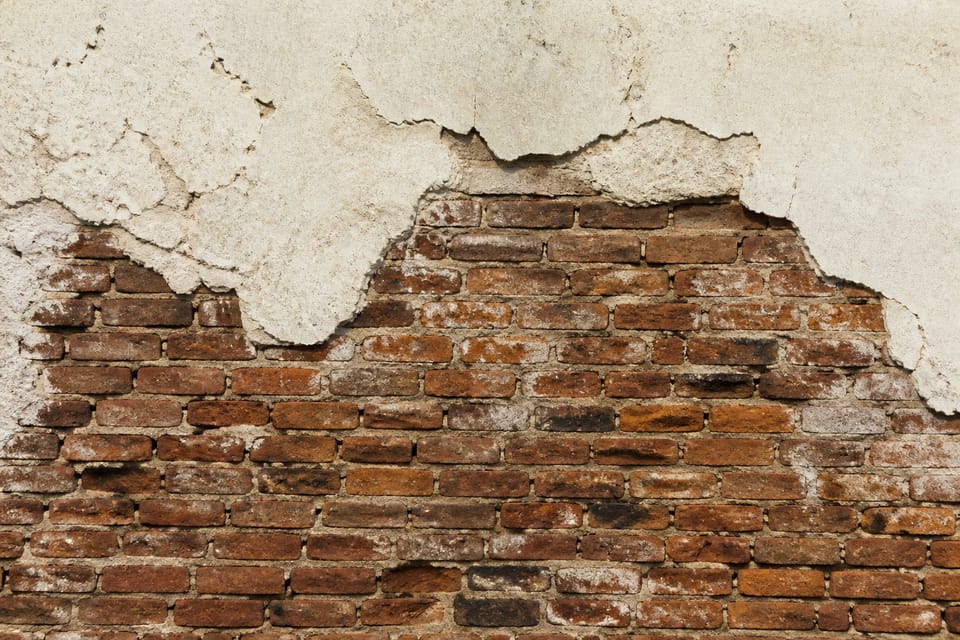
IS 2394 clause 8.1.1 says lime plasters have high workability, are generally suited for internal surfaces, and have “a long working time, a slow rate of strength development and reasonable strength”. Clause 8.1.2 says lime plastered finishes “are not suitable for external surfaces in areas of heavy rainfall, very damp places and in places where extreme water tightness is required”. Clause 8.1.3 says the plaster “hardens by drying and by recarbonation”, a slow process in which the early plaster is sensitive to shock and vibration. Other points:
- It resists knocks and abrasion poorly, and gauging lime plaster with cement can improve that (clause 8.2).
- Lime plastered surfaces suit white wash, colour wash and distemper, “because of better adhesive properties”. Where cement-based paints are to be applied, the standard says lime plastered surfaces “are not suitable” (clause 8.3).
- Metals in contact with lime plaster are liable to corrode (clause 8.4).
- “As a general rule, any coat of plaster shall not be stronger than the base or the previous coat” (clause 8.5).
- Lime mortar for plaster is ground in a mortar mill and kept damp: “All lime mortars after grinding shall be kept damp and shall never be allowed to go dry”, partly set mortar is not retempered, and as a rule mortar is used on the day it is made (clause 12.2.4).
- Curing starts 24 hours after finishing, with the plaster kept wet for 7 days and protected from damage, and the dates marked on the walls (clause 14.1). For brick wall curing, see curing a brick wall: how long, and how, per IS 2212.
What do the standards not say?
We read IS 2250, IS 2394, IS 712, IS 1635 and IS 6508 for this page and found no statement that cement harms old masonry, no conservation guidance, and no rule for choosing lime or cement for an old house. IS 2394 clause 16 deals only with patching plaster. IS 2250 grades mortars by strength and does not rank the binders. Whether a repair to an old house uses lime is a question for the engineer, who looks at what is there.
What should I ask the mason? (practice)
This is practice, apart from the clauses named.
- Which lime will be used, where is it from, and is the class named on the written specification?
- Who slakes it, how, and with what eye protection?
- How long was the putty matured, and where is it stored?
- What mix is on the written specification, and who gave it?
- How will the plaster be cured, and who waters it?
- When can the wall be painted or limewashed?
- Has the mason done lime work before, and can you see it?
What mistakes should I avoid? (practice)
- Using fresh quicklime in mortar or plaster without slaking.
- Rushing the putty, or letting it dry out before use.
- Slaking without trained workers and eye protection.
- Skipping the curing, or painting before the plaster is ready.
- Calling a paint that looks like limewash “limewash”. A paint film is a different product.
- Adding cement to a lime job, or lime to a cement one, without asking the engineer.
- Treating lime plaster as waterproof. IS 2394 says it is not for very damp places or where extreme water tightness is needed.
Frequently asked questions
What is the difference between lime mortar and cement mortar?
Lime mortar is lime and sand. Cement mortar is cement and sand. IS 2250 notes that lime mortars harden more slowly and change little in volume. It does not rank them.
Is lime plaster waterproof?
No. IS 2394 says lime plaster is not suitable for external surfaces in heavy rainfall, very damp places or where extreme water tightness is needed.
Can lime and cement be mixed?
The standards allow it in defined cases: IS 2250 describes composite and lime-cement mortars, and IS 2394 notes gauging lime plaster with cement. Do it only to the engineer’s written specification.
Why is quicklime slaked first?
Unslaked particles keep hydrating after use and cause popping, blowing and cracks, according to IS 2250 clause 4.3.2.
Is limewash the same as masonry paint?
No. IS 6508 defines white wash as hydrated lime, water and other materials used as a paint-like coating. IS 2394 says lime plaster suits white wash and distemper but is not suitable for cement-based paints.
Related guides
- Mortar ratio for brick walls: 1:4, 1:5 or 1:6?
- Stone masonry for plinths and walls: random rubble vs coursed rubble
- Curing a brick wall: how long, and how, per IS 2212
- Whitewash, colour wash and cement paint: what each is, how to apply
This guide is general information. Read the disclaimer. Your engineer decides whether lime is used in your house.
Sources
- IS 2250:1981, Code of Practice for Preparation and Use of Masonry Mortars: clauses 2.2, 4.3.1, 4.3.2, 5.1.3, 5.2, 5.3.2 and 8.3 (page images read, except clause 2.2: text layer). BIS lists it as in force, valid to 2030-09-17. It refers to the 1973 edition of IS 712.
- IS 712:1984, Specification for Building Limes (third revision): clauses 0.2, 0.4 and 3.1 (page images read). BIS lists it as in force, valid to 2029-05-31.
- IS 1635:1992, Code of Practice for Field Slaking of Building Limes and Preparation of Putty: foreword and clauses 1, 5, 6.2 and 8 (page images read). BIS lists it as in force, valid to 2029-01-31.
- IS 2394:1984, Code of Practice for Application of Lime Plaster Finish: clauses 1.3, 8.1 to 8.5, 12.2.4 and 14.1 (page images read; clauses 1.3 and 16 text layer). BIS lists it as in force, valid to 2027-01-31. IS 6508:1988, Glossary of Terms Relating to Building Lime: entries 2.20, 2.23, 2.34, 2.41, 2.42, 2.47, 2.58, 2.70 and 2.78 (page images read, except 2.78: text layer). BIS lists IS 6508 as in force, valid to 2029-01-31.
Change log
- : Added Related guides link to newly published article(s): whitewash-colour-wash-and-cement-paint-what-each-is-and-how-it-is-applied. No other text changed. Approved by the reviewing engineer.
General information only. It is not a structural design or professional advice. Ask a licensed structural engineer or architect to check your plans and site.