
Short answer
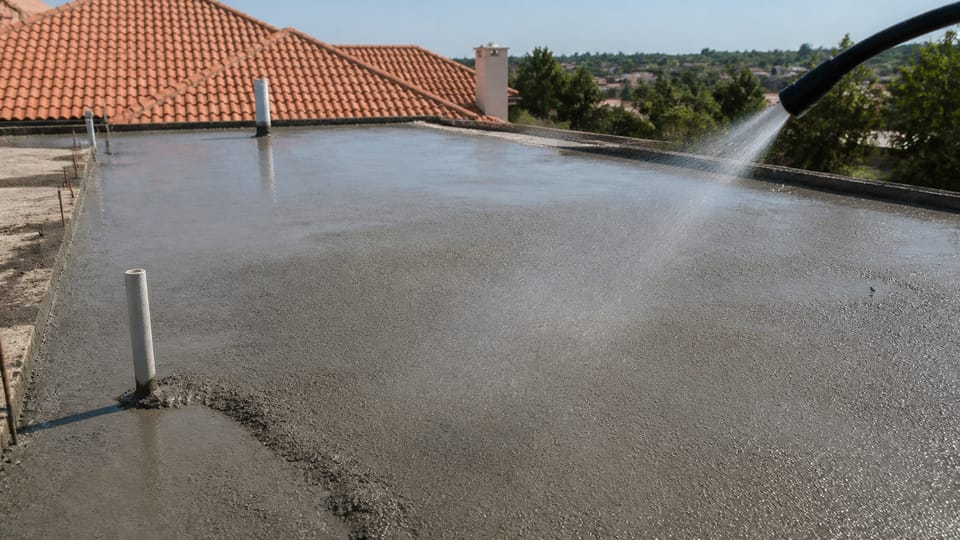
Can a curing compound replace water curing for concrete? A curing compound is a liquid sprayed on new concrete to keep the water in. IS 456 allows an approved curing compound in place of moist curing, but only with the engineer-in-charge's permission, and it must go on as soon as possible after the concrete has set. Ask the engineer whether the compound counts toward the curing period for your slab.
On this page (9)
Concrete needs water to gain its strength. After it is placed, the surface must be kept from drying out for a period. The usual way is to keep it wet with water or wet covers. A curing compound is a different way: a liquid sprayed on the surface that forms a thin film to slow the loss of water. This guide explains what the Indian concrete code says about curing compounds, when they can replace water curing, and what to check before use. It names no brand and gives no rate or period. The engineer decides for your job.
What does the code say?
IS 456 is the Indian code of practice for plain and reinforced concrete. Its clause on membrane curing says that “Approved curing compounds may be used in lieu of moist curing with the permission of the engineer-in-charge” (clause 13.5.2).
So two conditions apply. The compound must be an approved one, and the engineer-in-charge must give permission. A curing compound is not a standing alternative to water curing; it is an option the engineer may allow.
The clause also says when the compound must go on: “Such compounds shall be applied to all exposed surfaces of the concrete as soon as possible after the concrete has set.” It does not give a coverage rate, a number of coats or a spraying method. Those come from the product’s data sheet, and the engineer must accept them.
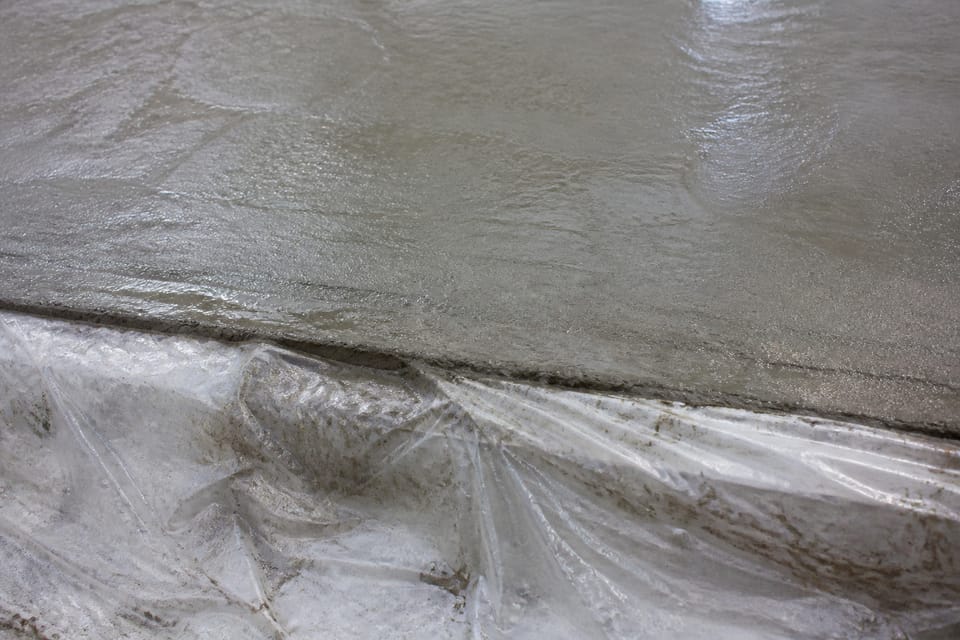
The same clause allows another barrier: “Impermeable membranes such as polyethylene sheeting covering closely the concrete surface may also be used to provide effective barrier against evaporation.” A plastic sheet laid tight over the surface is therefore also an accepted method, again with the engineer’s permission.
What does the code say about the period?
The code’s general rule is that moist curing is the usual way. Clause 13.5.1 says the exposed surface shall be kept damp or wet for a set minimum period. Those minimum periods depend on the cement and the weather, and they are set in the code, not here. Ask your engineer which period applies to your slab, and read our guide to how many days to cure a concrete slab.
A compound does not add strength to concrete that has dried too early. It only slows the loss of water. IS 456 does not say whether a compound counts toward the period in clause 13.5.1, so ask the engineer whether it does for your slab.
When can a compound be used?
This section is practice, not a code rule.
- Where water is short, and the engineer agrees that a compound is an acceptable substitute.
- On surfaces that are hard to keep wet, such as the top of a parapet or a sloping roof where water runs off.
- On a surface that is damp, not dry, when the compound goes on, and as soon as the surface has set enough to take it.
What are the risks?
This section is practice.
- A film that stops the next layer from bonding. Where plaster, waterproofing or a new pour is to follow, check the product sheet first. Clause 13.4, on construction joints, says that sprayed curing membranes “should be thoroughly removed from joint surfaces.” The same care is sensible for a surface that will be plastered or waterproofed.
- A compound that blocks waterproofing. Check with the waterproofing contractor before the compound is used on a roof or a wet area.
- A compound on a surface that will be painted. Check the product sheet, and ask the painter.
- Using a product the engineer has not approved. The code asks for approval, so do not use one without it.
What should I check?
This section is practice.
- The engineer has approved the use of a compound in writing, or on the site register.
- The product sheet is available, and the coverage and timing on it are followed.
- The surface is damp when the compound goes on, not dry and dusty.
- Any plaster or waterproofing that follows has been checked against the sheet.
- If a plastic sheet is used instead, it covers the surface closely, with no gaps at the edges.
What mistakes should I avoid?
This section is practice.
- Using a compound without the engineer’s permission.
- Treating a compound as a shortcut that cuts the curing period.
- Spraying a dry surface instead of a damp one.
- Leaving a film on a joint that a new pour or plaster must bond to.
- Choosing a product by its advertised claims rather than its data sheet and the engineer’s approval.
Frequently asked questions
Can I use a curing compound on a house slab?
Only if your engineer approves it under clause 13.5.2 of IS 456. Ask the engineer first, and ask for the product sheet.
Is a plastic sheet as good as water?
The code allows an impermeable sheet laid closely over the surface as a barrier against evaporation, with the engineer’s permission. Ask the engineer whether it counts toward the curing period for your slab.
Does a compound make concrete stronger?
No. A compound slows the loss of water. It does not add strength to concrete that has dried early.
Related guides
- How many days to cure a concrete slab?
- Concrete grades M15 to M25 explained
- Hot weather concreting in Indian summer
This guide is general information. Read the disclaimer. Your engineer decides the curing for your slab.
Sources
- IS 456:2000, Plain and reinforced concrete: code of practice (fourth revision). Clauses 13.5 and 13.5.2 (membrane curing) read from the page image of a public copy. Current per the BIS record (valid to 2030-07-12).
- Practice points on the product sheet and the timing are labelled as practice. No manufacturer's data sheet is cited, and no brand is named.
General information only. It is not a structural design or professional advice. Ask a licensed structural engineer or architect to check your plans and site.