
Short answer
What are the types of cracks in house walls? SP 25 (1984) sorts cracks into structural and non-structural, by cause, by pattern (vertical, horizontal, diagonal, stepped, map or random) and by width. A crack is a symptom of movement, so its pattern, growth and place matter as much as its width. Any crack that grows, goes through the wall or sits on a beam or column needs a structural engineer.
On this page (10)
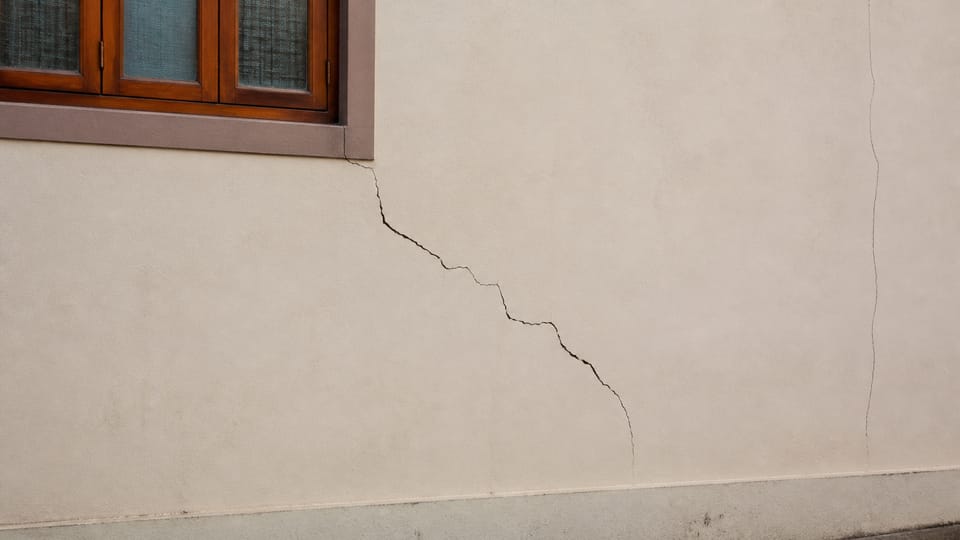
A crack in a new wall frightens most owners, and the usual advice swings between “it is only plaster” and “call an engineer”. Both can be right. The Indian handbook on cracks, SP 25, says what causes them and how to tell the kinds apart, and it also says who must judge. This page sets out its classification in plain words and what each pattern commonly points to. It prints no crack width, repair mix or price: the standards we read give widths only as repair thresholds, not as a safe or unsafe verdict for a house wall. For plaster cracks, see hairline cracks in plaster: causes and what to do.
Is every crack structural?
No. SP 25 clause 1.2 says “cracks could be broadly classified as structural or non-structural”. Structural cracks “are those which are due to incorrect design, faulty construction or overloading and these may endanger the safety of a building. Extensive cracking of an RCC beam is an instance.” Non-structural cracks “are mostly due to internally induced stresses in building materials and these generally do not directly result in structural weakening”. The handbook adds that they “normally do not endanger the safety of a building, but may look unsightly”, and that moisture entering through them over time “may render the structure unsafe” by corroding steel.
SP 25 covers non-structural cracks. It states that cracking from deficiency in structural design, faulty construction and overloading is not discussed. So the handbook cannot tell you your crack is harmless; it tells you what to look at.
How does SP 25 sort cracks?
| By | What SP 25 lists |
|---|---|
| Structural or not | Structural, from design, construction or overload; non-structural, from stresses inside the materials (clause 1.2) |
| Cause | Moisture changes, thermal changes, elastic deformation, creep, chemical reaction, foundation movement and settlement of soil, and vegetation (clause 1.8) |
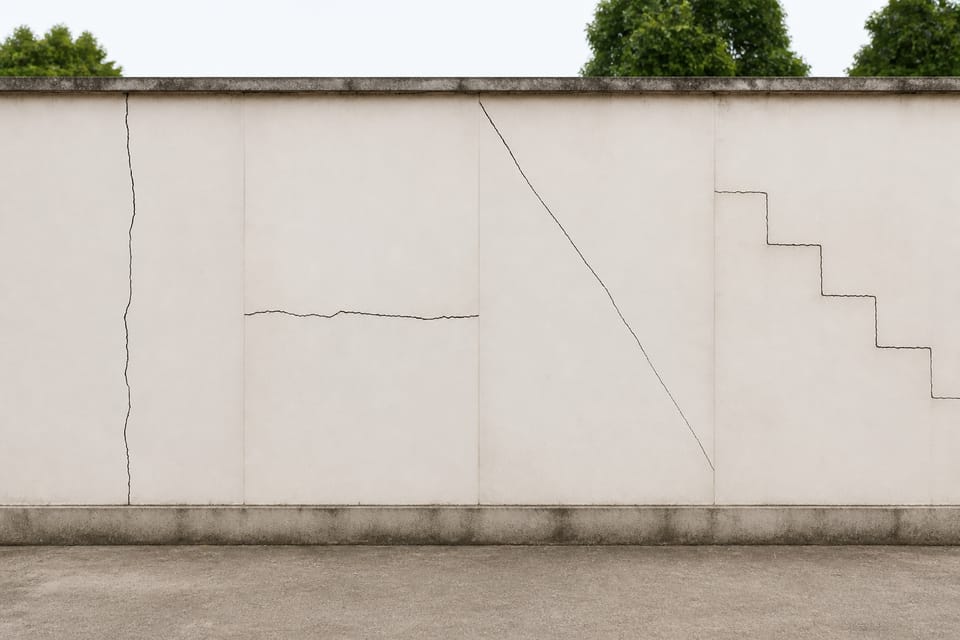
| Pattern | “Straight, toothed, stepped, map pattern or random”, and “vertical, horizontal or diagonal” (clause 1.5) |
| Shape | Uniform in width, or narrow at one end and gradually widening; at the surface only, or deeper (clause 1.5) |
| Width | A commonly known classification into thin, medium and wide (clause 1.5) |
Closely spaced fine cracks at the surface are sometimes called crazing. SP 25 also says that thin cracks, even closely spaced and greater in number, are less damaging than “a fewer number of wide cracks” (clause 1.6). That is a general rule about damage, not a verdict on any one crack.
What does each pattern commonly point to?
SP 25 clause 9.5 links patterns to causes. These are what a pattern commonly points to, not a diagnosis:
| Pattern | What SP 25 says it commonly points to |
|---|---|
| Vertical, in long walls, at corners or near openings | Thermal expansion, drying shrinkage, moisture movement or differential movement near an opening, often where movement joints are missing |
| Vertical, where RCC meets masonry | Different movement of concrete and masonry, usually thin, appearing months after construction |
| Horizontal, near the top storey | Thermal movement or deflection of the roof slab |
| Diagonal across a building corner, wider at the top | Foundation soil shrinking, as in shrinkable clay with a shallow foundation, with trees near the building making it worse |
| Diagonal over a large opening | Drying shrinkage of a concrete lintel cast in place |
| Random, in all directions | Foundation settlement or sulphate action in the foundation concrete, and “detailed investigations” are needed before remedies |
| Map pattern in concrete | Carbonation shrinkage or alkali-aggregate reaction, often years after construction; very fine map crazing in floors from excess water or poor curing |
SP 25 also says a crack along a reinforcing bar, with spalling, points to corroding steel. In practice (not from SP 25), a crack with spalling on a beam or column is a structural question for an engineer.
Why should an engineer judge?
SP 25 clause 9.1 says engineers are often required to look into the causes, and should observe “location, shape, size, depth, behaviour” and the history of the structure, including whether the cracks are “active or static”. Clause 9.3 lists questions such as where the crack starts and ends, whether it passes through the damp-proof course to the foundation, when it was first noticed and whether it has widened since, whether it opens and closes with the daily temperature, and whether it passes through the masonry units or follows the joints. Clause 9.6.1 says “no useful purpose is served in repairing cracks when these are still developing”. SP 25 names a tell-tale, a glass strip fixed across a crack that breaks if the crack widens, as a way to watch a crack (Appendix A).
IS 13935:2009 is a guide to earthquake damage in masonry buildings, not to ordinary house cracks, but it makes a related point: “even fine cracks in load bearing members which are unreinforced like masonry and plain concrete reduce their resistance in a large measure”, so all cracks must be located and marked and the critical ones repaired structurally (clause 6.1). Its damage grades (Annex A, Table 9) are by description, from hair-line cracks in very few walls to total collapse; it uses widths only for choosing repair methods.
What can I do myself? (practice)
This is practice, apart from the clauses named.
- Photograph the crack with the date and a coin or ruler for scale.
- Mark the ends with the date, and note when it appeared, such as after rain or in a hot spell.
- Look at both faces of the wall and at the floors above and below.
- Check whether doors or windows now stick.
When must it go to an engineer? (practice)
- A crack that goes through the wall, grows, or is wide enough to push a coin or pencil into.
- A step or offset across the crack, or a sloping floor.
- A crack on a beam, column or slab.
- Cracks with leakage, jamming doors or windows, or a wall that leans or bulges.
- A diagonal or horizontal crack that you cannot explain.
Ask the engineer what the likely cause is, whether it is still moving, whether it is structural, how long to watch it before repair, and what else to check, such as the foundation, drainage or leaks.
What mistakes should I avoid? (practice)
- Filling the crack and painting over it without finding the cause.
- Ignoring a crack that is growing.
- Treating width as the only verdict.
- Cutting the wall open to look.
- Blaming the mason with no evidence of the cause.
- Calling every new crack “settling”.
- Injecting epoxy before the cause is known.
Frequently asked questions
Are cracks in walls normal?
Some thin cracks from shrinkage are common, and SP 25 treats them as non-structural. A crack that grows, goes through the wall or sits on a beam or column needs an engineer.
Is a diagonal crack always structural?
No. SP 25 links diagonal cracks to causes from foundation soil shrinkage to a lintel’s drying shrinkage. An engineer finds which.
Is a hairline crack safe?
Not always. SP 25 says moisture can enter cracks and corrode steel. A hairline crack on a beam or column is different from one in plaster.
What crack width is safe?
SP 25 gives a width threshold for deciding whether a masonry crack needs repair (clause 9.6.2), not a safe width. Cause, pattern and growth decide whether a crack matters.
Can I fill a crack with putty?
Filling hides a crack and does not fix its cause. SP 25 clause 9.6.1 says to check first whether the crack has stabilised, because repairing cracks that are still developing serves no useful purpose.
Related guides
- Hairline cracks in plaster: causes and what to do
- Black cotton soil: why houses crack and what the engineer checks
- Expansion joints in a house: where walls and slabs need a gap
- Guniting, shotcrete and grouting: what each is and where it is used
- Crack filler vs putty vs white cement: what to fill a wall crack with
- Foundation settlement: uniform, differential and why houses crack
- How wall cracks are repaired: filling, injection and stitching
- Corrosion of steel in concrete: why bars rust inside a slab
This guide is general information. Read the disclaimer. Your structural engineer decides what a crack in your house means.
Sources
- SP 25(S&T):1984, Handbook on Causes and Prevention of Cracks in Buildings: clauses 1.2, 1.5, 1.6, 1.8, 6.5.1, 9.1, 9.2, 9.3, 9.5, 9.6.1, 9.6.2, 9.7 and Appendix A (page images read for clauses 1.2, 1.5, 1.6, 9.5.1(n) and 9.6.1; the other clauses from the text layer, with a few words possibly OCR-affected). It is a handbook, not a code. BIS lists it as in force, valid to 2030-03-31.
- IS 13935:2009, Seismic Evaluation, Repair and Strengthening of Masonry Buildings - Guidelines: clauses 1.1, 6.1 and Annex A Table 9 (clause 6.1 page image read; Table 9 text layer only). BIS lists it as in force, valid to 2029-08-31. It deals with earthquake damage, not ordinary house cracks.
Change log
- : Added Related guides link to newly published article(s): crack-filler-vs-wall-putty-vs-white-cement-what-to-fill-a-wall-crack-with, foundation-settlement-uniform-and-differential-settlement-and-why-new-houses-crack, how-wall-cracks-are-repaired-filling-grout-or-epoxy-injection-and-stitching. No other text changed. Approved by the reviewing engineer.
- : Added Related guides link to newly published article(s): guniting-shotcrete-and-grouting-what-each-is-and-where-it-is-used. No other text changed. Approved by the reviewing engineer (owner report, 2026-10-31).
- : Added Related guides link to newly published article(s): corrosion-of-steel-in-concrete-why-bars-rust-inside-a-slab-and-how-the-code-guards-against-it. No other text changed. Approved by the reviewing engineer.
General information only. It is not a structural design or professional advice. Ask a licensed structural engineer or architect to check your plans and site.