
Short answer
What are the types of roof tiles in India and which standards cover them? Machine-pressed Mangalore pattern tiles are covered by IS 654, handmade half round and flat country tiles by IS 13317, ridge and ceiling tiles by IS 1464, and burnt clay flat terracing tiles for flat roofs by IS 2690. No standard ranks them or gives a count per square metre, and the pitch and laps are the engineer's call. The type is chosen with the engineer, who checks the roof frame.
On this page (9)
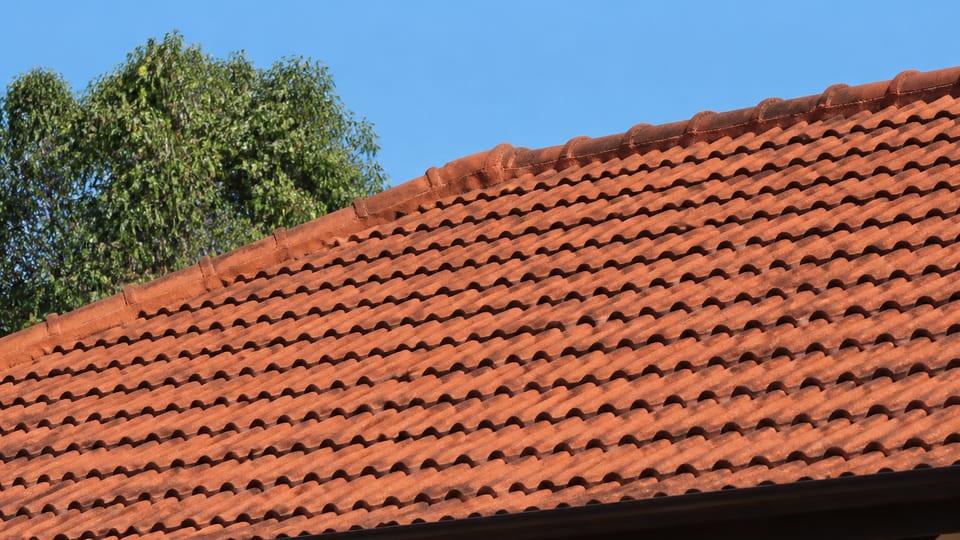
“Roof tile” covers four different things in an Indian house: the machine-pressed interlocking tile of the Mangalore pattern, the older handmade country tile, the ridge tile that caps the top of a pitched roof, and the flat terracing tile that finishes a flat concrete roof. Each has its own Indian Standard. This page names them, says what each standard covers, and says what none of them says. It gives no price, no brand, no pitch, no lap, no weight and no tiles per square metre: the standards give some laying and size figures for the maker and the engineer, and this page prints none of them. How a Mangalore tile roof is laid and kept is in Mangalore tile roof: how it is laid and how to maintain it; how tiles compare with sheets and a slab is in roof tiles vs metal sheets vs RCC slab: choosing a roof for a house.
What are the types and their standards?
| Type | IS code and edition | What the standard covers | Classes and test names |
|---|---|---|---|
| Mangalore pattern tile | IS 654:2023 | Cl 1: “machine-pressed clay interlocking roofing tiles of the ‘Mangalore pattern’” | Two classes, A and B, and three tile sizes (410 x 235, 420 x 250 and 425 x 260 mm, length by width). Tests: water absorption, wet breaking load, and permeability if the purchaser specifies it |
| Country tile, half round and flat | IS 13317:2023 | Cl 1: “handmade half round and flat country tiles made of clay” | Classes AA and A. Tests: water absorption and wet breaking load |
| Ridge tile and ceiling tile | IS 1464 (1992 edition read; IS 1464:2024 is in force) | Cl 1.1 (1992): “machine-pressed clay ridge and ceiling tiles”; cl 1.2 excludes tiles of irregular sizes, shapes and colour and those made to special requirements | Classes AA and A in the 1992 edition. Tests: water absorption, and breaking strength of ridge tiles |
| Terracing tile, machine made | IS 2690 (Part 1):2023 | Cl 1: requirements for machine-made burnt clay flat terracing tiles | Water absorption and flexural strength. Marked M for machine made |
| Terracing tile, hand made | IS 2690 (Part 2):2023 | Requirements for hand-made burnt clay flat terracing tiles | Water absorption and flexural strength. Marked H for hand made |
We print no limit for absorption, breaking load or strength. Those are for the maker’s test certificate and the engineer. The 1992 edition of the ridge and ceiling tile standard has been withdrawn and a 2024 edition is in force, so its details may have changed. IS 2858:1984 is the code of practice for laying Mangalore tiles, and it cites older editions of IS 654 and IS 1464.
How do I tell the types apart?
This is practice, apart from what the standards say.
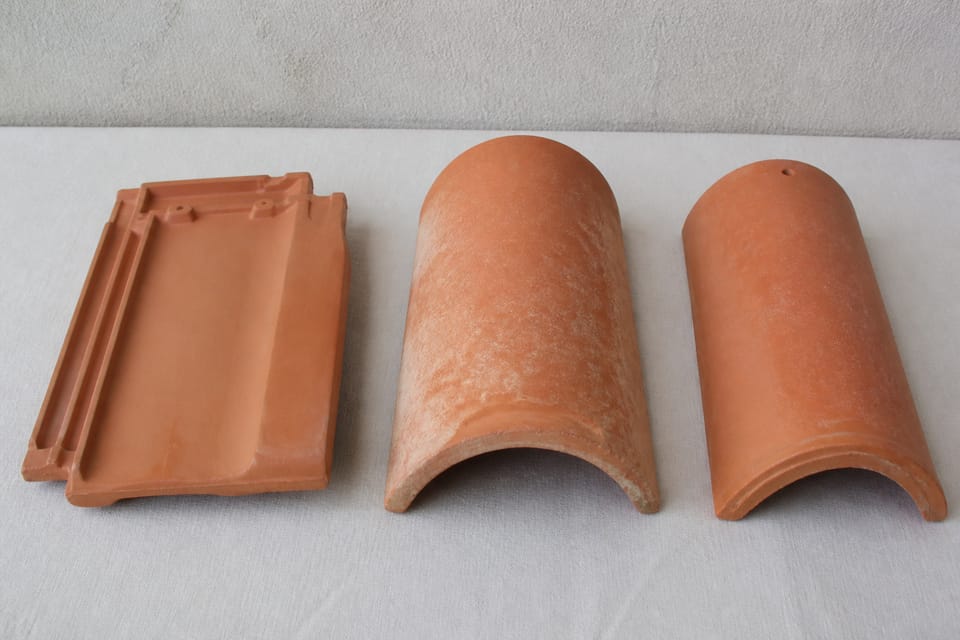
- Mangalore pattern tile. Machine-pressed and interlocking, with a flat-ish body, grooves and lugs that hook over the battens (reepers). The standard describes it as machine-pressed and interlocking.
- Country tile. Handmade, in a half-round (semicircular) or a flat shape (IS 13317). Half-round tiles are laid in alternating rows, one set with the hollow up as channels and another set over the joints, a method that differs from the interlocking pattern. Regional names such as khaprail, naliyada or naadan are everyday words, not terms of the standard.
- Ridge tile. A curved or angled cap for the ridge, the line at the top of the roof where two slopes meet. IS 2858 has the ridge and hip tiles bedded in mortar along their edges. It is a separate product from the covering tile.
- Ceiling tile. Covered by IS 1464 with the ridge tile.
- Terracing tile. A flat tile for the finish of a flat roof, not a covering for a slope. The Foreword of IS 2690 (Part 1) says it is “used for flat roof finishing over lime concrete or cement concrete base, and depending on the degree of protection necessary, they are used in two or more courses”.
Where is each used?
Mangalore tiles are associated with Kerala, Karnataka and Goa, as the Mangalore roof page notes, and country tiles are found in many regions. No standard we read says where to use which. A pitched tile roof and a flat concrete terrace are different design choices made with the engineer. A terracing tile finish is not a waterproofing layer: it protects and finishes the roof over the waterproofing. See Terrace leakage and waterproofing: methods, slope and ponding test, and How to make an RCC roof heat proof: insulation, paint and shade for the heat side.
What do the standards not say?
- Which tile is best. No standard ranks the types.
- Tiles per square metre. None gives a count. The maker’s data sheet gives the coverage for the tile you buy, and the supplier should state it in writing, with an allowance for breakage.
- A pitch we print. NBCS 2026 has no minimum pitch for tile roofs that we found. IS 2858 and IS 654 have their own pitch and lap figures, which this page and the Mangalore roof page deliberately do not print, and the engineer decides them for your roof.
- Cool or reflective clay tiles. We found no Indian Standard for a cool roof tile. A coating standard for roof tops exists (IS 17218:2019), which we did not read. Ask for a test certificate and a written warranty for any reflectivity claim.
- Weight. The tile type changes the load on the frame and walls. The engineer checks it.
NBCS 2026 notes on seismic design (clause 8.3.4.1.1, read in the text layer) that for pitched roofs “corrugated iron or asbestos sheets shall be used in preference to country, Allahabad or Mangalore tiles or other loose roofing units. All roofing materials shall be properly tied to the supporting members. Heavy roofing materials shall generally be avoided.” Whether it applies to your house is for your engineer.
What should I ask and check?
This is practice.
- Ask the engineer to check the roof frame and walls for the tile you choose before you order.
- Ask the supplier for the tile’s standard number, class and the maker’s test certificate, and for coverage per square metre in writing.
- Order a sample and a few spare tiles from the same lot. Colour varies between batches.
- On delivery, sort and reject chipped, cracked and warped tiles, and lay a few to check that the interlock fits. Do not mix profiles or makers on one roof.
- Ask who bedded the ridge tiles in mortar and how the bottom course is tied: see the Mangalore roof page.
- Look at the roof before each monsoon: see pre-monsoon checklist for your house and your building site.
What mistakes should I avoid?
These are practice unless a standard is named.
- Treating “terracotta” as one product: the types have different standards.
- Choosing a heavy tile without asking the engineer to check the frame.
- Ordering by arithmetic alone, with no allowance for breakage and from mixed batches.
- Laying terracing or china-mosaic tiles as if they were waterproofing.
- Dry-fixing ridge tiles instead of bedding them.
- Assuming a tile called “cool” is proven, without a certificate.
- Walking on tiles to inspect them.
- Citing IS 1464:1992 as the current ridge tile standard.
Frequently asked questions
What is the difference between a Mangalore tile and a country tile?
IS 654 covers machine-pressed interlocking Mangalore pattern tiles. IS 13317 covers handmade half-round and flat country tiles.
Which standard covers ridge tiles?
IS 1464, which also covers ceiling tiles. A 2024 edition is in force; we read the 1992 edition.
What are terracing tiles?
Flat burnt clay tiles for finishing a flat roof, under IS 2690 Part 1 (machine made) and Part 2 (hand made). They are not a roof covering for a slope and not waterproofing.
How many tiles do I need per square metre?
The standards give no count. Ask the supplier for the coverage of the tile you choose, in writing, and add an allowance for breakage.
Is there a standard for cool roof tiles?
We found none for clay roof tiles. Ask for a test certificate and a warranty.
Related guides
- Mangalore tile roof: how it is laid and how to maintain it
- Roof tiles vs metal sheets vs RCC slab: choosing a roof for a house
- How to make an RCC roof heat proof: insulation, paint and shade
This guide is general information. Read the disclaimer. Your engineer and your roofer decide the tile, the roof frame and the fixing for your house.
Sources
- IS 654:2023, Clay Roofing Tiles, Mangalore Pattern, Specification (fourth revision): clauses 1, 4 and 9, Table 1 and Table 2 (page images read). BIS lists it as in force, valid to 2028-12-31; NBCS 2026 notes a fifth revision under way.
- IS 13317:2023, Clay Roofing Country Tiles, Half Round and Flat Tiles, Specification (first revision): clauses 1, 4 and 10 and Table 2 (page images read). BIS lists it as in force, valid to 2028-04-30.
- IS 1464:1992, Clay Ridge and Ceiling Tiles, Specification (second revision): clauses 1.1, 1.2 and 4 (page images read). That edition is withdrawn; BIS lists IS 1464:2024 (third revision) as in force, valid to 2029-05-31, which was not readable.
- IS 2690 (Part 1):2023, Burnt Clay Flat Terracing Tiles, Part 1, Machine Made (third revision): Foreword and clauses 1 and 4 (text layer read; the Foreword quote from the text). BIS lists it as in force, valid to 2028-03-31. IS 2690 (Part 2):2023 covers hand-made tiles. SP 7:2026, National Building Construction Standards (NBCS) 2026, Part C Section 4 (Masonry) clause 8.3.4.1.1 on pitched roofs (text layer read; page not imaged). From an unofficial archive.org copy.
General information only. It is not a structural design or professional advice. Ask a licensed structural engineer or architect to check your plans and site.