
Short answer
What does IS 15450 cover for composite water pipes, and does it cover PEX-AL-PEX? IS 15450:2022 covers polyethylene-aluminium-polyethylene (PE-AL-PE) composite pipes with a welded aluminium tube, for hot and cold water supply. It excludes PEX-AL-PEX pipes. The standard does not state the purpose of the aluminium layer. Check the marking, the lot number and the maker's own fittings and joining method before you buy.
On this page (12)
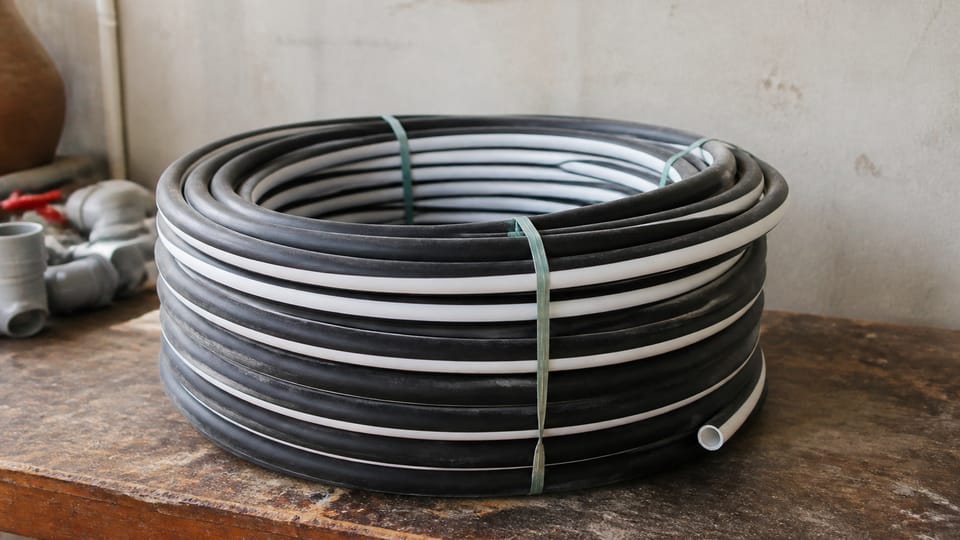
A composite pipe is a plastic pipe with a thin aluminium tube inside it, bonded between plastic layers. Sellers often call these pipes by a short name and sometimes give them a standard that they do not have. This page sets out what the Indian standard IS 15450 covers for the composite pipe, what it leaves out, and what an owner should check.
The page gives no pressure, temperature, size, bend radius or price. Those are in the standard or the maker’s data, and the engineer or plumber reads them there.
What does IS 15450 cover?
IS 15450:2022 is the Indian specification for polyethylene-aluminium-polyethylene composite pipes, meaning a PE inner layer, a welded aluminium tube, and a PE outer layer, bonded together with a polymeric adhesive. The scope is the conveyance of hot and cold water supply for domestic and industrial purposes, municipal water services including internal and external plumbing within buildings, air-conditioning and heating installations within buildings, and underground irrigation systems (clause 1.1).
The word “potable” does not appear in the standard. The scope does not say “drinking”, and “drinking water” appears only in the title of a reference standard, IS 10146, in clause 2. The standard does set safety rules for water contact: other constituents should not constitute a toxic hazard, shall not support microbial growth, and shall not give rise to an unpleasant taste or odour, cloudiness or discolouration of the water (clause 5.2.1.1). The migration test is in clause 11.3.
What does the standard leave out?
Three points matter for an owner.
- PEX-AL-PEX is excluded. The foreword and clause 1.3 say the standard excludes cross-linked polyethylene-aluminium-cross-linked polyethylene pipes. A pipe sold as PEX-AL-PEX is not covered by IS 15450. The standard does not name another Indian standard for it in the text read.
- The purpose of the aluminium layer is not stated. The standard says the welded metallic tube is itself capable of sustaining internal pressures (clause 1.2). Industry guidance says the layer blocks oxygen from entering the water and helps the pipe keep its shape, and that is guidance, not standard text.
- Gas is not in the scope. The scope does not mention gas. Do not use the pipe for gas unless the gas supplier and the applicable gas standard name it for that use.
What does the standard say, point by point?
| Point | What IS 15450:2022 says (wording only) | Clause |
|---|---|---|
| Scope | Hot and cold water supply for domestic and industrial purposes, municipal services, plumbing, air conditioning, heating and irrigation | 1.1 |
| Layers | PE inner and outer layers with a welded aluminium tube, bonded with a polymeric adhesive | Foreword and 1.1 |
| Exclusion | PEX-AL-PEX pipes are excluded | Foreword and 1.3 |
| Water contact | Other constituents should not be a toxic hazard, shall not support microbial growth, and shall not give an unpleasant taste or odour, cloudiness or discolouration | 5.2.1.1 |
| Marking | Manufacturer, designation and lot number on the pipe; two labels per coil | 14.1 to 14.2 |
| Fittings | Brass or other suitable material; must seal on the inside wall | 13 and A-2 |
Source: IS 15450:2022, clauses as listed, paraphrased in short. The values in the standard’s tables are not reproduced here.
How is the pipe marked?
IS 15450 asks for each pipe length to be marked at a set interval with the manufacturer’s name or trade mark, the pipe designation, and the lot or batch number (clause 14.1). The lot number carries the machine, shift, and the date of production (clause 14.1.1). Each coil should carry two labels with the supplier name, the manufacturing standard, the pipe designation, the coil weight and the coil length (clause 14.2). A BIS Standard Mark is optional; the pipe may be certified under the BIS scheme and may then carry the mark (clause 14.3).
What about the fittings?
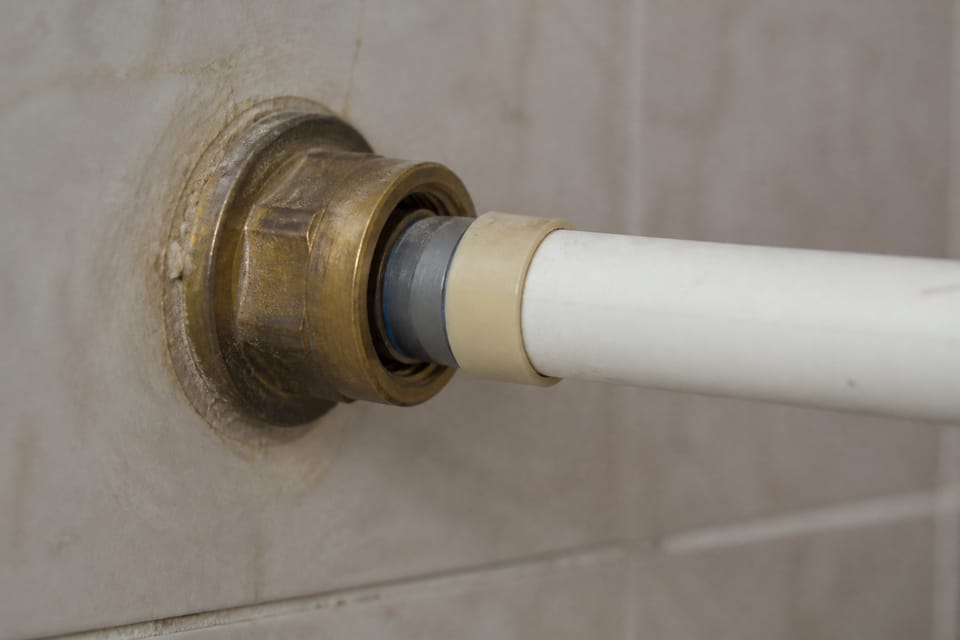
The standard does not cite a separate fittings standard. Its own Annex A, clause A-2, sets the requirements for the connectors and fittings used with the pipe. The fittings are of brass or another suitable material, and they must seal on the inside wall so that the water does not touch the pipe cross-section (clause 13 and A-2). The annex also sets burst, internal-pressure and pull-out tests for the fittings.
The joining method is set by the maker. Industry guidance says the joints are made in different ways in different systems, from crimp fittings with a press tool to compression fittings with O-rings. Use the maker’s fittings and the maker’s tool, and do not mix parts from different systems unless the maker says they go together. The mixing rule is practice, not standard text.
Inline image
Storage and coiling
Clause 9.3 limits how tightly the pipe may be coiled, as a multiple of its outside diameter. Annex A, clause A-1.4, says that non-black composite pipes must not be stored outdoors in the open sun for more than two years, and sets a limit on stack height. The coiling limit is a bending limit, and the page does not give it. Keep the pipe in the shade, and check the date on the coil label.
What should I check before buying?
These checks are practice, not steps in the standard.
- Ask which standard the pipe is made to. For a house water supply, ask for IS 15450 by its year. Ask whether the product is PE-AL-PE, not PEX-AL-PEX.
- Read the marking on the pipe. Check for the maker’s name, the designation and the lot number.
- Ask for the test certificate for the lot. A certificate for another lot does not apply.
- Ask for the maker’s fittings and the joining tool. Ask for the maker’s installation instructions in writing.
- Ask whether the maker says the pipe is for potable water, and ask for the certificate for that use. The standard’s water-contact rules are in clause 5.2.1.1, but the word potable is not in the standard.
What mistakes should I avoid?
These are practice points:
- Buying PEX-AL-PEX as if it were IS 15450. The standard excludes it.
- Mixing fittings from different makers. The joint is made to the maker’s design.
- Bending the pipe tighter than the maker allows, or without the bender the maker specifies.
- Storing the coil in the open sun for a long time.
- Using a pipe marked for water supply for a gas line.
- Trusting a marketing claim that a pipe is the best. The standard does not rank materials, and the choice depends on the maker, the marking and the job.
Frequently asked questions
Is PEX-AL-PEX covered by an Indian standard?
Not by IS 15450. The standard excludes it in its foreword and in clause 1.3. Ask the supplier which standard the PEX-AL-PEX product is made to, and do not assume it is covered.
Does the aluminium layer stop oxygen?
Industry guidance says it does, and that it helps the pipe keep its shape. IS 15450 does not state that purpose, so the claim is guidance, not a requirement of the standard.
Can I use this pipe for a gas connection?
IS 15450 does not cover gas. Ask the gas supplier which pipe and standard it accepts for the gas line.
Which pipe should I choose for my house?
The standard does not choose. The plumber and the engineer compare the options against the job, the standard marking, the fittings and the water quality. The types of pipes page sets out the pipe families.
Related guides
- Types of pipes in a house: water, drainage, rainwater and gas
- CPVC vs UPVC pipes: which one to use for home plumbing
- PPR pipe vs CPVC for hot and cold water: what each standard says
- GI pipe vs CPVC and UPVC for house plumbing: what to check on the pipe
This guide is general information. Read the disclaimer. Your plumber and your engineer decide the pipe for your house.
Sources
- IS 15450:2022, Polyethylene-Aluminium-Polyethylene Composite Pressure Pipes for Hot and Cold Water Supplies (first revision). Scope clause 1.1, clause 1.2, clause 1.3 (exclusion of PEX-AL-PEX, also in the foreword), clauses 4, 5.2.1.1, 5.4, 6, 8, 9.3, 11.3, 11.8, 13, 14.1 to 14.3 and Annex A clauses A-1.4 and A-2 read in words. No pressure, temperature, dimension or price values are reproduced. BIS record valid to 2027-03-31; the 2004 edition is withdrawn.
- Industry guidance on PEX-AL-PEX construction and the reasons for the aluminium layer (Plastics Pipe Institute). Guidance from a US industry body, not an Indian standard.
General information only. It is not a structural design or professional advice. Ask a licensed structural engineer or architect to check your plans and site.