
Short answer
What is the difference between a floor trap and a nahani trap? A floor trap is the standard term for a trap set in a floor that takes waste water from a bathroom or wash area. Nahani is an older Indian word for a floor drain with a grating, and IS 1172 names it once. The codes give a 50 mm water seal for floor traps. 'Multi-floor trap' is a trade name that no standard uses.
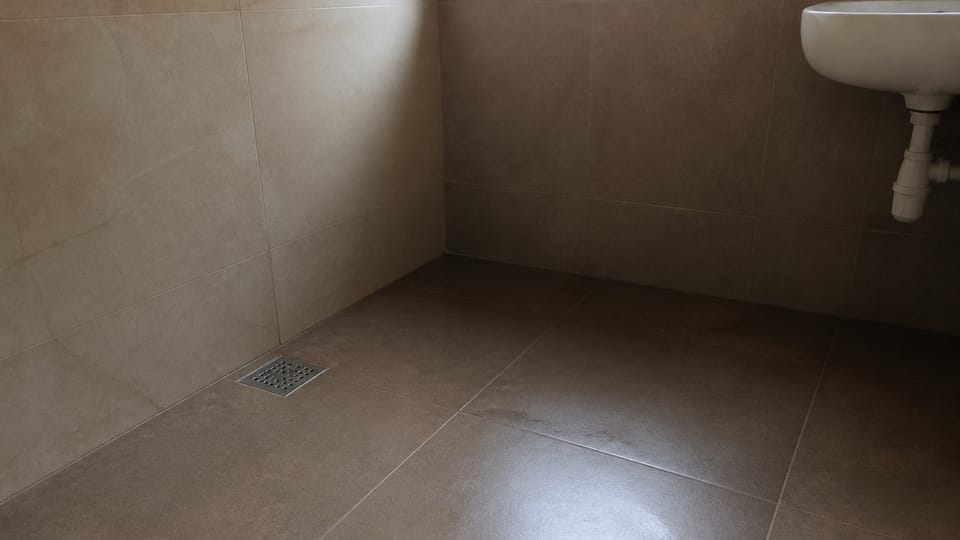
On this page (9)
Bathroom and wash-area drains in India go by several names: floor trap, nahani, multi-floor trap, and the smell cap or jali that sits on top. Some of these are standard words and some are shop words. This page separates them, quotes the Indian codes where they speak, and says plainly where they do not. It gives no price, no brand and no ranking.
What is a floor trap?
“Floor trap” is a standard term. A trap is “a fitting or device so designed and constructed as to provide, when properly vented, a liquid seal which will prevent the back passage of air without materially affecting the flow of sewage or waste water through it” (NBCS 2026, clause 2.98; IS 5329 clause 2.23 says much the same). The water left in the trap is the water seal (clause 2.106 of NBCS 2026).
For a floor trap, the codes give one figure you can quote. NBCS 2026 clause 4.5.2.4.2 lists the depth of water seal for water closets, floor traps and other fixtures: water closets 50 mm, floor traps 50 mm. IS 5329 gives the same 50 mm for floor traps in clause 6.9.2(c) and Table 2, for two-pipe, one-pipe and single-stack systems. Both also say that when a connection is made through a floor trap, no separate seal is needed for the fixtures that drain into it.
The codes do not give one outlet size for a floor trap that both editions agree on: IS 5329 Table 1 and NBCS 2026 give different figures, and this page does not state either. If you need a size for a job, ask your plumber and check the edition of the standard they are using.
What is a nahani trap?
Nahani is an older Indian word for a bathroom or wash-area floor drain: a grating over a water seal. It is not defined in the glossary of water supply terms. The only standard read for this page that uses it is IS 1172, which says a dwelling with individual conveniences should have “one nahani or sink either in the floor or raised from the floor with a tap” (clause 5.2.1(c)).
So nahani is a real word in the code, but the code does not describe its construction. A nahani is in practice a floor trap with a grating, and the codes’ rule for a floor trap applies to it: a 50 mm seal.
What is a multi-floor trap?
“Multi-floor trap” is a trade name. No Indian standard read for this page uses it, and none describes a trap by that name. Some sellers use “multi trap” for a fitting with more than one inlet, so that several fixtures can drain through one trap. Ask the seller to describe the inlets and the seal. Do not assume a trade name means a standard rating.
What about the smell cap and the jali?
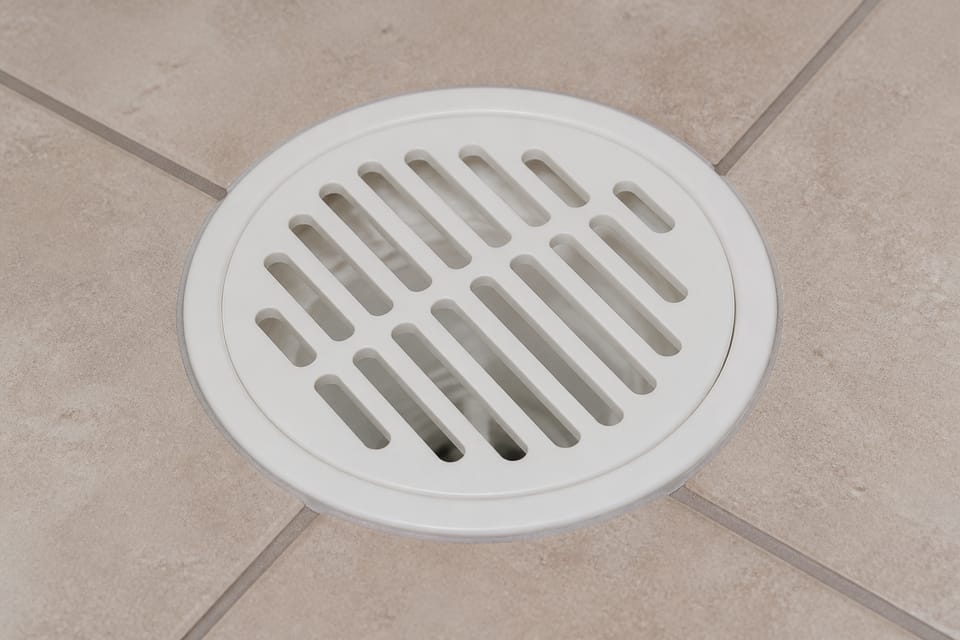
The smell cap, the anti-odour insert and the jali (the grating or cover) are trade words. No standard read for this page gives a size, a shape or a rule for them. Their job is to keep out debris and reduce smell. Whether a given cap or jali is good enough is a matter for the maker and your plumber.
How do the three names compare?
| Name | Standard or trade | What the codes say | Where it is used |
|---|---|---|---|
| Floor trap | Standard term | 50 mm water seal (NBCS 2026 cl 4.5.2.4.2; IS 5329 cl 6.9.2(c)) | Bathroom, wash area, floor drain |
| Nahani | Older Indian word; in IS 1172 | Named once, as a floor or raised sink drain with a tap (cl 5.2.1(c)) | Bathroom or wash area in older houses |
| Multi-floor trap | Trade name | No standard | Seller’s term for a multi-inlet fitting |
What mistakes should I avoid?
- A dry trap. A trap that is rarely used can lose its water seal, and the smell comes back. The codes say the seal must be kept; they do not list the causes. The practice is to pour water down a rarely used floor trap. This is practice.
- A trap with no vent. A trap can be sucked dry or pushed out if air cannot reach it. This is practice, with the code rule in the next sentence. IS 5329 clause 6.7.1 says the traps of baths, wash basins and sinks shall be ventilated “whenever such ventilation is necessary to preserve the seal of the trap”. It does not name floor traps; venting a floor trap is practice on the same principle. The vent pipe page explains why.
- A blocked grating. Hair and soap build up under the jali. IS 5329 clause 6.5.3 asks that traps be accessible and provided with cleaning eyes or other means of cleaning. Cleaning the grating is practice.
- A floor drain with no trap. NBCS 2026 clause 4.5.3.6.2.1 says floor drains “shall connect into a trap so constructed that it can be readily cleaned”.
- Buying by the trade name. Ask for the seal depth and the outlet size in writing, and for the standard the trap is made to.
Frequently asked questions
Is a nahani trap the same as a floor trap?
In practice, yes: both are a floor drain with a grating over a water seal. The codes use the term floor trap. Nahani is an older word that IS 1172 uses once.
What seal depth does a nahani trap need?
The codes give 50 mm for floor traps (NBCS 2026 cl 4.5.2.4.2; IS 5329 cl 6.9.2(c)). No Indian standard read for this page gives a separate figure for a nahani.
Is a multi-floor trap allowed?
No standard read for this page forbids or allows a multi-floor trap, because the term is not in the codes. Ask the seller for the standard the fitting is made to and for its seal depth.
Which trap do I need for a bathroom floor?
Ask your plumber. The codes require a floor drain to connect into a trap that can be cleaned, and they give a 50 mm seal for a floor trap. The size and layout depend on the house.
Related guides
- Bathroom drain smell and the nahani trap: causes and fixes
- Gully trap: what it is and where it goes
- P-trap vs S-trap vs Q-trap vs bottle trap: which goes where
- IS 1172 explained: water supply and sanitation basics for a building
This guide is general information. Read the disclaimer. Your plumber decides the trap, the seal and the outlet for your house, and the standard named on the fitting is the reference.
Sources
- IS 5329:1983, Code of Practice for Sanitary Pipe Work above Ground for Buildings: clause 2.23 (trap), 2.24 (water seal), 6.5.1 and 6.5.3 (traps and cleaning), 6.7.1 (venting to keep the seal), 6.9.2(c) and Table 2 (floor traps, 50 mm seal). Read from the archive copy; BIS record valid to 2027-02-28.
- IS 1172:1993, Code of Basic Requirements for Water Supply, Drainage and Sanitation (fourth revision): clause 5.2.1(c) ('One nahani or sink either in the floor or raised from the floor with a tap').
- IS 10446:1983, Glossary of Terms Relating to Water Supply and Sanitation: clause 2.149 (deep seal trap), 2.151 (depth of water seal), 2.658 (trapped gully). No entry for floor trap, nahani or multi-floor trap.
- SP 7:2026, National Building Construction Standards 2026 (NBCS 2026), Part E Section 2, Drainage and Sanitation: clause 2.98 (trap), 4.2.4.1, 4.5.2.4.2 (depth of water seal: water closets 50 mm, floor traps 50 mm), 4.5.3.6.1 (protection against siphonage), 4.5.3.6.2.1 (floor drains into a trap). Read from an archive copy of the 2026 volume; check against the BIS copy before publication.
Change log
- : Added Related guides link to newly published article(s): is-1172-explained-water-supply-and-sanitation-basics-for-a-building. No other text changed. Approved by the reviewing engineer (owner report, 2026-10-31).
General information only. It is not a structural design or professional advice. Ask a licensed structural engineer or architect to check your plans and site.