
Short answer
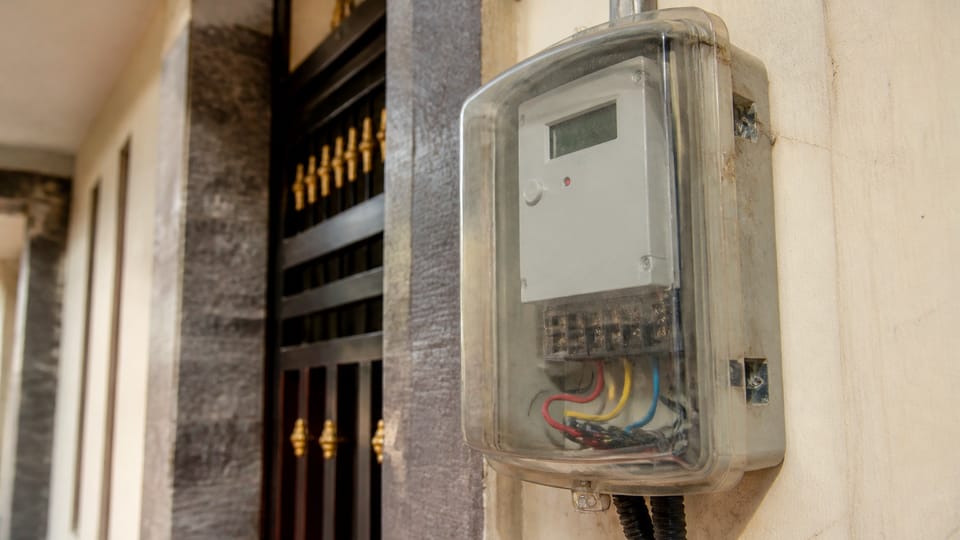
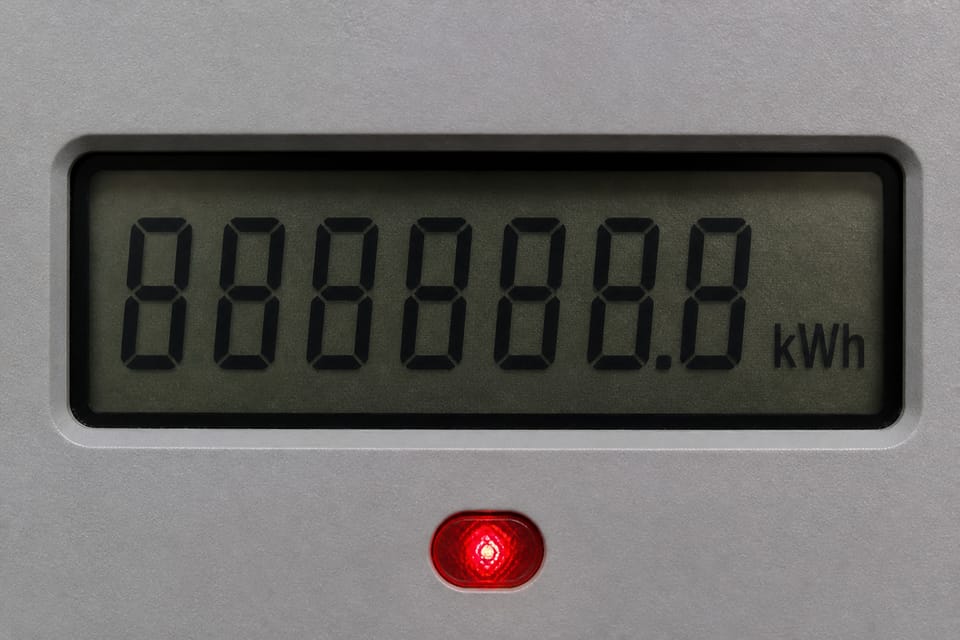
How do I read my digital electricity meter? IS 13779:2020 says a static meter's principal unit is the kilowatt-hour (kWh), shown on a register or electronic display, and it gives windows for reading the display: read the energy figure through the window and do not open the cover. When one display shows several values, each is identified. The blinking light is an operation indicator, a visible signal that the meter is working. The standard gives owners no blink test. Ask your DISCOM about the screens.
On this page (12)
- What is the number on the display?
- What are the other screens?
- What is the blinking light?
- What is printed on the meter plate?
- What do the standards not say?
- How do I take a reading? (practice)
- What should I ask the DISCOM or electrician? (practice)
- What mistakes should I avoid? (practice)
- What can I check myself? (practice)
- Frequently asked questions
- Related guides
- Sources
Many homes now have a digital static meter with a small display, a button and a blinking light. This page explains, from IS 13779:2020, what the main number is, what the display and the blinking light are, and what is printed on the meter plate. It gives no tariff, bill amount or DISCOM rule, and no test to judge a meter’s accuracy: the standard has none for owners, and a doubt goes to the DISCOM for a meter test. It covers static kWh meters only; smart meters follow a different standard (IS 16444), which we did not read. For where the meter sits and how high, see your electrician and your DISCOM; this page does not cover location.
What is the number on the display?
IS 13779:2020 defines a watthour meter as an instrument that “measures and registers active energy in watthours or in suitable multiples thereof” (clause 3.1.1) and a static meter as one in which current and voltage act on solid-state electronic elements (clause 3.1.2). Clause 6.10 says the information can be shown on an electromechanical register or an electronic display, and that “the principal unit for the measured values shall be kilo watthour (KWh) or the mega watthour (MWh)”. Clause 3.2.6 defines the register as the memory and display that store and show the information.
So the energy figure is in kWh. In practice, one unit on your bill is one kWh and the figure counts up as energy is used; check that on your own bill.
What are the other screens?
When one display shows several values, the standard says it must be possible to display all of them and “identification of each tariff/parameter shall be available” (clause 6.10). It also says the current tariff shall be indicated, and that when the meter is not energised, the electronic display need not be visible: a dark display during a power cut is not by itself something this standard treats as a fault. The standard does not list the screens a meter must show or the number of digits of the main display, so do not guess which one is the billing figure: ask your DISCOM which screen is.
What is the blinking light?
| Term in IS 13779 | What the standard says |
|---|---|
| Operation indicator (clause 3.2.2.2) | “A device which gives a visible signal of the operation of the meter. The test output may also act as operation indicator.” |
| Test output (clause 3.2.2.1) | “A device at which output from the measuring element is available for testing of the meter,” in the form of pulses or a high resolution register |
| Output device (clause 6.11) | The meter has a test output accessible from the front, and the operation indicator, if fitted, must be visible from the front |
So the blinking light is a visible sign that the meter is operating, and it may be the test output as well. The standard does not say what a blink rate means for an owner, and it does not give a rule that a faster or slower blink shows a fault. In practice, the pulse rate follows the power drawn when the light is the test output, so a faster blink with more load is normal; do not use the blinking to judge accuracy.
What is printed on the meter plate?
Clause 7.1 lists what every meter bears, including: the manufacturer’s name or trade mark, type, number of phases and wires, serial number and year of manufacture, reference voltage, the principal unit in which the meter reads (for example kWh), the current marking, the reference frequency, the meter constant “for example in the form; X Wh/imp or X imp/kWh”, the class index, and the country of manufacture. Some items may be on an external plate and others on a name plate “preferably placed within the meter”, so not all of them may be visible without opening the cover. The marking is to be “indelible, distinct and readable from outside the meter”. Meters “may be marked with the Standard Mark” (clause 7.1.1). The standard does not ask the owner to use the meter constant or the class index for anything.
What do the standards not say?
- How to read a bill, or how to turn two readings into units used.
- Tariffs, or typical household use.
- An owner test of accuracy, or any blink-count test.
- A list of the display screens, or the number of digits of the main display.
- How to take a reading: clause 6.3 only provides windows “for reading the displays and observation of the operation indicator”.
How do I take a reading? (practice)
This is practice, apart from the clauses named.
- Read the energy figure through the window, and note the date and time. Photograph it so there is a record.
- To find use between two dates, note the reading on each date and subtract. If the meter or bill shows a multiplier, ask the DISCOM how it applies.
- A decimal digit, often after a dot or in red, is a fraction of a unit; ask your DISCOM how the bill treats it.
- Do not open the cover or touch the seals.
What should I ask the DISCOM or electrician? (practice)
- What do the screens on my meter mean, and which one is the billing kWh?
- Is there a multiplier on my meter?
- How do I request a meter test if I doubt the reading?
- Who owns the meter and its seal?
What mistakes should I avoid? (practice)
- Confusing kW and kWh: kW is the rate of use, kWh is the energy used over time.
- Reading the wrong screen, such as voltage or current, as the usage.
- Treating the decimal digit as a whole unit.
- Opening or removing the meter cover or seal.
- Trusting a blink count as proof of a fault.
- Assuming a fault because the meter moves with appliances off: a fridge, router or inverter charger may still be drawing energy; ask your electrician to review the circuits.
What can I check myself? (practice)
That the display is readable and steady, that the cover is not cracked and the seal is not broken, and that you have a dated photo of the reading. For the safety of the circuits behind the meter, see MCB vs RCCB vs RCBO: what each protects against at home.
Frequently asked questions
Is one unit the same as one kWh?
IS 13779 says the principal unit is the kilowatt-hour. On the bill, one unit is one kWh in practice; check your bill.
What is the blinking red light?
An operation indicator: a visible signal that the meter is working (clause 3.2.2.2). It may also be the test output.
Does a faster blink mean the meter is faulty?
The standard gives no such rule. The standard gives no such rule. In practice a meter pulses faster when more power is being drawn. For a doubt, ask the DISCOM for a meter test.
Why is the display blank?
IS 13779 says that when the meter is not energised the electronic display need not be visible. If your meter is energised and the display is blank, ask the DISCOM.
What if the bill reading differs from the meter?
Send your dated photo to the DISCOM and ask for the reading to be checked and, if needed, a meter test.
Related guides
- MCB vs RCCB vs RCBO: what each protects against at home
- Earthing for a house: what it is, earth vs neutral, and why it matters
- Electrical work in a house build: stages and inspection points
- kW vs kVA vs kWh: what each unit means on a meter, inverter and bill
This guide is general information. Read the disclaimer. Your DISCOM and licensed electrician decide how your meter is read and tested.
Sources
Change log
- : Added Related guides link to newly published article(s): kw-vs-kva-vs-kwh-what-each-unit-means-on-a-meter-an-inverter-and-a-bill. No other text changed. Approved by the reviewing engineer.
General information only. It is not a structural design or professional advice. Ask a licensed structural engineer or architect to check your plans and site.