
Short answer
Is a septic tank or a small sewage treatment plant better for a house? Neither is better in every case. A septic tank with a soak pit suits many single houses without a sewer, if the soil lets the liquid soak away. A small STP needs power, a trained operator and regular sludge removal. Your local body and state pollution control board decide what is allowed for your plot, so ask them and your engineer before you choose.
On this page (10)
- What does each system do?
- What does the national manual say each one is for?
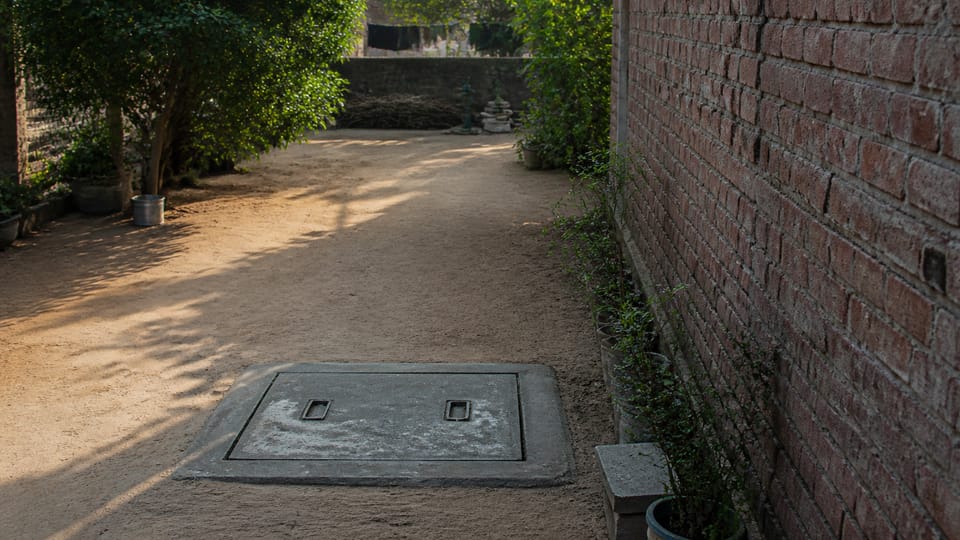
- What does a septic tank need from its owner?
- What does a small STP need?
- Do I need permission for either?
- Where does the liquid go if there is no soak pit?
- What mistakes should I avoid?
- Frequently asked questions
- Related guides
- Sources
Many houses outside a city sewer use a septic tank. Some owners are also offered a small sewage treatment plant, which is sold as the modern choice. This page sets out what each system does, what the national manual says about each, and what you must keep doing once it is built. It gives no prices, running costs, plant sizes or tank volumes. Those depend on your plot, your local rules and an engineer’s design.
What does each system do?
| Septic tank with soak pit | Small sewage treatment plant (STP) | |
|---|---|---|
| What it does | Settles solids and partly breaks them down without air. The liquid that leaves still needs disposal in the soil | Treats the sewage in stages, usually with air and a blower, and gives a cleaner outflow |
| Power | Needs none for the tank itself | Needs power for the blower or pumps |
| Operator | The owner keeps it working. A contractor empties it | A trained operator, under a service contract or the owner, runs and checks it |
| Sludge | Removed by a municipal utility or private contractor and taken to a designated facility | Also needs regular removal; ask where it goes |
| Where the outflow goes | To a soak pit, dispersion trench or other approved disposal | To a permitted outlet, reuse or disposal as the approval says |
The CPHEEO manual notes that a septic tank on its own does only part of the job. Its liquid still carries pathogens and “can only be discharged into soak pits” because of this partial treatment. So a septic tank is one half of a system, not a finished one. The soak pit is covered on its own page: soak pit vs septic tank.
What does the national manual say each one is for?
The CPHEEO manual recommends septic tanks “only for individual homes and small communities and institutions, whose contributory population does not exceed 300.” For larger communities, septic tanks “may be adopted with appropriate effluent treatment and disposal facilities.” The manual also calls on-site systems “interim measures till a decentralised or a full sewerage system is implemented.”
The 2020 CPHEEO and MoHUA advisory says the same thing from another side: a house that is not served by a piped sewer “can adopt on-site sewage treatment systems.” So the advisory says a house not served by a piped sewer “can adopt on-site sewage treatment systems,” and a septic tank is a common choice. It is not a permanent answer for a whole town, and the manual expects the wider system to replace it where one comes.
What does a septic tank need from its owner?
The 2020 advisory is direct: “Responsibility for operation and maintenance of septic tank & soak pit lies with the owner of the property.” The owner does not need to do the emptying, but the owner must make sure it happens.
- Desludging. The CPHEEO manual says yearly desludging is desirable. If that is not feasible or economical, the tank should be cleaned “at least once in two - three years, provided the tank is not overloaded due to use by more than the number of persons for which it is designed.” So the number of people living in the house matters, not only the calendar. IS 2470 (Part 1), clause 5.1, gives a shorter figure for small domestic tanks: they “may be cleaned at least once in 2 years” for economic reasons.
- Who empties it. The advisory says periodic desludging needs a municipal utility or a private contractor, and that the septage must go to “a designated facility like Faecal Sludge & Septage Treatment Plant (FSTP) or Sewage Treatment Plant (STP).”
- How it is emptied. The advisory says “the septic tanks should not be fully emptied.” Ask the contractor to follow this.
- Where the sludge goes. The CPHEEO manual says spreading sludge on the ground nearby “should not be allowed.”
The advisory also warns about what usually goes wrong. Such systems “often don’t follow the norms about its size and construction quality,” and in most cases soak pits “either do not exist or silted badly to perform any function and discharged in open drains.” Ask your builder to show you the soak pit when the tank is built, not only the tank.
What does a small STP need?
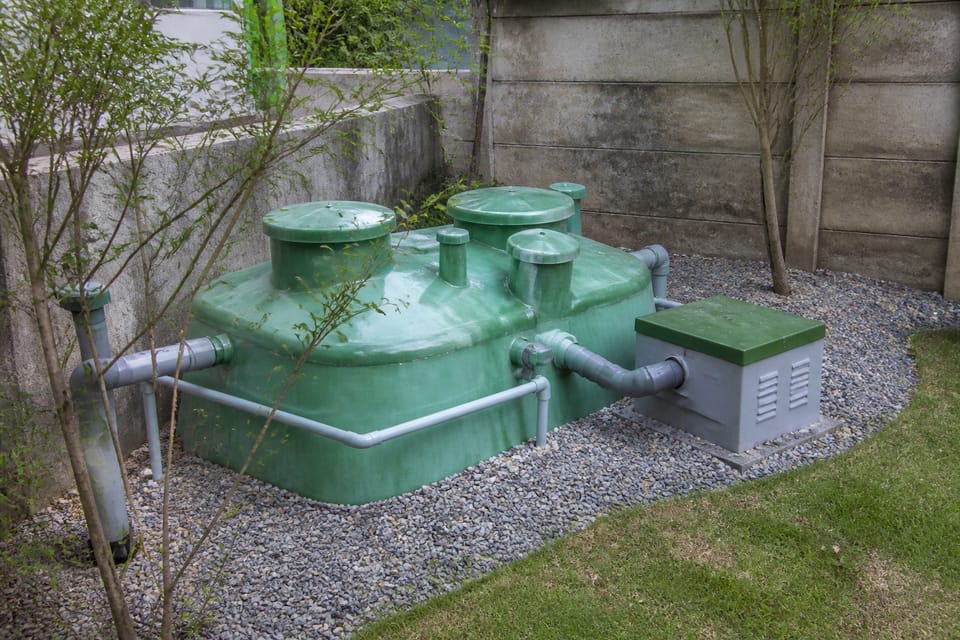
The manual says improved septic tanks, such as baffled tanks or anaerobic filters, “can lessen the burden of organic pollution without any extra energy cost,” but “cannot bring down the BOD and TSS levels up to the national effluent discharge standards.” The aerobic step that could do so, such as contact aeration, is “at the expense of electrical power requirement for 24×7 operating air blower with standby equipment and standby power.”
The advisory adds a warning from practice: “Even simplest of STPs/FSTPs do not function properly due to poor O & M and lack of skilled manpower.”
Before you choose an STP, ask:
- Who will run it after the builder leaves, and is there a written manual and a service contract?
- What happens during a power cut, and is there a backup?
- Where does its sludge go, and who removes it?
- Is it sized for the number of people who will really live in the house?
Do I need permission for either?
The Water (Prevention and Control of Pollution) Act, 1974 says that no person may, without the previous consent of the State Pollution Control Board, establish a “treatment and disposal system” that is likely to discharge sewage “into a stream or well or sewer or on land.” The Act does not say in its text whether a single house’s septic tank or small plant is caught. Each State Board decides how its rules apply, and local bye-laws add their own conditions.
So check two things before you build: the local body’s rule for your plot, and whether the State Board needs to give consent for the system you choose. Your engineer or the local body can tell you which rule applies.
Where does the liquid go if there is no soak pit?
The manual describes what happens when effluent is put into an open drain. It says the effluent “is commonly discharged to open stormwater drains,” which causes “unsightly conditions, eutrophication, odour, vector and water related diseases.” The manual allows a lined channel along a storm drain only as an interim measure, until a proper sewer is laid.
What mistakes should I avoid?
These are practice points, not code rules.
- Treating the septic tank as the whole system. A tank without a soak pit, dispersion trench or other approved disposal leaves the outflow unchecked.
- Choosing an STP only because it sounds better. Without power, an operator and a sludge plan, a plant may stop working properly.
- Buying a plant with no paperwork. Ask for the approval or consent letter and the operating manual before you pay.
- Letting the tank be emptied to the bottom. The advisory says septic tanks should not be fully emptied.
- Assuming “maintenance-free”. Both systems need inspection, desludging and a record of who did it.
Frequently asked questions
Is an STP better than a septic tank?
Not always. The national manual sees septic tanks as acceptable for individual homes and small groups of up to 300 people, and as an interim step. An STP gives a cleaner outflow but depends on power, a skilled operator and sludge removal. The right choice depends on your plot, your soil and what your local rules allow.
Does a septic tank need a soak pit?
The manual says the effluent from a septic tank can only be discharged into soak pits, because the tank does only partial treatment. The soil test and the rules for your area decide whether a soak pit can be used. Read the soak pit page for the details.
How often should a septic tank be emptied?
The CPHEEO manual says at least once in two to three years where yearly cleaning is not feasible, provided the tank is not overloaded. A tank used by more people than it was designed for may fill faster. Your local body may set its own rule.
Can treated water from an STP be used for the garden?
Only if the plant’s approval and test reports say the outflow is fit for that use. Ask for both before you plan the garden water supply.
Do I need a licence or consent for a septic tank?
The Water Act makes prior State Board consent a legal requirement for a system likely to discharge sewage. How it applies to a single house is set by each State Board and by local bye-laws, so check with them.
Related guides
- Soak pit vs septic tank: what each does and when a soak pit works
- Septic tank size: how it is worked out
- Soil test before building a house
This guide is general information. Read the disclaimer. Your local body and your engineer decide what is allowed for your plot and your house.
Sources
- CPHEEO, Manual on Sewerage and Sewage Treatment Systems, Part A, Chapter 9: On-site Sanitation (MoHUA, 2013). Sections 9.1, 9.1.2.3, 9.3.4, 9.3.4.3 and 9.3.4.5.
- CPHEEO and MoHUA, Advisory on On-Site and Off-Site Sewage Management Practices (May 2020). Sections 4.1, 4.1.1, 4.2 and Chapter 7.
- IS 2470 (Part 1):1985, Code of Practice for Installation of Septic Tanks, Part 1: Design, Criteria and Construction (second revision, reaffirmed 2001), clause 5.1. Current BIS status not yet confirmed.
- IS 2470 (Part 2):1985, Code of Practice for Installation of Septic Tanks, Part 2: Secondary Treatment and Disposal of Septic Tank Effluent (second revision, reaffirmed 2001). Current BIS status not yet confirmed.
- The Water (Prevention and Control of Pollution) Act, 1974, section 25(1) (prior consent of the State Board).
General information only. It is not a structural design or professional advice. Ask a licensed structural engineer or architect to check your plans and site.