
Short answer
What is the difference between sewage, sullage and storm water? IS 1742 defines sullage (waste water) as the discharge from wash basins, sinks and similar appliances that does not contain human excreta. IS 2470 defines sewage as the liquid waste of a household or community including human excreta. NBCS 2026 defines surface water as natural water from the ground surface, paved areas and roofs. IS 1742 says that, generally, rain water is dealt with separately from sewage and sullage.
On this page (9)
People use “drainage”, “sewage”, “sullage” and “storm water” as if they meant one thing, and the confusion shows up in plans, in quotes and in the choice of a septic tank or a soak pit. The Indian Standards define the words, though not always the same way. This page gives the definitions as printed, says where the sources differ without picking a winner, and then says what it means for the pipes of a house. It gives no pipe size, gradient or flow. For how the pipes of a house are laid out, see house drainage system explained: soil, waste and rainwater pipes.
What do the main words mean?
| Term | What the standard prints |
|---|---|
| Sullage, waste water | IS 1742 2.45, IS 2470 2.11 and IS 10446 2.704: “The discharge from wash basins, sinks and similar appliances, which does not contain human excreta.” NBCS 2026 2.104 reads the same but adds “or animal excreta”, and 2.91 sends “sullage” to that entry |
| Sewage | IS 2470 (Part 1) 2.5: “The liquid waste of a household or community including human excreta.” IS 10446 2.531: “Water borne human, domestic and form waste. It may include trade effluent, subsoil water or surface water.” (The word “form” is printed so in our copy.) IS 1742 and NBCS 2026 have no definition of their own |
| Black water | NBCS 2026 2.10: “Waste water from water closet, bidet, urinals, kitchen sink and bed pan sink or similar contaminated sources.” |
| Grey water | NBCS 2026 2.49: “Waste water that has not encountered water closet, kitchen sink waste, or similar contaminated sources.” It includes waste water from bathtubs, showers, lavatories, clothes washers, dishwashers and domestic reverse osmosis reject water |
| Storm water, surface water | NBCS 2026 2.94 and IS 10446 2.619: “Natural water from the ground surface, paved areas and roofs.” IS 2470 2.7: “The run-off from precipitation and other water that flows over surface of the ground.” Storm water has no entry of its own in NBCS 2026, IS 1742 or IS 10446; it appears inside the entry for a surface water drain (“A drain conveying surface water including storm water”, IS 1742 2.40, NBCS 2.95 and IS 10446 2.620) |
| Soil waste | IS 1742 2.36: “The discharge from water closets, urinals, slop sinks, stable or cowshed gullies and similar appliances.” NBCS 2.87 reads “slop hopper, stable yard or cowshed gullies” |
| Drain | NBCS 2.33: “A conduit, channel or pipe for the carriage of storm water, sewage, waste water or other water-borne wastes in a building drainage system.” IS 1742 2.12 says “storm water, sewerage or other used water” |
| Sewer | NBCS 2.81 and IS 1742 2.32: “A pipe or conduit, generally closed, but normally not flowing full for carrying sewage and/or other waste liquids” (NBCS) or “sewage or other waste liquids” (IS 1742) |
Where do the sources differ?
We do not reconcile them. Each is stated as printed, and the standard your authority or engineer follows decides.
- Excreta. IS 1742, IS 10446 and IS 2470 define waste water as having no “human excreta”. NBCS 2026 says “human or animal excreta”.
- The kitchen sink. NBCS 2026 lists the kitchen sink under black water (2.10) and excludes “kitchen sink waste” from grey water (2.49), while its waste water (sullage) entry covers “sinks and similar appliances” (2.104). IS 1742, IS 2470 and IS 10446 also say “sinks and similar appliances”; none says “kitchen sink” in the sullage entry. So within NBCS 2026 itself, where a kitchen sink falls is not clear.
- Sewage and grey water. NBCS 2026 2.96 writes “foul water (sewage) (black and grey water)”, which reads as treating sewage as black and grey water together (our reading). IS 2470 3.1.2 says septic tanks are “normally … designed for foul sewage (faecal matter and urine)”, with sullage handled separately.
- Surface water in sewage. IS 10446 says sewage “may include trade effluent, subsoil water or surface water”, while IS 2470 3.1.1 says “Surface and subsoil water should not find way into the septic tank.”
- A building drain. NBCS 2026 classes building drains as combined (carries sewage and storm water or other drainage, 2.16), sanitary (sewage and sullage only, 2.17) and storm (storm water or other drainage but no sewage or sullage, 2.18). IS 5329 2.6 defines the building drain as the part of the lowest horizontal piping of a drainage system that receives the discharge from pipes inside the walls and conveys it to the building sewer, beginning one metre outside the building wall.
Because of this, a plan note that says “sewage line” or “drain” needs the reader to ask which water it carries.
What are combined and separate systems?
NBCS 2026 2.96 describes three systems of drainage: combined, where foul water and surface water go through the same sewers and drains; separate, where they go through separate ones; and partially separate, a variation in which part of the surface water goes to the foul sewers. IS 1742 2.41 gives the same three systems in slightly different words.
IS 1742 4.3.1 says: “Generally, rain water shall be dealt with separately from sewage and sullage. Sewage and sullage shall be connected to sewers. Storm water from courtyard may be connected to the sewer where it is not possible to drain otherwise after obtaining permission of the authority.” NBCS 2026 4.5.2.1 says rainwater “should preferably be dealt separately” and keeps the same exception. IS 1742 4.10.3.6 adds that a rain-water pipe shall not discharge into or connect with a soil pipe, a waste pipe or their ventilating pipes, and shall not discharge into a sewer unless the authority specifically permits it, in which case the discharge is intercepted by a gully trap. Whether your street has a combined or a separate public sewer, ask your local body: NBCS 2026 4.4.2 lists the system on which the public sewers are designed among the information that may be obtained from the Authority.
Where does each kind of water go in a house?
This part is practice and local, except where a clause is named.
| Water | Where it comes from | Where it usually ends |
|---|---|---|
| Sewage (toilet waste) | Water closets and urinals, through soil pipes | A public sewer where there is one (IS 1742 4.3.1), otherwise a septic tank or other treatment as the Authority approves (NBCS 4.4.3.7) |
| Sullage | Wash basins, baths and other sinks, through waste pipes; ask whether your design sends the kitchen sink here | A sewer where connected (IS 1742 4.3.1), otherwise a seepage pit or dispersion trench (IS 2470 3.1.2) |
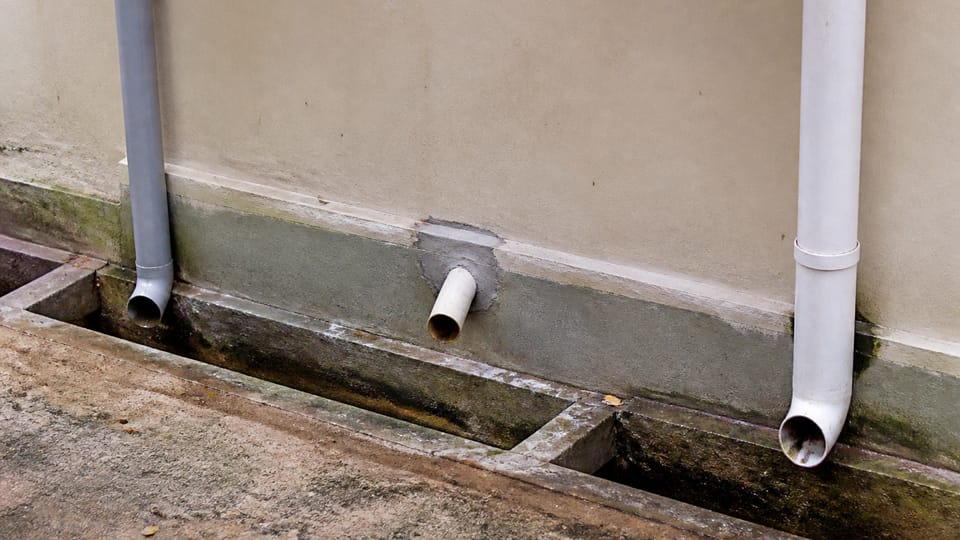
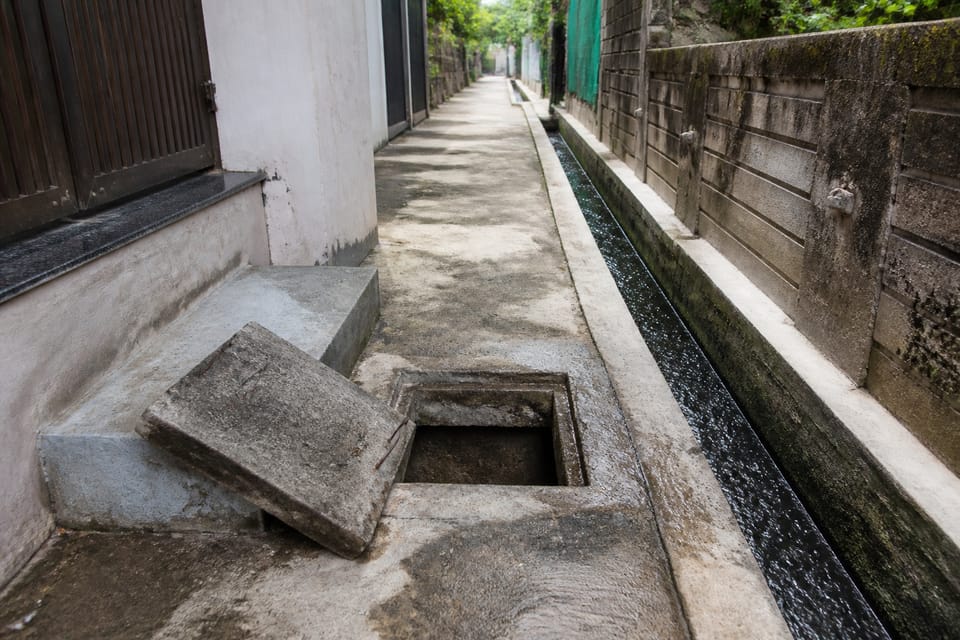
| Storm water | Roofs, terraces, courtyards and the ground | A surface drain, or a recharge pit if the engineer’s plan has one (practice); not the toilet drain |
IS 2470 3.1.2 says sullage can be dispersed on gardens or drained to a seepage pit or dispersion trench, and that those pits and trenches “shall be so located as to avoid contamination of watercourses or underground water supplies”. IS 2470 3.1.4 says wastes with excessive detergents, grease and disinfectants should not be treated in a septic tank because they affect the decomposition. For the tank and the pit, see soak pit vs septic tank: what each does and when a soak pit works and septic tank size: how it is worked out, which assumes toilet waste only.
What should I ask my engineer or plumber?
- Which pipes carry soil waste, which carry waste water and which carry rainwater, and do the plan and the site show them separately?
- Where does each end: public sewer, septic tank, soak pit, surface drain, or a harvesting pit?
- Does the city sewer take sewage and sullage together, and is there a separate storm drain? Ask the local body.
- Does the kitchen sink go to the same place as the bathrooms in this design, and what is done about grease?
- Where are the inspection chambers and the gully trap? See gully trap: what it is, where it goes and why a house needs one.
What mistakes should I avoid?
These are practice, not code rules, unless a clause is named.
- Joining a roof downpipe to a soil pipe, a waste pipe or a sewer (IS 1742 4.10.3.6 forbids it, with a permission exception for sewers), or to a septic tank (IS 2470 3.1.1 says surface water should not find its way in).
- Sending bathroom or kitchen waste water into a storm drain or an open drain.
- One common drain for everything.
- Letting sullage, rain or surface water into a toilet-only septic tank without the engineer re-sizing it.
- Using the word “sewage” or “drain” on a plan without saying which water it means.
- Treating a recharge pit for rainwater as a sewage soak pit, or the reverse.
Frequently asked questions
Is sullage the same as sewage?
No. In IS 1742, IS 2470 and IS 10446, sullage is waste water from wash basins, sinks and similar appliances with no human excreta, while sewage includes excreta. NBCS 2026 uses grey water and black water as well, and counts the kitchen sink differently.
Is grey water the same as sullage?
The wording differs in NBCS 2026. Grey water (2.49) lists baths, showers, lavatories, clothes washers, dishwashers and RO reject water and excludes kitchen sink waste, while waste water (sullage) (2.104) covers wash basins, sinks and similar appliances.
Is drainage the same as sewage?
No. NBCS 2026 defines drainage as “the removal of any liquid by a system constructed for the purpose” (2.35), which reads as wider than sewage.
Can rainwater go into the sewer or the septic tank?
IS 1742 says that, generally, rain water is dealt with separately from sewage and sullage, with one exception: courtyard storm water may go to the sewer with the authority’s permission. IS 2470 says surface water should not find its way into the septic tank.
Does waste water from basins and baths go into the septic tank?
IS 2470 says septic tanks are normally designed for foul sewage (faecal matter and urine), and sullage may go to a seepage pit or dispersion trench. Your engineer decides for your tank.
Related guides
- House drainage system explained: soil, waste and rainwater pipes
- Soak pit vs septic tank: what each does and when a soak pit works
- Gully trap: what it is, where it goes and why a house needs one
This guide is general information. Read the disclaimer. Your engineer and your local body decide how the drains of your house are connected.
Sources
- SP 7:2026, National Building Construction Standards (NBCS) 2026, Part E Plumbing Services, Section 2 Drainage and Sanitation: clause 2 definitions 2.10, 2.16 to 2.18, 2.33, 2.35, 2.49, 2.81, 2.87, 2.91, 2.94 to 2.96 and 2.104, and clauses 4.4 and 4.5.2.1 (page images read; printed pages 7 to 16 and 42 to 45). From an unofficial archive.org copy.
- IS 1742:1983, Code of Practice for Building Drainage (second revision): clauses 2.12, 2.32, 2.40, 2.41, 2.45, 4.3.1 and 4.10.3.6 (page images read). BIS lists it as in force, valid to 2027-11-30.
- IS 10446:1983, Glossary of Terms Relating to Water Supply and Sanitation: items 2.531, 2.619, 2.620 and 2.704 (page images read). BIS lists it as in force, valid to 2027-02-28.
- IS 2470 (Part 1):1985, Code of Practice for Installation of Septic Tanks, Part 1 Design Criteria and Construction: clauses 2.5, 2.7, 2.11, 3.1.1, 3.1.2 and 3.1.4 (page images read). BIS lists it as in force, valid to 2027-02-28.
- IS 5329:1983, Code of Practice for Sanitary Pipe Work Above Ground for Buildings: clause 2.6 (page image read). BIS lists it as in force, valid to 2027-02-28.
General information only. It is not a structural design or professional advice. Ask a licensed structural engineer or architect to check your plans and site.