
Short answer
What are the types of bricks used in India? Each type has its own Indian Standard: common burnt clay (IS 1077), burnt clay fly ash (IS 13757), fly ash-lime (IS 12894), fly ash-cement (IS 16720), perforated (IS 2222), hollow bricks and blocks (IS 3952), facing (IS 2691), heavy-duty (IS 2180) and paving (IS 3583). First, second and third class are trade words, not IS classes.
On this page (10)
- What are the types of bricks, and which standard covers each?
- Is “first class brick” an IS grade?
- What is a fly ash brick?
- Perforated, hollow, facing and heavy-duty: what is different?
- What about other bricks?
- What should I ask the supplier?
- What mistakes should I avoid?
- Frequently asked questions
- Related guides
- Sources
Search for “types of bricks” and you find two different answers. One is the old trade grading: first class, second class, third class. The other is the Indian Standards, where each kind of brick has its own standard. This page lists the kinds an owner meets, what each is made of, what its standard says it is for, and what to ask a supplier. It prints no strength, size, absorption or perforation figure, because those depend on the edition and the class, and the current common-brick standard could not be read. It does not rank the types: which one suits a wall is for your engineer.
What are the types of bricks, and which standard covers each?
| Type | Indian Standard | What it is | What its standard says it is for |
|---|---|---|---|
| Common burnt clay brick | IS 1077:2025 (sixth revision, in force; the 1992 edition is replaced) | Clay brick, moulded by hand or machine and burnt | Requirements for common burnt clay building bricks “used in buildings” (1992 scope); classified by compressive strength |
| Burnt clay fly ash brick | IS 13757:1993 | Made from “the admixture of suitable soils and flyash”, uniformly burnt | Prepared on the lines of IS 1077 for the same end use |
| Fly ash-lime brick | IS 12894:2002 | Fly ash in major quantity with lime and an accelerator, moulded, then cured (chemically bonded), not fired like clay bricks; solid | “Suitable for use in masonary construction just like common burnt clay bricks” |
| Fly ash-cement brick | IS 16720:2018 | Fly ash in major quantity with cement, moulded and cured; solid | “Suitable for use in masonry construction just like common burnt clay bricks” |
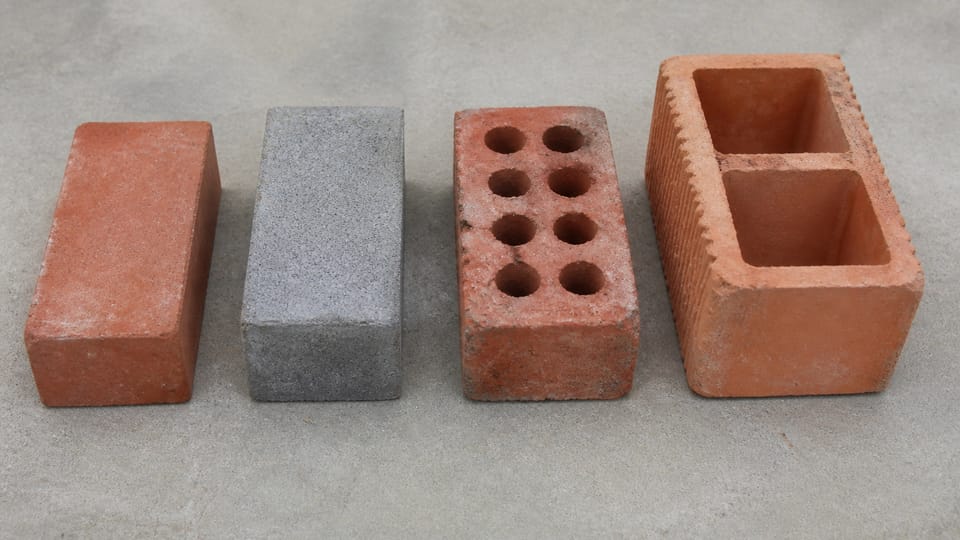
| Perforated brick | IS 2222:1991 | Burnt clay brick with perforations through it | “For use in walls and partitions”; light, with better thermal insulation than common bricks |
| Hollow brick or block | IS 3952:2013 | Burnt clay units “having perforations through and at right angle to the bearing surface” | Walls and partitions; three types by surface: both faces keyed for plaster, both smooth, or one of each |
| Facing brick | IS 2691:2017 | Clay or shale, “thoroughly burnt”, of even texture | “Used in the exposed face of masonry without any further surface protection” |
| Heavy-duty brick | IS 2180:1988 | Pressed or extruded, fully burnt clay, with a clear ring when struck | Heavy-duty bricks “are generally required for masonry in heavy engineering works, such as bridge structures, industrial foundations and multi-storeyed buildings”; also called engineering bricks |
| Paving brick | IS 3583:1988 | Burnt clay brick, mechanically shaped | “For use in construction of pavements” |
Strength classes exist for common, fly ash, fly ash-lime, fly ash-cement and heavy-duty bricks, each by compressive strength. Perforated and hollow bricks have a single minimum strength requirement instead. Facing bricks have strength, absorption and efflorescence requirements. Which class a wall needs is the engineer’s decision, and the classes are on the supplier’s test report.
Is “first class brick” an IS grade?
No. First, second and third class are trade words, and the IS 1077 text we read does not use them: it classifies common bricks by compressive strength class. CPWD 2019 says brickwork is “classified according to the class designation of bricks used” (clause 6.2.1). If a supplier says “first class”, ask which standard and which strength class he means, and ask for the test report. For sizes, see brick and block sizes in India, which this page does not repeat.
What is a fly ash brick?
The phrase covers three different products, which the standards keep apart. IS 13757 describes a burnt clay brick with fly ash in the mix. IS 12894 describes a lime and fly ash brick that is moulded and cured, not fired like a clay brick. IS 16720 describes a fly ash and cement brick, also cured. CPWD 2019 lists fly ash-lime, clay fly ash and calcium silicate bricks as separate types (clause 6.1). When someone offers “fly ash bricks”, ask which of the three and which standard. See red brick vs fly ash brick vs AAC block and fly ash brick quality: what IS 12894 requires.
Perforated, hollow, facing and heavy-duty: what is different?
Perforated and hollow bricks are separate products in the standards. IS 2222 describes perforated bricks for walls and partitions and notes that they are light and give better thermal insulation. IS 3952 describes hollow bricks and blocks for walls and partitions, with the three surface types. IS 2222 and IS 3952 say walls and partitions and do not say whether the wall is load-bearing, so that is a question for the engineer. For which wall is load-bearing, see which brick wall thickness goes where.
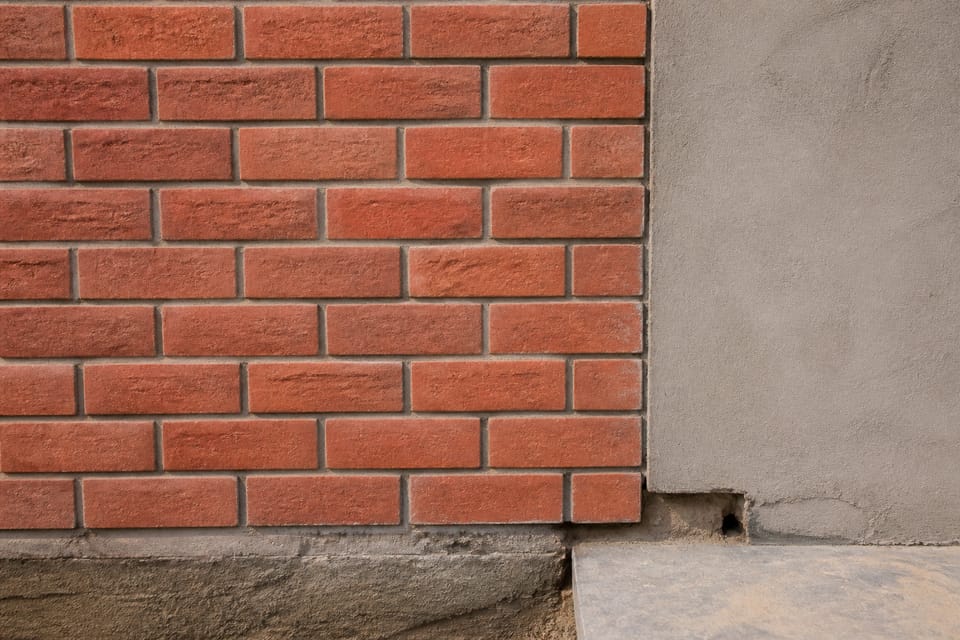
Facing bricks are made for walls left exposed. IS 2691 says that where external plastering has to be renewed often in a corrosive atmosphere, and for tall buildings where maintaining exposed brick walls is expensive, facing bricks can prove economical. The 2017 revision removed the requirement for uniform colour, because some variation is now given for appearance. CPWD 2019 still asks for uniform colour and even texture in its facing brickwork, which is its own practice (clause 6.10.1). An exposed wall still needs good mortar and pointing: see exposed brick walls.
Heavy-duty bricks sit above common bricks in strength: the IS 1077:1992, IS 13757 and IS 12894 scopes point to IS 2180 for higher strength.
What about other bricks?
IS 4139 covers calcium silicate (sand-lime) bricks, which CPWD also calls fly ash sand lime bricks. Concrete and AAC units are blocks and not bricks: see solid concrete blocks vs bricks. Unburnt sun-dried bricks are not covered here. NBCS 2026 lists these brick standards in its building materials part, and its list names IS 1077:2025.
What should I ask the supplier?
This is practice, not a standard.
- Which standard, which type and which strength class the brick is made to, and the edition.
- The test report for the batch, with the size, strength and absorption, and the BIS mark if the maker holds a licence.
- Whether the units are solid, perforated or hollow, and what the engineer’s drawing allows for each wall.
- That all the bricks for one wall come from the same type, size and batch.
- Where a brick type is meant for an exposed face, the finish and mortar the maker advises.
What mistakes should I avoid?
These are practice, not code rules.
- Buying by colour or the ring of the brick alone.
- Ordering “first class” without naming the standard and the class.
- Mixing bricks of different types or sizes in one wall.
- Using perforated or hollow units in a load-bearing wall without the engineer.
- Using perforated or hollow bricks for an exposed or ground-contact wall without asking.
- Accepting under-burnt or over-burnt bricks.
- Not asking for a test report.
- Quoting the old IS 1077:1992 limits as current.
- Assuming “fly ash brick” means one product.
Frequently asked questions
What are the three types of bricks?
Searchers usually mean first, second and third class, which is an old trade grading and is not in IS 1077. The standards separate bricks by type, such as common, fly ash, perforated, hollow, facing and heavy-duty, and by strength class.
What is a perforated brick?
A burnt clay brick with perforations through it, for walls and partitions (IS 2222). IS 3952 describes hollow bricks and blocks with holes passing through the unit, which its scope words as “perforations through and at right angle to the bearing surface”.
What is a facing brick?
A burnt clay brick made for the exposed face of a wall without further surface protection (IS 2691).
What are engineering bricks?
A heavy-duty brick (IS 2180) is also known as an engineering brick. It is for heavy works such as bridge structures and industrial foundations.
Which brick is best?
The standards do not rank them. The wall, the exposure and the engineer’s design decide.
Related guides
- Red brick vs fly ash brick vs AAC block
- Brick and block sizes in India
- Fly ash brick quality: what IS 12894 requires and how to check
This guide is general information. Read the disclaimer. Your engineer decides the brick type and class for your walls.
Sources
- IS 13757:1993, Burnt Clay Fly Ash Building Bricks; IS 12894:2002, Pulverized Fuel Ash-Lime Bricks; IS 16720:2018, Pulverized Fuel Ash-Cement Bricks; IS 2222:1991, Burnt Clay Perforated Building Bricks; IS 3952:2013, Burnt Clay Hollow Bricks and Blocks for Walls and Partitions; IS 2691:2017, Burnt Clay Facing Bricks; IS 2180:1988, Heavy Duty Burnt Clay Building Bricks; IS 3583:1988, Burnt Clay Paving Bricks: scope, foreword and classification clauses (page images read for IS 13757, 2222, 3952, 2691, 2180 and 16720; text read for IS 12894 and 3583). The BIS register lists them; BIS shows a valid-to date of 2026-09-30 for IS 13757, 2222 and 2180, which has passed, so check their current status.
- IS 1077:1992, Common Burnt Clay Building Bricks (fifth revision), scope and classification clauses (page image read, for structure only: it has been replaced by IS 1077:2025, sixth revision, which is in force per BIS and which we could not read).
- CPWD Specifications 2019 Vol 1 (Central Public Works Department), sub-head 6 masonry work, clauses 6.1, 6.1.5, 6.2.1 and 6.10.1 (text read; departmental practice, not an Indian Standard). SP 7:2026, National Building Construction Standards 2026, Part B list of brick standards (text read).
General information only. It is not a structural design or professional advice. Ask a licensed structural engineer or architect to check your plans and site.