
Short answer
What is a weep hole and where does a house need one? A weep hole is a small opening through a wall that lets water out, so that water does not build up behind or inside the wall. IS 14458 asks for them in hill-area stone masonry retaining walls, and IS 2212 for draining cavity walls above damp-proof courses. A normal solid brick house wall has none. Whether your plot needs any is the engineer's call.
On this page (9)
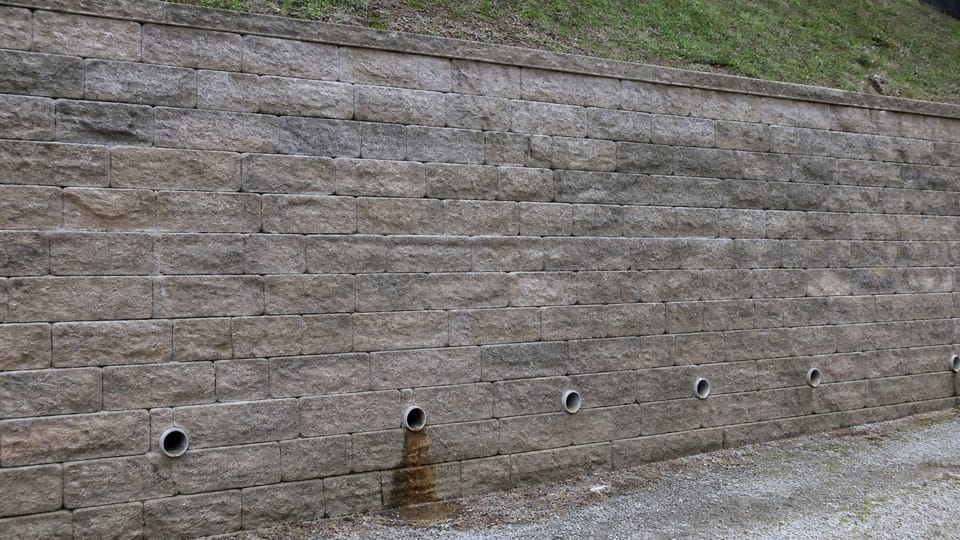
A weep hole is the small hole you see at the base of a retaining wall, with a stain below it after rain. Many owners think it is a defect or a place for pests, and seal it. It is neither: it is a drain. This page says what the term means, where the Indian Standards we read name a weep hole, how it differs from a vent hole, and what to check. No standard we read defines “weep hole” in words, and none requires weep holes in an ordinary house wall, so most of the placement advice here is practice and is marked so. It gives no price, no brand and no wall design.
What is a weep hole?
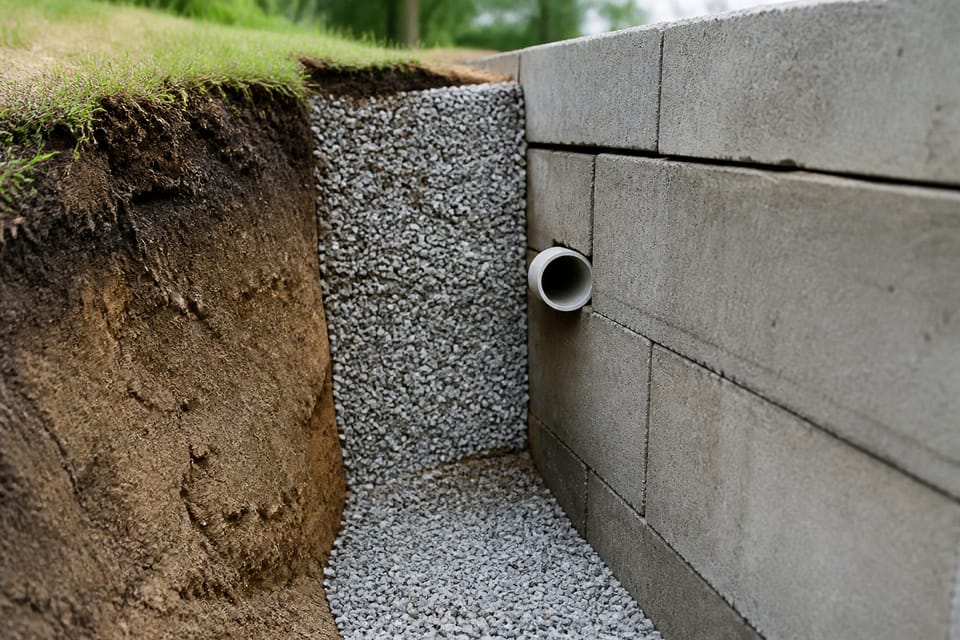
In practice, a weep hole is a small opening or short pipe through a wall that lets water drain out from behind or inside it, so that water does not build up. Water that cannot get out presses on the wall and soaks it. The weep hole does not work alone: it needs a path for the water to reach it, such as a layer of stone or gravel behind the wall, and a place for the water to go once it is out.
The standards we read use the term but do not define it, so this plain meaning is ours.
Where do the Indian Standards name weep holes?
| Where | What the standard says | Source |
|---|---|---|
| Retaining walls in hill areas | “Weep holes shall be provided in cement stone masonry walls at spacing of about 1.5 m centre-to-centre in either direction”, as pipes of 100 mm to 150 mm, embedded sloping down towards the valley side to drain the water. This is a guideline for hill-area stone masonry walls | IS 14458 (Part 2):1997, cl 6.5.2 |
| Behind those walls | “Inverted filter shall be provided behind retaining walls to drain off ground water table or rain water seepage” | IS 14458 (Part 2):1997, cl 6.5.1 |
| At the toe | A catch water drain at the toe of a breast wall collects water from weep holes and surface runoff | IS 14458 (Part 2):1997, cl 6.5.5 |
| Cavity walls | “Cavity walls shall be effectively drained by weep holes above all damp-proof courses that bridge the cavity” (in a list of constructional details to avoid wet conditions) | IS 2212:1991, cl 13.2.3(f) |
| Above openings in cavity walls | A flexible damp-proof course at the top of an opening drains water that flows down the cavity “to drain it off outside through weep holes” | IS 2212:1991, cl 6.8.5 |
| Dry stone walls | The standard notes the masonry “remains quite permeable to the flow of water and pressure normally does not build up”, and still asks for drainage above the wall; it does not call for weep holes | IS 14458 (Part 3):1998, cl 8.1 |
The 1.5 m spacing and the pipe size in IS 14458 (Part 2) are a hill-area guideline for one kind of retaining wall. They are not a rule for a plot in the plains, a boundary wall or a basement, and the engineer decides the number, size, level and filter for an actual wall. IS 14458 Part 1 gives different figures in a table of wall specifications; we did not image that table and print nothing from it. For the drainage layer behind a retaining wall and who designs one, see retaining wall vs boundary wall: what differs and who designs it.
NBCS 2026 also mentions weep holes for window test specimens, floor trunking, a recharge well and compost pits, which are not house walls. We found no weep hole requirement in NBCS 2026 for retaining walls, basement walls, parapets or planters. We did not search IS 456, IS 1904 or IS 4326 for the word.
Is a weep hole the same as a vent hole?
No. A weep hole drains water. A vent or air slot moves air. IS 2212 treats them separately: clause 11.12.6 asks for air slots to keep a cavity dry, while clauses 6.8.5 and 13.2.3(f) ask for weep holes to drain it. No standard we read sets the two side by side in a sentence, so this is our reading of the clauses. Other things are also not weep holes: a balcony or terrace drain, a bathroom floor trap, and the drain slots at the bottom of a window frame. For those slots, see windows leaking in rain: frame, sill and drip, and where to start. NBCS 2026, Part C Section 8, clause 8.4.3.2(f), says dust and debris in a window sub-frame can block its weep holes and let water overflow into the room.
Does my house need weep holes?
This is practice, apart from the clauses named. A normal solid brick or block house wall above ground does not have them. They matter where a wall holds back earth or water, or where a cavity needs draining:
- A retaining wall where the plot changes level, or a sloping-plot boundary wall that holds earth. The engineer designs the drainage behind it. See building a house on sloping land: site checks and what changes.
- A basement or sunken wall. Whether to use weep holes, or waterproofing with drainage outside, is the engineer’s decision: see a basement in a house: what the bye-laws allow and what changes.
- A planter or raised garden wall that holds soil against a wall.
- A cavity wall, if your design has one, per the IS 2212 clauses above. Most Indian houses are solid masonry, so a US page on brick-veneer weep holes may not apply to you.
What should I check?
This is practice.
- Level. The outlet should be at or just above the finished ground or paving at the base, so water can leave. Holes set high, or buried in soil, a planter or paving, do not drain.
- Behind. Ask the engineer to show the filter or granular backfill behind the wall on the drawing, as IS 14458 (Part 2) 6.5.1 asks for hill-area walls.
- Outlet. Water should run to a drain, a catch drain or a soak pit, not onto a neighbour’s land or against your own foundation, and not scour a channel into the soil.
- Open. Never plaster over, paint, or fill a weep hole with mortar or sealant. A fine mesh is the most that should cover one, and the engineer decides it.
- After rain. Dampness at the hole is usually the hole working. A steady muddy flow means soil is leaving from behind the wall: call the engineer.
- Yearly. Look at each one before the monsoon: see pre-monsoon checklist for your house and your building site. Clear it from outside with a soft rod, and do not hammer or drill, which can crack the masonry.
What mistakes should I avoid?
These are practice unless a clause is named.
- Sealing the holes with mortar, caulk or paint, or plastering over them.
- Building a retaining wall with no drainage behind it, so the holes have nothing to drain.
- Setting the holes too high, or below the finished ground.
- Letting the outlet run onto a neighbour’s plot or against your foundation.
- Treating a balcony drain, a floor trap or a window drain slot as a weep hole.
- Cutting extra holes at random, instead of having the engineer set them with a filter behind.
- Taking a spacing or size from a website or from the hill-area guideline for your own wall.
- Assuming that a wet hole after rain means failure.
Frequently asked questions
What is the purpose of a weep hole?
To let water drain out from behind or inside a wall so that it does not build up. IS 14458 (Part 2) names weep holes in hill-area stone masonry retaining walls, and IS 2212 in cavity walls.
What is the difference between a weep hole and a vent hole?
A weep hole drains water; a vent or air slot moves air. IS 2212 uses them for different jobs.
Should I seal weep holes to keep out pests?
No. Sealing stops the hole draining, which is its job. If pests are a worry, ask the engineer about a fine mesh, never a solid fill.
Does a compound wall need weep holes?
Only if it holds back earth or water. A plain freestanding wall does not. We found no standard that requires them for a boundary wall.
How do I clean a weep hole?
From the outside with a soft rod, before the monsoon. Do not hammer or drill. If water or muddy soil keeps coming out, ask the engineer.
Related guides
- Retaining wall vs boundary wall: what differs and who designs it
- A basement in a house: what the bye-laws allow and what changes
- Windows leaking in rain: frame, sill and drip, and where to start
This guide is general information. Read the disclaimer. Your engineer decides where weep holes are needed and how they are drained for your house.
Sources
- IS 14458 (Part 2):1997, Guidelines for Retaining Wall for Hill Area, Part 2, Design of Retaining and Breast Walls: clauses 6.5.1, 6.5.2 and 6.5.5 (page image read). BIS lists it as in force, valid to 2027-09-30. It is a hill-area guideline.
- IS 2212:1991, Code of Practice for Brickwork: clauses 6.8.5, 11.12.6 and 13.2.3(f) (page images read). BIS lists it as in force, valid to 2029-09-30.
- IS 14458 (Part 3):1998, dry stone walls, clause 8.1 (text layer read). SP 7:2026, National Building Construction Standards (NBCS) 2026, Part C Section 8, clause 8.4.3.2(f) (text layer read; page not imaged). From an unofficial archive.org copy.
General information only. It is not a structural design or professional advice. Ask a licensed structural engineer or architect to check your plans and site.