
Short answer
Which board is best for a false ceiling: gypsum, calcium silicate, cement board or PVC? There is no single best board. Gypsum board is the usual choice for dry rooms, and moisture-resistant grades suit kitchens and bathrooms only where the damp is intermittent. Fibre cement and calcium silicate boards are chosen for damp or outdoor-exposed places, but check the maker's data sheet. PVC panels are often used in wet areas, but their joints and fixings need dry, ventilated conditions. Your maker's data sheet and your engineer decide the board for your ceiling.
On this page (9)
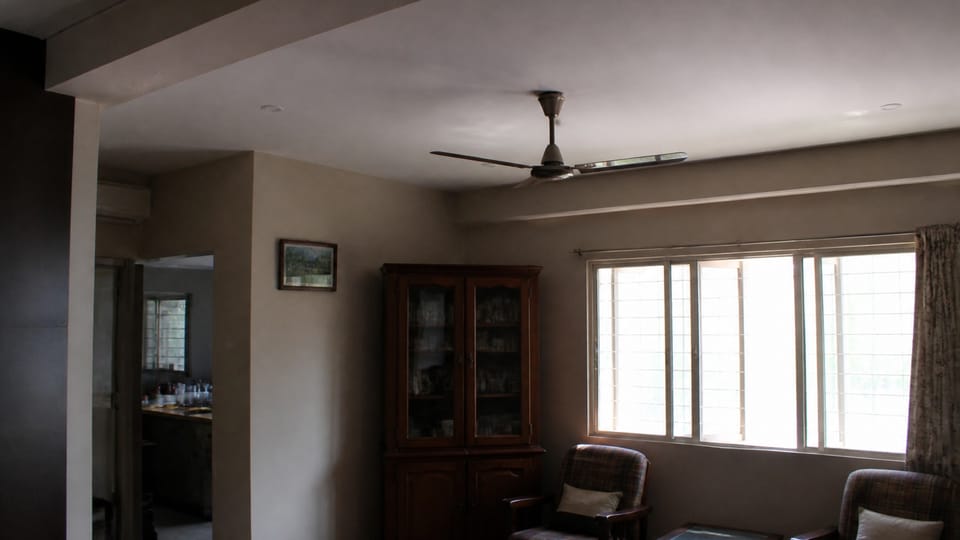
A false ceiling hides the wiring and gives a flat finish, but the board you choose decides how it behaves in a damp room, under a leaking terrace and in a hot verandah. The four common choices are gypsum board, calcium silicate board, fibre cement or cement board, and PVC panels. Sellers describe each one as the best. This page sets out what each is made of, where it is usually used, what the standards say, and what to ask. It names no brand and gives no thickness, span or fixing spacing. Those come from the maker’s data sheet and your engineer.
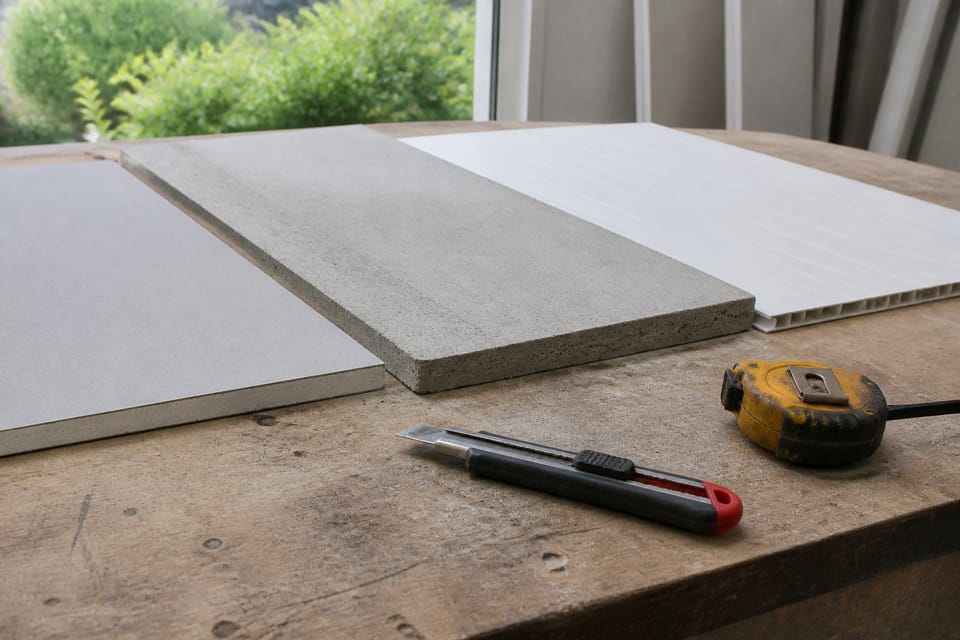
What is each board?
| Board | What it is | Where it is usually used | What to check |
|---|---|---|---|
| Gypsum board | A gypsum core covered in paper or glass fibre | Dry rooms: bedrooms, living rooms, offices | The grade: plain or moisture-resistant. The data sheet says where each is allowed |
| Calcium silicate board | A lime and silica sheet, fibre-reinforced and cured in steam | Damp or fire-prone places, and partitions | The maker’s data sheet for the exposure you need |
| Fibre cement or cement board | A cement-based sheet with fibre reinforcement | Damp or outdoor places, under a sloping roof or verandah | Whether the sheet is for inside or outside use, and its protective finish |
| PVC panels | A plastic panel, clipped or glued to a frame | Bathrooms, kitchens, and places that need easy cleaning | Joints, fixings, expansion gaps and sun exposure |
The table describes common practice. The exact board for your ceiling depends on the room, the exposure and the maker’s data sheet.
What do the Indian Standards say?
The Indian Standards are thinner than the sellers’ claims suggest.
- Fibre cement. IS 14862 covers fibre cement flat sheets. It has two types. Type A is for external use, where the sheet may be exposed to sun, rain or snow. Type B is for internal use, and for external use where it will not be exposed to direct sun or rain. The standard’s note says a Type B sheet directly exposed to weather but protected, for example by coating or impregnation, has its weather resistance set by that protection, which the standard does not specify. It does not say a Type B sheet is for damp areas, so do not assume it is. IS 14862 does not cover calcium silicate boards.
- Gypsum board. BIS has current standards for gypsum plaster boards (IS 2095) and for gypsum ceiling tiles (IS 18387). The current text was not read for this page, so the article does not quote them. Ask the maker which BIS standard its board meets, and read the scope and moisture statement in that standard.
- PVC. BIS has a specification for rigid PVC sheets (IS 6307). A search of the BIS listing on 22 October 2026 found no standard for PVC ceiling panels.
- Calcium silicate. A search of the BIS standards listing on 22 October 2026 found no standard for calcium silicate ceiling boards.
So the standard for each board is the maker’s data sheet, read alongside the BIS standard the maker names.
Where does moisture come in?
In practice, moisture is the most common reason ceilings fail. A dry room with a dry ceiling lasts. A ceiling under a bathroom floor, under a terrace or near a leaking pipe does not, whatever the board.
- Gypsum board sags and swells when it stays wet. A moisture-resistant grade resists damp that comes and goes, such as the air in a kitchen or bathroom. It is not waterproof and cannot stand standing water or a direct shower spray.
- Fibre cement and calcium silicate boards are often chosen for damp places. Their suitability depends on the exposure the maker has tested, so ask for it in writing.
- PVC panels do not absorb water, which makes them suitable for wet areas. But the joints, the cut edges, the fixings and the frame still need dry, ventilated conditions. Water that gets above the panel can still stain it or rot the frame behind.
A stain at a ceiling joint usually means water is coming from above. Fix that source first, as the false ceiling page and the water tank leakage page explain. Covering a leak with a new board only hides it.
What about sun, heat and the verandah?
A ceiling under an open verandah or a sloping terrace is hot in summer and wet in the monsoon. As general practice, not a standard rule, PVC panels can warp or fade in direct sun, and heat from some light fittings can damage them. Fibre cement and calcium silicate boards are chosen for such places, but only if the maker says so. Ask the maker for the exposure rating in writing, and check the colour and warp after a few months.
What should I check before I buy?
- The exact board type and the BIS standard it claims to meet, from the packaging or the data sheet.
- Whether the board is rated for the room: dry, damp, wet or outdoors.
- How the board is fixed, the joints are finished, and the edges are sealed.
- Whether there is ventilation above the ceiling, in bathrooms and kitchens, and under a sloping roof.
- The source of any water above the ceiling, fixed before the ceiling goes up.
- For PVC, that the installer leaves room for movement and does not fix over damp plaster.
What mistakes should I avoid?
These are practice points, not standard rules.
- Treating moisture-resistant gypsum as waterproof. It is not, and it fails under standing water.
- Covering a leak with a new ceiling. The water is still there and the new board stains.
- Assuming PVC cannot warp or fade. It can, in sun or near heat.
- Cutting calcium silicate board dry. The dust from it is harmful. Cut it wet, wear a mask, and use a trained installer.
- Relying on the seller’s claims. Ask for the data sheet and the BIS standard number.
- Ignoring ventilation. A wet ceiling in a closed room is the main cause of sag.
Frequently asked questions
Is gypsum board better than calcium silicate board?
Neither is better in every place. Gypsum board is common for dry rooms. Calcium silicate is chosen for damp or fire-prone places, but the choice depends on the maker’s data sheet for your exposure.
Can I use a ceiling board in a bathroom?
Only a board the maker rates for a bathroom, fixed and ventilated as the maker says. Plain gypsum board is not suitable. Moisture-resistant grades are for intermittent damp, not for a shower area. PVC panels are common in bathrooms, but their joints and fixings need care.
Is PVC ceiling waterproof?
It does not absorb water, but it is not waterproof as a system. Water above the panel, at the joints or through the frame can still cause damage.
What thickness of gypsum board should I use?
The thickness depends on the span, the frame and the maker’s span table. Your engineer or the maker decides it. This page gives no thickness.
Related guides
- False ceiling vs POP ceiling, and repair
- Gypsum plaster vs cement plaster
- Water tank leakage: how to find and fix it
- Gypsum board (POP board) types and thicknesses: what IS 2095 lists
- Grid false ceiling with 2x2 tiles: what IS 18387 says
This guide is general information. Read the disclaimer. The board maker’s data sheet and your engineer decide the board, its thickness and its fixing for your ceiling.
Sources
- IS 14862:2000, Fibre Cement Flat Sheets: Specification (current; clause 1.1 and clause 4.1, Type A and Type B sheets).
- BIS listing for IS 2095 (Part 1):2023 (plain gypsum plaster boards, current) and IS 2095 (Part 3):2022 (reinforced gypsum plaster boards and ceiling tiles, current). Titles and status checked; the current text was not read for this page.
- BIS listing for IS 6307:2023 (rigid PVC sheets, current). Titles and status checked; a search of the BIS listing on 22 October 2026 found no standard for PVC ceiling panels.
Change log
- : Added Related guides link to newly published article(s): gypsum-board-pop-board-types-and-thicknesses-what-is-2095-part-1-lists, grid-false-ceiling-with-2x2-tiles-what-is-18387-says-about-gypsum-ceiling-tiles. No other text changed. Approved by the reviewing engineer.
General information only. It is not a structural design or professional advice. Ask a licensed structural engineer or architect to check your plans and site.