
Short answer
What causes mould and algae on outside walls, and how do I clean them? Mould and algae grow where a wall stays damp. IS 2395 says that any such growth shall be removed, and that the treated surface should dry thoroughly before painting. First find and fix the source of the damp: a leaking gutter, a wet base, or a shaded face. Then clean, let the wall dry fully, and paint. Ask your engineer or painter to check the wall first.
On this page (8)
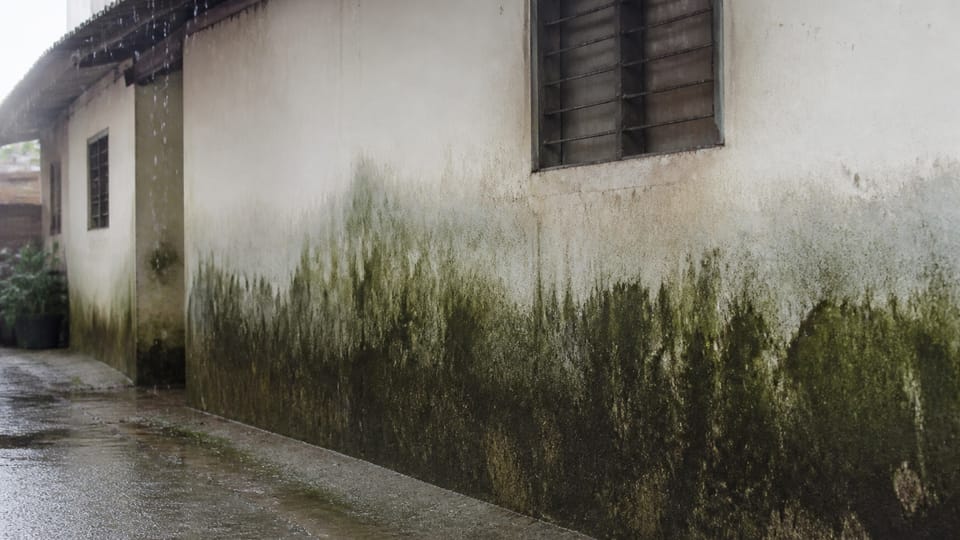
After the monsoon, many outside walls show dark streaks or green patches. People call it black fungus, mould or algae. The marks are a sign that the wall has stayed wet for a long time. They are not a health claim, and they are not a reason to panic. They are a reason to find the source of the damp before you paint. This guide explains what causes the growth, what the Indian painting standard says about removing it, and how to clean and check the wall. It names no products and gives no chemical strengths.
Why does the growth come?
The painting standard links the growth to damp. It says that “The growth of mould is generally associated with continued dampness, either of the material painted or of the surrounding atmosphere” (IS 2395 (Part 1):1994, clause 5.6.1). Some growths may “penetrate the underlying plaster or brickwork and become difficult to eradicate” (clause 5.6.1).
The government’s guidance on dampness names rain as one source. It says “Dampness can occur on account of rain which strikes on the exposed surfaces of the house and finds its way within, through the walls and joints etc.” (BMTPC, House Building Digest 12, page 3). The same digest says dampness can also come from poor design, poor materials and poor workmanship.
So the growth usually points to one of these sources:
- a gutter or downpipe that overflows or leaks onto the wall;
- water standing at the base of the wall, or soil piled against it;
- a shaded face that dries slowly after rain;
- a crack or a cracked joint that lets water in;
- a leaking pipe or tank inside the wall.
Check these before you clean. See also damp walls: rising damp, seepage or condensation for how to tell the kinds of damp apart.
What does the standard say about removing it?
IS 2395 (Part 1) is the Indian code of practice for painting concrete, masonry and plaster surfaces. For porous outside surfaces such as brick, stone and cement rendering, the standard says that growth “shall be removed” before the paint goes on (clause 5.6.2). The same sentence says the treated surface is to be “allowed to dry thoroughly before painting.”
To stop the growth coming back, the standard asks for four steps (clause 5.6.3):
- remove the source of the dampness and dry out the walls;
- improve the ventilation, if necessary;
- remove any infected paint or paper;
- sterilise the surface with an antiseptic wash, and let it dry.
The standard requires an antiseptic wash for the job. This guide does not name one. The right wash, its strength and the time it stays on the wall depend on the product and the wall. Ask your painter for the wash, follow its label, and test it on a small patch first.
How do I clean the wall?
This section is practice, not a code rule.
- Fix the source first. Repair the gutter, the downpipe, the crack or the leak, and clear the drain at the base.
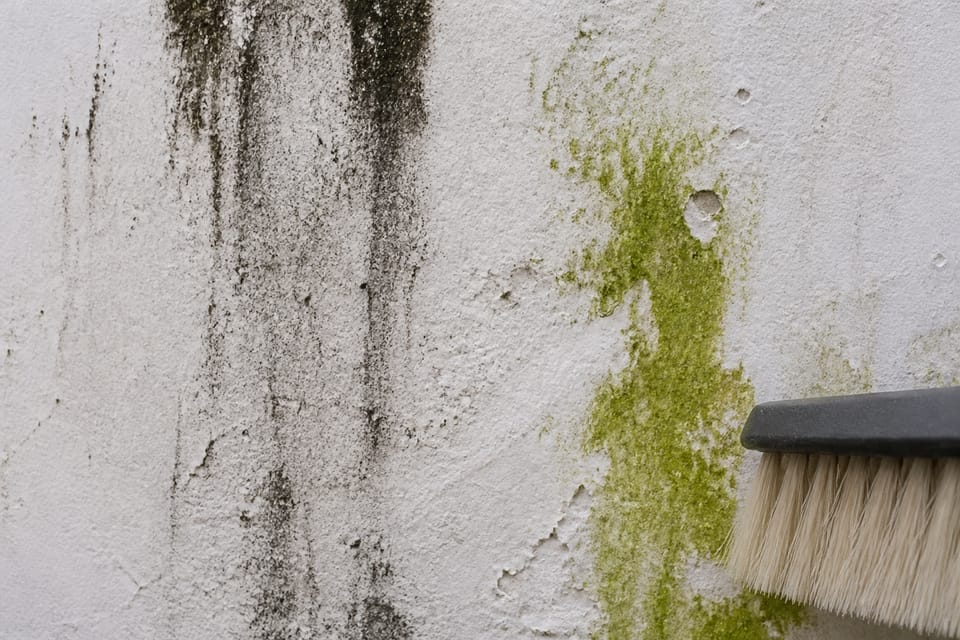
- Brush off the loose growth dry. A stiff brush removes what comes away easily. Avoid harsh brushes on soft plaster.
- Wash with clean water. Test a small patch first. High-pressure washing can damage old plaster and loosen the mortar, so avoid it on old brick or plaster.
- Apply the antiseptic or fungicidal wash your painter specifies, as the standard requires, and follow its label. Test it on a small patch first. Do not mix cleaners.
- Rinse and let the wall dry fully. Wait until the wall is dry to the touch before you prime or paint. Paint over a damp wall traps the damp.
Work in dry weather, and not in the heat of the day, so the cleaner does not dry on the wall too fast.
What safety should I take?
This section is practice. Wear gloves and eye protection when you use any cleaner. Keep children and pets away from the area while the wall is wet with cleaner. Do not mix one cleaner with another.
What mistakes should I avoid?
This section is practice.
- Painting over the growth. The paint will not hold, and the growth will come through.
- Cleaning without fixing the source. The growth will come back after the next rain.
- Using a strong cleaner without a test patch, which can damage the paint or the plaster.
- Washing or painting while the wall is still wet.
- Using a high-pressure washer on old brick or plaster.
- Treating every dark mark as the same thing. Ask the painter what is on the wall before you choose the method.
Frequently asked questions
Is the growth harmful?
This guide does not make a health claim. The painting standard describes the growth as a sign of continued dampness. If anyone in the house has breathing problems or allergies, ask a doctor.
Can I use a strong household cleaner?
Ask your painter. Strong cleaners can damage paint and plaster. If a cleaner is used, follow its label and test it on a small patch first.
Will it come back?
It can, if the source of the damp is not fixed. Check the gutters, the downpipes, the base of the wall and any cracks after each monsoon. Our pre-monsoon checklist lists these checks.
Related guides
- Painting exterior walls: preparation, primer and coats
- Damp walls: rising damp, seepage or condensation, and the fix
- Pre-monsoon checklist for your house and your building site
This guide is general information. Read the disclaimer. Your painter and engineer decide the method for your wall.
Sources
- IS 2395 (Part 1):1994, Painting of concrete, masonry and plaster surfaces: Part 1 Operations and workmanship (first revision). Clauses 5.6.1, 5.6.2 and 5.6.3 read from the page images. Current per the BIS record (valid to 2029-09-30). Chemical washes named in the standard are not used here.
- BMTPC, House Building Digest 12, Prevention of Dampness (Aam Aadmi series), page 3. Read from the scanned page image.
General information only. It is not a structural design or professional advice. Ask a licensed structural engineer or architect to check your plans and site.