
Short answer
What should I check on a plot before I buy it to build a house? Check the slope and low spots, where the water drains, the road to the plot, the soil and the history of the ground, and the flood risk. The national atlas says it does not identify low-lying urban areas, so the checks must be done on the ground. Ask the local authority for the approved layout and the flood history, and get an engineer to check the plot before you sign.
On this page (11)
Most people check the price, the size and the view before they buy a plot. The checks that decide whether a house is cheap or expensive to build are less obvious: which way the ground falls, where the water goes in the monsoon, what the ground was used for before, and whether the road to the plot is one the authority will approve. This guide sets out those checks, what the official sources say, and what is practice. It gives no price, no slope angle and no flood level. Those numbers come from the local authority and your engineer, for your plot.
What do the official sources say?
Very little that a buyer can use directly. The national atlas of building vulnerability says two things that matter here:
- “No information is available on low lying areas in urban centres, which are liable to inundation during heavy rains, hence such areas could not be identified.” (BMTPC, Vulnerability Atlas of India, 2019, Preface.)
- “All buildings are likely to suffer severe damage if impacted by landslides, hence separate vulnerability levels to different building types could not be assigned.” (same Preface.)
The atlas also says its maps are “solely for thematic presentation”. So the national maps will not tell you whether your plot is low. You have to check the plot on the ground and with the local authority.
The BMTPC flood guidelines (2010) say land morphology, meaning the shape of the land, is the main factor in how safe a site is against flood water. For a hill plot, the Bureau of Indian Standards has two standards with these titles: IS 14243 (Part 2), “Selection and development of site for building in hill areas”, and IS 14804, “Siting, design and selection of materials for residential buildings in hilly areas”. Ask your engineer to read them before you build on a slope.
| Check | What to look at | Who can confirm it (practice) |
|---|---|---|
| Slope and low spots | Where the ground falls; standing water after rain | You, after rain; an engineer for the level |
| Drainage outlet | Nearest drain, its level, soak pit or septic place | Local authority; plumber or engineer |
| Ground history | Former pond, tank bed, drain line, filled ground | Older neighbours; revenue or land-records office |
| Soil | Cracks in nearby walls; expansive clay; soil test before buying | Soil test (with the seller’s permission); engineer |
| Access road | Public or private; on the approved layout; width | Local authority; approved layout |
| Flood risk | Flood history; any flood-zone map; conditions on the layout | Local authority; visit after heavy rain |
Slope and low spots
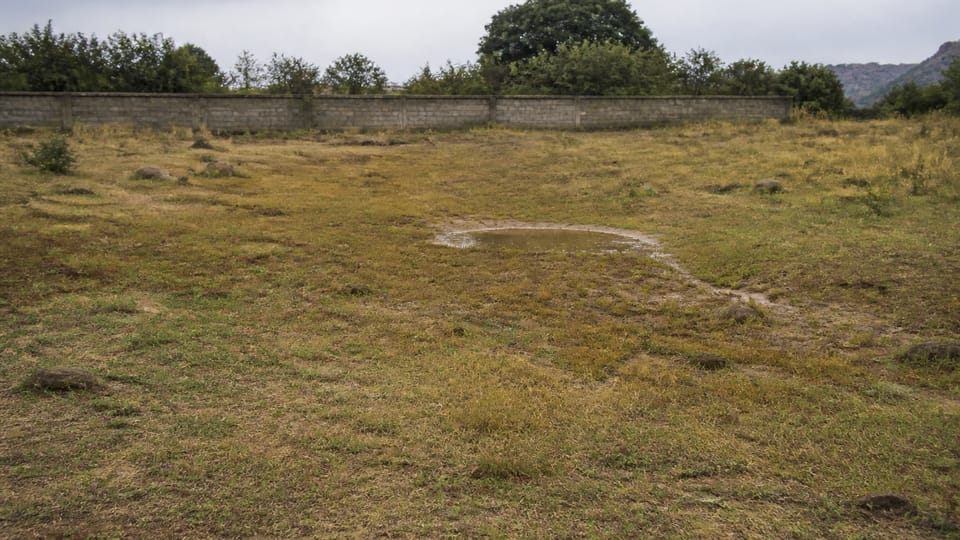
Walk the plot and look at it as water would. Practice:
- Note where the ground falls and where it is lowest.
- After rain, look for standing water, soft ground and where the water runs off.
- Compare the plot with the road. A plot that sits well below the road can need filling or a raised plinth. Ask your engineer how the level will be handled.
- On a hill plot, look for cracks in walls nearby, cut slopes and retaining walls that have moved.
Drainage: where does the water go?
A plot needs a way for rain and waste water to leave. Practice; ask:
- Where is the nearest drain, and at what level is it?
- Will the house use a soak pit, a septic tank or a connection to a municipal drain? Practice: each may need its own place on the plot.
- Does the plot drain onto a neighbour’s land or a road? That can cause a dispute later.
The house drainage guide and the soak pit guide explain the outlets. The pre-monsoon checklist lists the site checks for the rains.
Soil and the history of the ground
Ask what the land was used for before. Practice:
- Was it a pond, a tank bed, a drain line or a filled site? Practice: old water bodies and filled ground can settle and hold water.
- Ask older neighbours who saw a monsoon whether the plot has flooded.
- Ask whether a trial pit or a soil test can be done before you buy. The seller’s permission is needed.
Soil is covered in detail in the soil test guide. If the area has expansive clay, the black cotton soil guide explains what that means for the foundation.
The access road
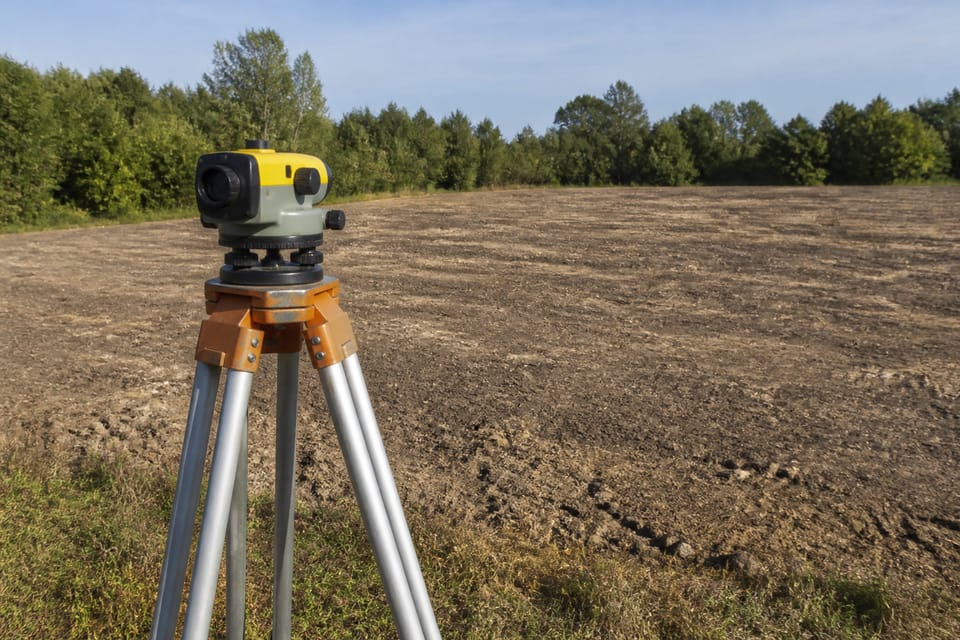
Check the road to the plot as well as the plot itself. Practice:
- Is the road a public road or a private path?
- Is it on the approved layout for the area?
- How wide is it, and does the authority count it as a road for approval? Rules differ between states, so ask the authority, not a website.
Practice: a plot with no clear road frontage can be hard to get approved. Ask before you pay.
Flood risk
The atlas does not identify low-lying urban land, so the flood check is local. Practice:
- Ask the local authority for the flood history of the area and any flood-zone map it holds.
- Visit the plot during or just after heavy rain, if you can.
- Ask the authority whether the plot is in an approved layout and whether the layout approval carries any conditions on filling or drainage.
An approved layout or a sales listing is not proof that a plot is safe from flood. The atlas notes that where flood protection fails, the devastation in a “so called protected” area “becomes even more severe”.
Who should check the plot?
Practice. Three people can help, each for a different check:
- The local authority: the approved layout, the approval number, the road and the flood history.
- The revenue or land-records office: the title and the land use. The building plan approval guide lists the documents to check.
- An engineer or architect: the slope, the level against the road, the drainage outlet and the soil. The architect and engineer guide explains who does what.
What mistakes should I avoid?
Practice. Common mistakes:
- Buying on the strength of a sales listing, without checking the layout and the road.
- Checking only the plot and not the road to it.
- Ignoring a low spot that holds water after rain.
- Practice: skipping the drain outlet can add cost to the house later.
- Treating a monsoon-free visit as proof that the plot is dry.
Frequently asked questions
Can I build on a sloping plot?
Often yes, with the right design. Ask your engineer how the slope will be handled before you buy.
Is a low plot always a bad buy?
Not always, but it can need filling and raising. Ask how the level will be handled, and what it will cost in time and work, before you decide.
How do I know if a plot floods?
Ask the local authority and older neighbours, and visit after heavy rain. The national atlas does not map low urban land, so the local check is the one that counts.
Do I need a soil test before buying?
It helps. A soil test before you buy tells you what the foundation will need. Ask the seller’s permission first.
Related guides
- Building plan approval process and documents
- Plinth height for a house
- Soil test before building a house
- Setting out a house: lines, points and checks before digging
This guide is general information. Read the disclaimer. Your engineer, your architect and your local authority decide what is suitable for your plot.
Sources
- BMTPC, Vulnerability Atlas of India, Third Edition (2019), Preface and disclaimer. Quoted for what the atlas does not cover (low-lying urban areas, local landslide impact) and that the maps are for thematic presentation.
- BMTPC, Vulnerability Atlas of India disclaimer: 'The maps are solely for thematic presentation.'
- BMTPC, Improving Flood Resistance of Buildings: Guidelines (2010), section 5.2 (land morphology). Read for the flood-prone site statement.
- BIS records (checked for this page): IS 14243 (Part 2), selection and development of site for building in hill areas, in force; IS 14804:2000, siting, design and selection of materials for residential buildings in hilly areas, in force; IS 1893 (Part 1):2016 in force; SP 7:2026 National Building Construction Standards 2026 current. Titles and status only; scope not read.
Change log
- : Added Related guides link to newly published article(s): setting-out-a-house-lines-points-and-checks-before-digging. No other text changed. Approved by the reviewing engineer (owner report, 2026-10-31).
General information only. It is not a structural design or professional advice. Ask a licensed structural engineer or architect to check your plans and site.