
Short answer
What is concealed plumbing, and what should be checked before the wall is tiled? Concealed plumbing is pipe run inside a wall, floor or ceiling, or behind tiles or plaster, so that only the fittings can be reached. IS 2065 says piping shall not be buried in walls where that can be avoided, that no joints are buried, and that the work shall be planned so it can be reached for repair. Check the joints, the valves and a record drawing before the wall is closed.
On this page (9)
Plumbing that goes inside a wall is hard to change once tiles or plaster cover it. A leak, a blocked pipe or a dead valve then means opening the wall. This page explains what “concealed plumbing” means, what the Indian water supply code IS 2065 says about pipes in walls, and what an owner can check before the wall is closed.
The page does not replace your plumber’s work or your engineer’s drawings. It gives you the questions to ask and the points the code asks for.
What does concealed plumbing mean?
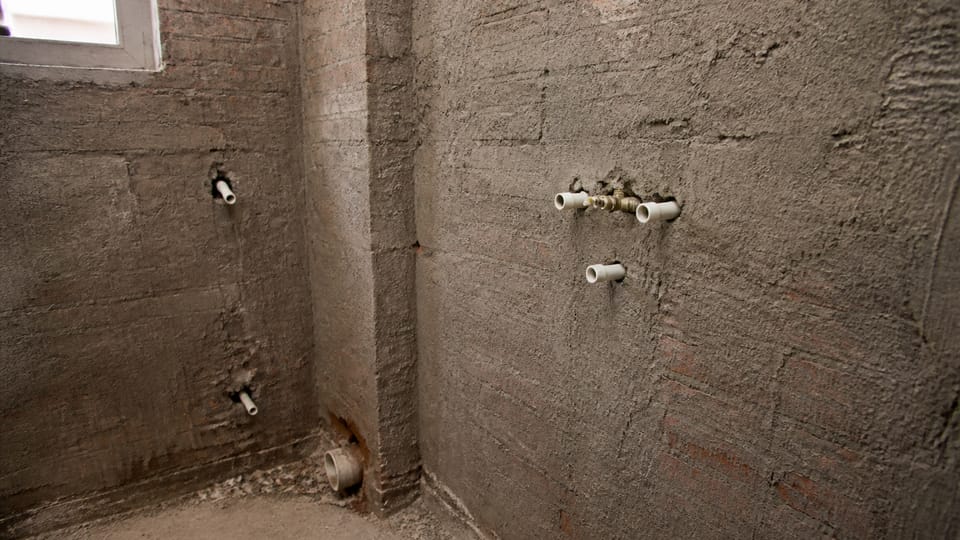
Concealed plumbing is pipework that runs inside a wall, a floor or a ceiling, or behind tiles, plaster or boarding. You can reach it only at the fittings: the valves, the taps and the outlets. The pipe itself is out of sight.
The term is not a code term. IS 2065 does not define “concealed”. It describes the rules that apply to pipes in walls and chases, and that is what this page uses.
What does IS 2065 say about pipes in walls?
The code’s main rule is in clause 8.1.11. It says piping shall not be buried in walls or solid floors. Where that cannot be avoided, it may be buried for a short distance if adequate protection is given against damage and no joints are buried.
The same clause also says the pipework shall be planned so that it can be reached for inspection, replacement and repair. It adds that the pipe is often arranged in or next to cupboards and recesses, if there is enough space to work on it.
Two more points from the code:
- Chases are made while the wall is built. Clause 9.8 says ducts or chases for pipes shall be provided during the building of the walls. If they are cut into an existing wall, they must be finished smooth and large enough to fix the pipe.
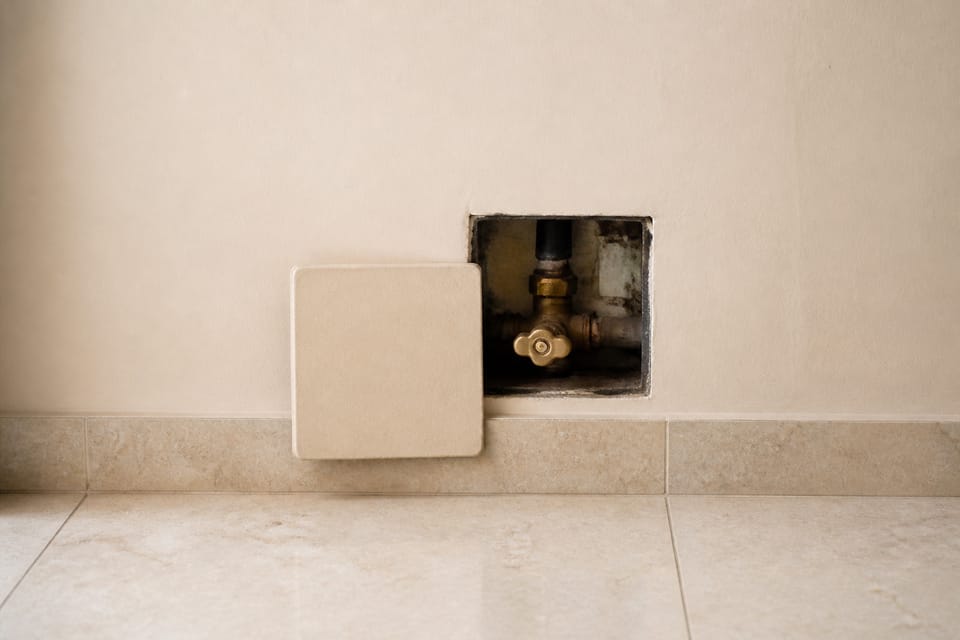
- Covers can be removed. Where a chase has a cover, clause 9.8.1 says it shall be fixed with screws for easy removal.
Chase depths and spacings are not in this page. They are design values for the wall and are not given here. The cutting chases page covers what the codes allow for chases in more detail.
What should be checked before the wall is tiled?
Clauses 8.1.11 and 9.8 give the rules above. The checks below are practice. The code does not list them as steps, and IS 2065 does not require a pressure test of concealed pipes before tiling. Ask your plumber to confirm each one.
| Check | Why it matters | Source |
|---|---|---|
| No joint is buried in the wall | A buried joint is the first place a leak starts and the hardest to find. | IS 2065 cl 8.1.11 |
| Every valve is reachable | A valve behind tile needs an access panel or a space to work in. | IS 2065 cl 8.1.4 (stop valves in flats and large buildings) and cl 8.1.11; practice for the panel |
| Chase is open and clear before the pipe is fixed | A chase cut after the wall is built is harder to finish smooth. | IS 2065 cl 9.8 (chases made while the wall is built); practice for the check |
| Pipe is fixed with clips, not left loose | A loose pipe can move and strain its joints. | IS 2065 cl 9.7.1 and 9.7.2 (copper and steel: clips); cl 9.7.3 sends plastic to IS 7634; practice for the rest |
| Sleeve fitted where a pipe passes a wall or floor | A sleeve lets the pipe move without straining the wall. | IS 2065 cl 8.1.12 |
| A pressure test is done and recorded before the wall is closed | A leak found after tiling needs the wall opened. | Practice; see the next section |
| Record drawing shows the pipe layout and valve positions, kept up to date | Someone repairing the wall later needs to know where the pipe is. | IS 2065 cl 15.2 (for maintenance); practice for new work |
| Tile layout is checked against the outlet positions | A tap or shower outlet that falls on a grout line or a cut tile is hard to fix. | Practice |
Source: IS 2065:1983 clauses as listed. The checks in the last two rows and the tile-layout row are practice.
What does the code say about testing before tiling?
IS 2065 has no clause that requires a pressure test of pipes inside a wall before they are tiled. Its clause 14.3 says that when a service line is complete, all draw-off taps closed, the service pipe must be “absolutely watertight”. That clause is about the service line, not about the pipes inside a wall.
Clauses 14.1 and 14.2 cover tests of mains and the factory test of pipes, not pipes inside a wall. So a pre-tiling pressure test is good practice, not a code rule. Ask for it in writing, with the date and the pressure used. Keep the record with the house papers.
Clause 9.6.2 says something useful when tile-work is opened for plumbing: the floors, walls and tile-work that are changed or replaced must be left in a safe structural condition. That is the rule to ask your plumber for when a finished wall is opened for a repair.
Inline image
What mistakes should I avoid?
These are practice points, not rules in IS 2065:
- Burying a joint. Use a continuous pipe where you can, and keep joints in an accessible place.
- No access to a valve. Plan the access panel before the tile layout is fixed, not after.
- Chasing without a plan. A chase cut after the wall is built may be too deep or too rough. Agree the route with the plumber before the walls are built.
- Closing the wall before a test. A leak found after tiling needs the tile removed.
- No drawing. Without a drawing of the concealed routes, a later repair starts with guesswork.
Frequently asked questions
Is it bad to hide pipes in a wall?
IS 2065 says piping shall not be buried in walls where that can be avoided, and that no joints are buried. It also says the work shall be planned so it can be reached for repair. A pipe in a chase, with its joints outside the wall and a removable cover, meets those rules better than a pipe buried in plaster.
Who is responsible for a leak in a concealed pipe?
This depends on your contract and local rules. The code does not say who pays. Ask your plumber for a written guarantee on the work and keep the test record.
When do I test the pipes?
Practice is to test the pipe run before the wall is closed, and again after the fittings are fitted. IS 2065 does not give a test rule for pipes inside a wall, so the test pressure and time should be agreed with your plumber and written down.
Do I need an access panel for every valve?
IS 2065 requires the work to be planned so that it can be reached for repair (cl 8.1.11). Clause 8.1.4 says that, in flats supplied by a common service pipe and in large buildings, stop valves shall be fixed in accessible positions. In practice, a removable panel is the usual way to meet that for a valve behind tile. Its size and position are for your plumber to plan.
Related guides
- Cutting chases in walls for pipes and conduits: what the codes allow
- Plumbing work during house construction: stages and inspection points
- Bathroom waterproofing: steps, wall height and the ponding test
- Bathroom leaking into the ceiling below: how to find the source
- Pressure test for water pipes before tiling: what IS 2065 asks
This guide is general information. Read the disclaimer. Your plumber and your engineer decide how the concealed pipes in your house are run and tested.
Sources
Change log
- : Added Related guides link to newly published article(s): pressure-test-for-water-pipes-before-tiling-what-is-2065-asks-and-what-to-ask-the-plumber. No other text changed. Approved by the reviewing engineer.
General information only. It is not a structural design or professional advice. Ask a licensed structural engineer or architect to check your plans and site.