
Short answer
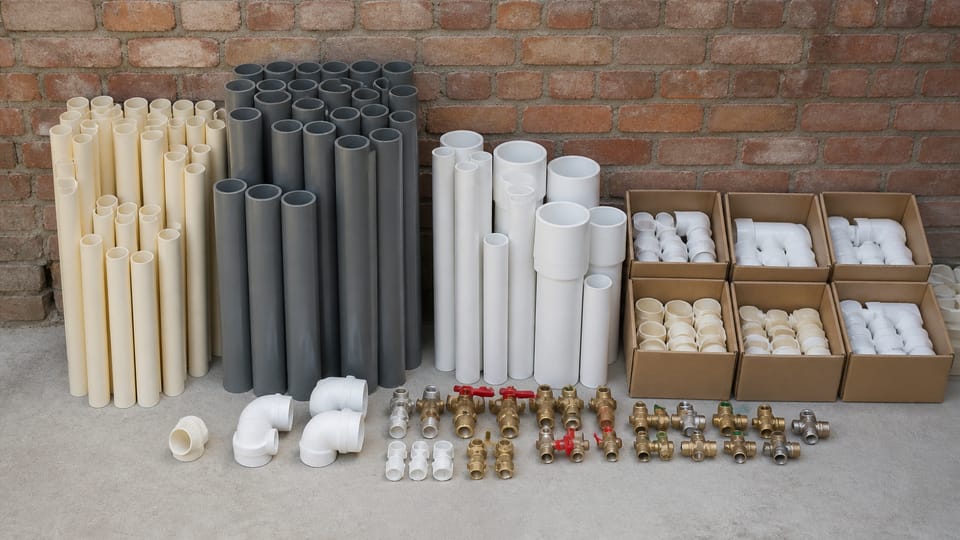
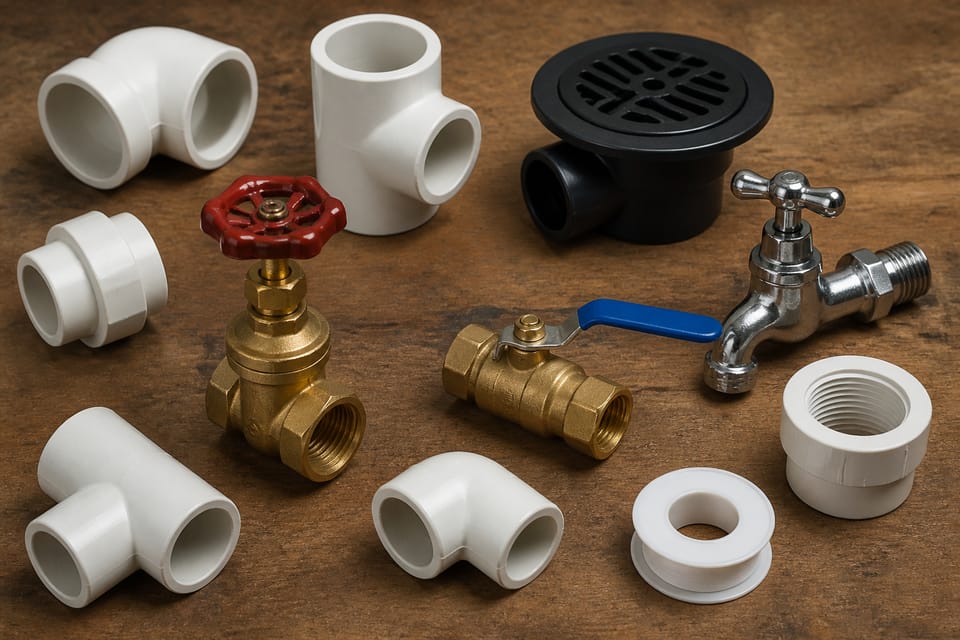
What materials are in a house plumbing job, and which IS covers each? A house plumbing job has water pipes, their fittings, valves, taps, tanks, drain pipes, traps and sanitary items. Each has its own Indian Standard: for example IS 15778 for CPVC pipe, IS 17546 for CPVC fittings, IS 4985 for UPVC water pipe, IS 13592 for drain pipe, IS 778 for gate valves and IS 12701 for plastic tanks. Pipes and fittings often have separate standards, so check both.
On this page (10)
- What goes into a plumbing materials list, and which standard covers each?
- What should be printed on each item?
- What are Type A and Type B drain pipes?
- Is the ISI mark compulsory on plumbing materials?
- How do I check that a mark is real?
- What gets left out of a list?
- What mistakes should I avoid?
- Frequently asked questions
- Related guides
- Sources
A plumber’s list can run long, and a pipe’s standard often does not cover its fittings. This page sets out the materials of a whole-house plumbing job by group, the Indian Standard for each, and what you should be able to read on the item. It gives no quantities, sizes, prices or brands. Those come from your plumbing drawing and your plumber’s written schedule. For the order of work, see plumbing work during house construction.
What goes into a plumbing materials list, and which standard covers each?
NBCS 2026, the national building code, says in Part E Section 1 clause 4.6.1: “All materials, water fittings and appliances shall conform to Part B ‘Building Materials’ of this NBCS.” Part B clause 2 says material “shall conform to the relevant Indian Standards”, unless otherwise specified in the code or approved. The grouping below is our own, for practical use. No code sets out a list like this.
Water supply pipes and fittings
| Item | Indian Standard | Notes |
|---|---|---|
| UPVC water pipe | IS 4985:2021 | Marked with “The word plumbing” on plumbing pipes |
| UPVC fittings | IS 7834 (Parts 1 to 8):1987; IS 10124 (Parts 1 to 13):2009 | IS 7834 is moulded socket fittings; IS 10124 is fabricated fittings |
| CPVC pipe | IS 15778:2007 | Pipes only |
| CPVC fittings | IS 17546:2021 | Has its own marking list |
| PPR pipe | IS 15801:2008 | We did not find a separate standard for PPR fittings |
| PE-AL-PE composite pipe | IS 15450:2022 | Annex A covers connectors and fittings |
| Polyethylene (HDPE) pipe | IS 4984:2016 | Fittings have separate standards |
| GI pipe | IS 1239 (Part 1):2004 | Galvanising is to IS 4736 |
| GI fittings | IS 1239 (Part 2):2011 | Separate from the pipe |
| UPVC solvent cement | IS 14182:1994 | UPVC only, not for CPVC |
| CPVC solvent cement | IS 18837:2024 | Title and status from BIS; we did not read the text |
| PTFE thread tape | IS 14643:1999 | “for use as a thread sealing material” |
Valves, taps and tank items
| Item | Indian Standard | Notes |
|---|---|---|
| Gate, globe and check valves | IS 778:1984 | Copper alloy |
| Ball valves | IS 19315:2025; IS 9890:1981 | IS 19315 is for water works (title only read); IS 9890 covers cast iron and carbon steel valves for general purposes |
| Taps, mixers, stop valves | IS 8931:2021; IS 781:1984 | IS 9763:2000 for plastic taps |
| Float valves | IS 1703:2000; IS 12234:2021; IS 13049:1991 | Copper alloy; plastic equilibrium; diaphragm plastic body |
| Plastic water tank | IS 12701:1996 | Maker’s name and net capacity moulded on |
Drainage, traps and covers
| Item | Indian Standard | Notes |
|---|---|---|
| Soil, waste, vent and rainwater pipe | IS 13592:2013 | Type A or Type B |
| Soil and waste fittings | IS 14735:1999 | Lists “Waste trap with strainer (Nahani trap with jali)” |
| Underground UPVC drain pipe | IS 15328:2003 | For underground drainage |
| Stoneware drain pipe | IS 651:2007 | Includes gully traps |
| Concrete drain pipe | IS 458:2021 | |
| Cast iron soil pipe and fittings | IS 1729:2023 | Has a table for a floor trap (nahani) |
| Metal traps | IS 5219:2013 | Copper alloy P, S, tube and bottle traps |
| China floor traps and pan traps | IS 2556 (Part 7):1995 | Vitreous china |
| Manhole covers | IS 1726:1991 (cast iron); IS 12592:2002 (precast concrete) |
Sanitary items
| Item | Indian Standard | Notes |
|---|---|---|
| Vitreous china sanitary ware, general | IS 2556 (Part 1):2021 | Marking is in the specific parts |
| Ceramic flushing cistern | IS 774:2021 | Dual flush |
| Plastic flushing cistern | IS 7231:2021 | BIS shows it as not withdrawn, but the validity date shown, 31 March 2026, has passed. We found no newer edition, and NBCS 2026 still lists it |
| Waste fittings | IS 2963:2013 |
For a room-by-room view of the bathroom, use the bathroom plumbing fittings list. We have not listed every part of each series. Several validity dates end soon: BIS shows IS 8931, IS 12234, IS 774 and IS 2556 (Part 1) to 30 December 2026, so check the status before you order.
What should be printed on each item?
Most product standards ask for the maker’s name and details of the item, not the IS number. IS 1239 (Part 1) is the one we read that puts the number on the item itself.
| Item | What the standard asks for | Clause |
|---|---|---|
| UPVC pipe | Maker, outside diameter, class and pressure rating, batch or lot, “The word plumbing in the case of plumbing pipes” | IS 4985 cl 13.1 |
| CPVC pipe | Maker, outside diameter, class and pressure rating, batch or lot, “at intervals of not more than 3 m” | IS 15778 cl 12.1 |
| CPVC fitting | Maker, nominal size, SDR, the word ‘CPVC’; batch on the box or packet | IS 17546 cl 11.3 |
| GI pipe | “manufacturer’s name or trade-mark, IS No. that is, IS 1239 ( Part I ) and class of tubes” | IS 1239 Part 1 cl 17.1 |
| SWR drain pipe | Maker, outside diameter, Type A or B, batch | IS 13592 cl 14.1 |
| SWR fitting | Maker, nominal diameter, angle where it applies; batch on the carton | IS 14735 cl 19.1 |
| Tap | Maker, plus the letter H or C, or fire red or blue colour; size and batch on the packing | IS 8931 cl 13.1, 13.2 |
| Gate, globe, check valve | Cast on the body: maker, class, nominal size; flow arrow on globe and check valves | IS 778 cl 13.1 |
Colour alone is a weak check. IS 4985 makes the UPVC pipe body light grey and uses pink as the print or band colour for plumbing pipes, not the colour of the pipe. IS 1239 uses colour bands: yellow for light, blue for medium and red for heavy. IS 15778 and IS 17546 make CPVC off-white. Read the print.
What are Type A and Type B drain pipes?
IS 13592 says: “Type A — for use in ventilation pipe work and rain water” and “Type B — for use in soil and waste discharge systems.” A list that says only “SWR pipe” does not tell you which one you are buying, so ask for the type for each line. For fitting names, see SWR pipe fittings.
Is the ISI mark compulsory on plumbing materials?
It depends on the item. Many product standards leave it open. IS 15778 says: “Each pipe may also be marked with the Standard Mark.”
Where a government Quality Control Order applies, the goods “shall bear the Standard Mark under a license from the Bureau of Indian Standards”. That wording is from the Steel Tubes order of 2020. BIS keeps a list of such products, called Scheme I.
We read the list on 1 November 2026 (last updated 22 October 2026). It lists IS 1239 (Part 1) steel tubes, spun iron pipes, IS 1729 and IS 1879 cast iron drainage and malleable fittings, IS 1726 manhole covers, IS 14810 copper tubes for plumbing, and IS 779 and IS 2692 water meters and ferrules.
We did not find these on that list: IS 4985, 15778, 17546, 13592, 14735, 4984, 15801, 15450, 7834, 10124, 778, 781, 1703, 12234, 8931, 2556, 774, 7231, 12701 or 14182. That is what the list showed on that date. It does not prove that no order applies, and orders change, so check the current list. For a private house, you can still ask for marked items in your written schedule.
How do I check that a mark is real?
BIS says the licence number should appear with the mark, “preferably below the Standard Mark as ‘CM/L-XXXXXXXXXX’”. A BIS press note says consumers are advised “to verify the authenticity of products before purchase by checking the licence details through the BIS Care App”. The app is free, and its ‘Verify Licence Details’ option fetches licensee details from the CM/L number.
It checks a licence, not the piece in your hand. So compare the maker and standard it shows with what is printed on the item. BIS gives “As Per ISS” and “From BIS Approved” as examples of spurious marks.
What gets left out of a list?
This is practice, not a code list. These small items are often missed, then bought in a hurry from the nearest shop:
- Clips and clamps. CPWD says “DO NOT USE NAILS FOR HOLDING OF PIPES IN THE CHASES” for CPVC pipes.
- Thread tape. CPWD’s specification for PE-AL-PE work says “Only Teflon Tape should be used on threads instead of ‘Dhaaga/ Safeda’”.
- The right solvent cement for each pipe type.
- Unions at tanks and at items that may be removed later.
- Stop valves for each line, and a wash-out valve at the tank.
- Mosquito-proof screens on tank overflow and vent pipes.
- Vent pipe cowls, cleanouts and floor trap gratings.
- Gully traps, inspection chamber covers and sleeves through walls.
What mistakes should I avoid?
These are practice points unless a standard is named.
- Assuming the pipe’s standard covers its fittings. Check CPVC vs UPVC before mixing systems.
- Using UPVC solvent cement on CPVC. IS 15778 Annex E says: “Use only CPVC cement jointing.”
- Mixing makers of pipe and fitting without asking. We found no clause that bars this, but ask the maker in writing whether they fit.
- Buying a list with no drawing. The list should come from the plumbing drawing.
- Choosing by colour rather than the printed marking.
- Accepting an “ISI” sticker with no IS number or CM/L number.
- Leaving out bills and batch numbers. Keep both, because they help if a line fails later.
Frequently asked questions
What items are used in concealed plumbing?
The same pipes and fittings as open work, plus clamps, valves and test points. See what to check before tiling.
Which pipe is best for a house?
The standards do not rank pipes. Each covers a material and a use. Your plumber or engineer chooses by line, using the types of pipes in a house.
Is IS 15778 for CPVC fittings too?
No. Its title covers pipes. CPVC fittings have their own standard, IS 17546:2021.
Is there an Indian Standard for teflon tape?
Yes. IS 14643:1999 covers PTFE tape “for use as a thread sealing material and in similar applications”.
Does the plumbing list need brand names?
The standards do not say so. In practice, a contractor’s schedule often names agreed makes, which helps you check deliveries. This page does not suggest any brand.
Related guides
- Taps and valves in a house: bib tap, pillar tap, angle valve
- Ball valve vs gate valve: what the standards say about each
- IS codes for house construction: which standard covers what
- Is UPVC pipe safe for drinking water? What IS 4985 requires
- Pressure test for water pipes before tiling: what IS 2065 asks
This guide is general information. Read the disclaimer. Your plumber and engineer fix the final list for your house from its drawing.
Sources
- SP 7:2026, National Building Construction Standards (NBCS) 2026, Part B clause 2 and Part E Section 1 clause 4.6.1. From an unofficial archive.org copy.
- IS 4985:2021, UPVC pipes for potable water supplies: clauses 10.1, 13.1 and 13.1.1.
- IS 15778:2007, CPVC pipes for potable hot and cold water distribution supplies: clauses 9.1, 12.1, 12.2 and Annex E.
- IS 17546:2021, CPVC fittings for potable hot and cold water distribution supplies: clauses 8.1, 11.3 and 11.3.1.
- IS 1239 (Part 1):2004, Steel tubes, tubulars and other wrought steel fittings, Part 1 Steel tubes: clauses 12.1, 17.1 and 17.2.
- IS 13592:2013, UPVC pipes for soil and waste discharge systems: clauses 3 and 14.1.
- IS 14735:1999, UPVC injection moulded fittings for soil and waste discharge systems: clauses 19.1 and 19.1.1 and the fittings list.
- IS 8931:2021, plated copper alloy taps, mixers and stop valves: clauses 13.1 and 13.2. BIS shows validity to 30 December 2026.
- IS 778:1984, copper alloy gate, globe and check valves: clause 13.1 as amended by Amendment 3 (2005).
- IS 12701:1996, rotational moulded polyethylene water storage tanks: clauses 10.1 and 10.2. BIS shows validity to 31 March 2027.
- IS 14643:1999, PTFE thread sealing tape: clause 1.1.
- BIS, Products under compulsory certification, Scheme I list, last updated 22 October 2026, read 1 November 2026.
- Steel Tubes (Quality Control) Order, 2020, S.O. 281(E), 21 January 2020: the wording on the Standard Mark.
- BIS, BIS Standard Mark page (the CM/L licence number).
- BIS, Genuine and spurious marks (examples of spurious marks).
- BIS blog, BIS Care app ('Verify Licence Details' from the CM/L number).
- Press Information Bureau, BIS press note, 29 January 2026 (verify a licence through the BIS Care App).
- CPWD Specifications 2019, Volume 2, clauses 18.9.9.1 (nails, CPVC section) and 18.10.4.7 (thread tape, PE-AL-PE section). A government contract specification, used here as a reference.
General information only. It is not a structural design or professional advice. Ask a licensed structural engineer or architect to check your plans and site.