
Short answer
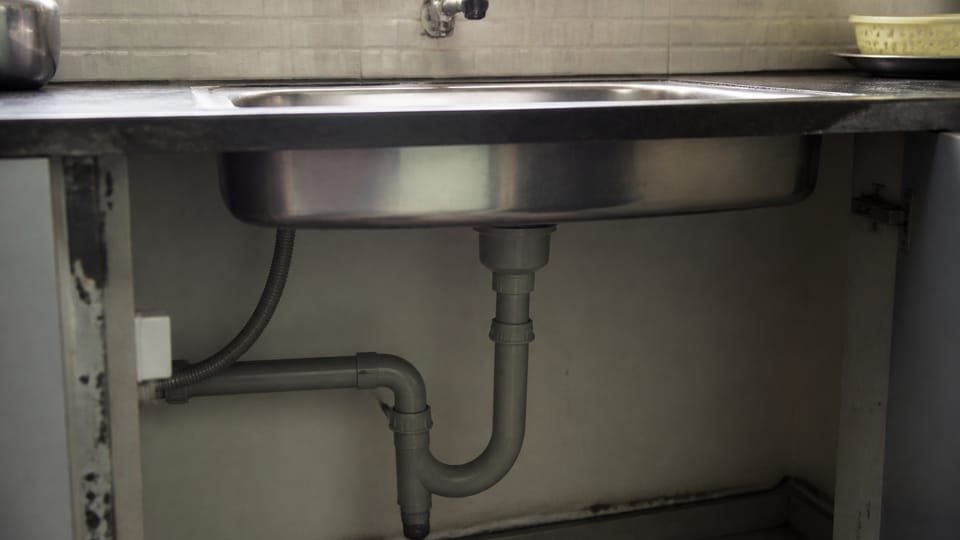
How should a kitchen sink drain be laid, with the pipe and trap? Every sink needs a trap with a water seal, placed to stop foul air coming back into the room. IS 5329 covers the pipes above ground and says traps must be ventilated where needed to keep the seal. The trap must be accessible for cleaning. Neither standard covers kitchen grease in detail, so ask the plumber and the authority whether a grease or intercepting trap is needed.
On this page (10)
A kitchen sink is one of the most used drains in a house, and its trap is the part that stops smell and foul air from coming back up the pipe. This guide explains how the sink drain is laid, what the Indian codes say about traps, venting and access, and what they do not say about kitchen grease. It names no sink brand and gives no pipe size or slope. Those depend on the layout and the plumber’s design.
What is the trap for?
The trap holds a small amount of water, and the water is the seal. IS 5329 defines a trap as “A fitting or device so designed and constructed as to provide, when properly vented, a liquid seal which will prevent the back passage of air …” (clause 2.23). The code says that “The entry of foul air to the building should be prevented by suitable traps, properly sited” (clause 6.5.1).
The code asks that every sink have one. It says that waste from “every bath, wash basin or sink” shall be trapped immediately beneath it “by an efficient siphon trap with adequate means for inspection and cleaning” (clause 6.7.1). A sink without a trap has no seal at all.
Why is venting needed?
A trap can lose its seal in two ways. The water can be drawn out by the flow of the waste, and the code calls this self-siphonage. It defines self-siphonage as “The extraction of water from a trap by siphonage setup by the momentum of the discharge from the sanitary appliance to which the trap is attached” (clause 2.21).
The vent protects the seal. IS 5329 says the branch ventilating pipe “is fitted to prevent loss of water seal from a trap owing to partial vacuum back pressure, or surging caused by air movement within the pipe system” (clause 2.2). The waste trap is ventilated into the external air “whenever such ventilation is necessary to preserve the seal of the trap” (clause 6.7.1). The code also says that ventilating pipes “should be so installed that water cannot be retained in them” (clause 6.8.1).
The layout matters too. IS 5329 Fig. 6, on single-stack waste-pipe connections, labels two entry shapes “UNDESIRABLE ON ACCOUNT OF SELF SIPHONAGE”. Ask the plumber to show the connection on the drawing. Ask for the layout to be shown on the drawing.
How is the pipe laid and what is it made of?
IS 5329 covers the soil, waste and vent pipes above ground, and it excludes rainwater pipes (clauses 1.1 and 1.2). It lists the pipe materials, such as asbestos cement, cast iron, salt glazed stoneware and galvanised steel, and “any other material as approved by the local authority” (clause 5.2). IS 1742 says that unplasticised PVC “may be used for drainage purposes” (clause 4.7.6). Where hot water is expected, as from a kitchen sink, the wall should be at least 3 mm thick.
The gradient of the waste pipe is a construction value. The code gives a range of gradients for horizontal branches (clause 6.2.2), and says that flat gradients reduce self-siphonage and noise in single-stack plumbing (clause 6.9.1(c)). This guide prints no figure; the plumber sets the gradient for your layout.
How is the trap cleaned?
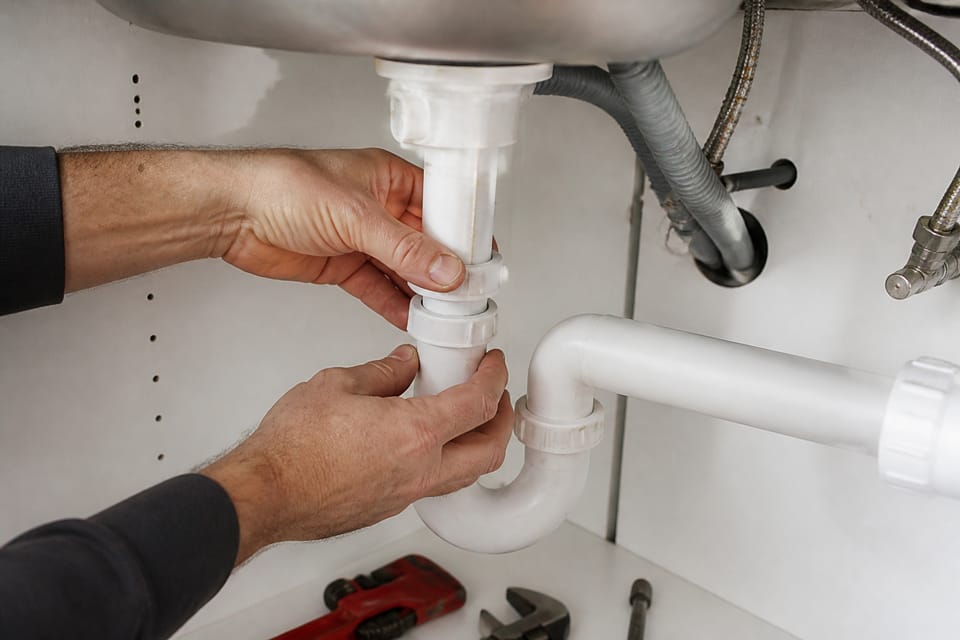
The code asks that traps be easy to reach. It says that traps “should be conveniently accessible and provided with cleaning eyes, or other means of cleaning” (clause 6.5.3), and that “Ample provision should be made for access to all pipework” (clause 6.3.4).
IS 1742 asks for the same access on the drain. It requires “Adequate and easy access for cleaning and clearing obstructions” (clause 4.1.1(c)), and it says that “All lengths of main and branch drains shall be rodded by means of drain rods and a suitable runner or leather plunger” (clause 9.2.2(c)).
What about kitchen grease?
Neither standard uses the words grease, fat or oil for kitchen waste. The code’s only related text is about an intercepting trap. IS 1742 asks the authority whether one “is required by the authority on the drain near the boundary of the curtilage” (clause 4.2.2). If one is fitted, it “shall be adequately cleaned and flushed with clean water” (clause 9.2.2(b)).
So whether a kitchen needs a grease trap, and how big it is, is not decided in these two standards. Ask the authority and the plumber. This section is practice: a grease trap, if one is fitted, should be cleaned on a schedule the owner keeps.
What should I check?
This section is practice, not a code rule.
- The trap sits directly under the sink, and its seal is full of water.
- The vent or the layout gives the trap protection against self-siphonage, as the drawing shows.
- A cleaning point or access is left on the trap and the pipe run.
- The pipe material is the one the authority approves.
- Whether the authority asks for an intercepting or grease trap on the drain, and its cleaning schedule.
What mistakes should I avoid?
This section is practice.
- Leaving the trap dry because the sink is rarely used. A dry trap lets smell up.
- Pouring hot cooking fat down the sink where a grease trap is fitted, without cleaning it.
- Building the sink trap into a wall where it cannot be reached.
- Putting the trap at the wrong level for the layout the drawing shows.
- Assuming a grease trap is needed or that it is not, without asking the authority.
Frequently asked questions
Can I use a plastic pipe for the sink?
IS 1742 says unplasticised PVC may be used for drainage purposes. The authority decides the pipe material that it approves, and the plumber checks the joints and the fall.
What if the sink smells?
Check whether the trap is dry, and whether the vent is blocked. Fill the trap with water and check the seal. This is practice; a plumber should confirm the cause.
Is a grease trap always required?
The standards do not say that every kitchen needs one. Ask the authority whether it requires an intercepting trap on the drain.
Related guides
This guide is general information. Read the disclaimer. Your plumber and the local authority decide the drain for your kitchen.
Sources
General information only. It is not a structural design or professional advice. Ask a licensed structural engineer or architect to check your plans and site.