
Short answer
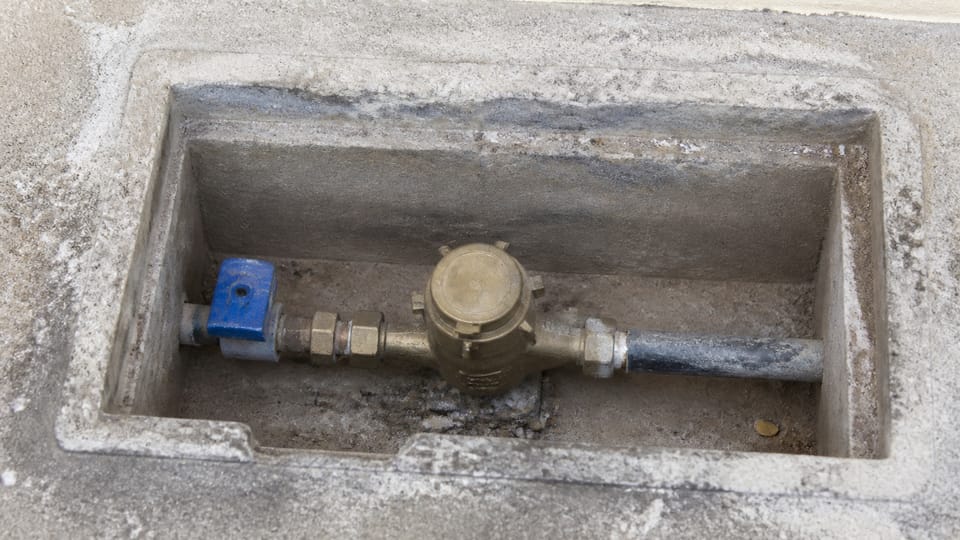
How do I read a domestic water meter, and what do Class A and Class B mean? Read the register at the same time each week or month and note the date. IS 779:1994 sorts the meters into classes A and B by their maximum verification scale interval and their metrological characteristics, including the flow at which each starts to register. The standard does not say which class suits a house. Ask your water provider. IS 779 also sets fitting rules: a stop valve upstream, a strainer that stays in, and an inferential meter level with its dial up.
On this page (11)
A water meter tells you how much water the house has drawn from the supply. It is the reference point for the water bill, and it is the first place to look for a leak. Yet most owners have never read one. This page explains how to read the register, what the classes in IS 779 mean, how the standard says the meter should be fitted, and what the standard leaves to your water provider.
The page does not give a tariff, a bill, or the connection steps for your city. Those are set by the water board or the local body.
How is the register read?
The meter’s register shows the volume of water that has passed through the meter. IS 779 says the indicator must allow “reliable, easy and unambiguous reading of the volume of water measured, expressed in litres” (clause 8.2). The volume may be shown by pointers on a circular scale, by digits in windows, or by both.
Three points from the standard help:
- The unit is the kilolitre. IS 779 measures in litres and shows the total in kilolitres, written “KILO-LITRES” on the dial or next to the digits (clause 8.2.3).
- Pointers turn clockwise on a dial type (clause 8.2.2).
- The register rolls over. A 15, 20 or 25 mm meter records up to 9999 kilolitres, and a 40 or 50 mm meter up to 99999 kilolitres, then reads zero (clause 8.1).
The standard does not explain the register or the billing units in step-by-step terms. The reading routine on this page is practice.
How do I take a reading?
The practice that works is simple. Take the reading at the same time each week or month, write the date beside it, and keep the notes. The comparison between two dates tells you the water used between them.
If a pointer sits between two numbers, the usual practice is to read the lower number, because the pointer has not finished its travel. The standard does not say this.
What are Class A and Class B?
IS 779 sorts domestic meters into two classes, A and B. Clause 5 bases the classes on the verification scale interval and on how the meter performs at low, transitional and high flow (clauses 8.3 and 11). The class text was changed by Amendment No. 3 in 1999, and the old Class O was withdrawn after three years from printing (Foreword).
The classes differ in how small a flow the meter will register. A Class B meter starts to register at a lower flow than a Class A meter of the same size. For a 15 mm meter the standard’s starting flows are 60 litres an hour for Class A and 30 for Class B. That is the difference the standard sets.
The standard does not say which class suits a house, a flat or a commercial premises. It does not say that one class is more accurate than the other. Ask your water provider which class it fits.
| Point | Class A | Class B | Source |
|---|---|---|---|
| Basis of the class | Verification scale interval and performance at low, transitional and high flow | Same basis | IS 779 clause 5 (amended 1999) |
| Where it starts to register | Later (higher starting flow) | Earlier (lower starting flow): 60 and 30 litres an hour at 15 mm | IS 779 clause 11 and Table 3 |
| Which use it suits | Not stated in the standard | Not stated in the standard | IS 779 has no use rule |
| Accuracy ranking | Not stated | Not stated | IS 779 does not rank the classes |
Source: IS 779:1994, clause 11 and Table 3 (checked on the page image).
Single-jet or multi-jet?
Amendment No. 1 (1995) adds two definitions. In a single-jet meter the water strikes the turbine at a tangent, and the body is the measuring chamber. In a multi-jet meter the water passes through a distribution box with holes around the turbine. The standard does not say which type suits which flow.
Where is the meter fitted?
IS 779 gives recommendations for the installation in its Annex D. Clause 13 says that water meters “are to be installed and maintained properly” and that the Annex recommendations “may be followed”. The main points are:
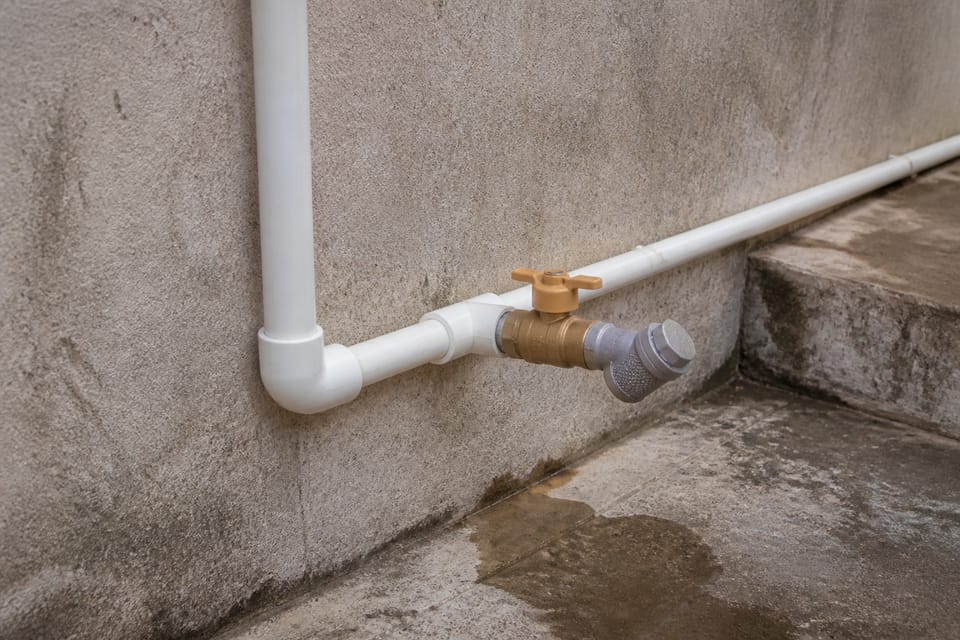
- A stop valve on the upstream side, so the meter can be isolated (Annex D, clause D-2.3, which says one should be provided).
- A strainer on the inlet, easy to remove and clean (clause 7.6). The strainer must not be removed (checklist, clause 13.2). The internal strainer does not stop sand, so a filter or dirt box is needed upstream where there is sand (clause D-1.3).
- The meter always full of water, with an air release valve upstream where air can enter; the standard says such a valve may be fitted (clause D-2.2).
- Flush the line before fitting, then open the control valves slowly until the line is full (clause D-2.7).
- Straight pipe on both sides equal to ten times the nominal size of the meter (clause D-2.5).
- The dial position. An inferential meter is placed horizontally with the dial facing upwards (clause D-2.4 and checklist clause 13.2(e)). A semi-positive meter may be fixed in any position, with the dial up or sideways (clause D-2.3).
- A meter box. The meter may be underground in a box, with the top of the box slightly above the surrounding ground to keep groundwater out (clause D-2.8). Frost protection is needed where frost is a risk (clause D-2.6).
The standard does not say whether the meter goes before or after the overhead or storage tank. That is set by the water provider or the local body.
What is printed on the meter?
The meter body must be marked with the maker’s name or trade-mark, the nominal size and the class, the direction of flow on both sides, the year of manufacture and a serial number (IS 779, clause 13.1). Check these when the meter is fitted. The standard does not say on which face of the body the marks go.
Inline image
What mistakes should I avoid?
These are practice points, not rules in IS 779:
- Reading the wrong figure. Check the unit symbol on your own meter before you compare readings. Some meters show a second, finer scale.
- Reading a pointer as the higher number when it sits between two digits.
- Taking readings at irregular times, or after water was used, with no date written.
- Testing for a leak while the overhead tank is filling. An open float valve or a cistern refill draws water through the meter and looks like a leak. Shut the tank feed or test with the tank full.
- Removing or clogging the strainer. Clean it only with the meter isolated by the stop valve.
- Fitting the meter with the dial facing down, or on a pipe that is not full.
- Burying the box so its lid sits below the ground. Groundwater then gets in.
Frequently asked questions
Which class of water meter is in my house?
The class is marked on the meter body. The standard does not say which class to use. Ask your water provider.
How do I check for a leak?
Shut every tap, appliance and cistern that draws water. Note the reading, wait for a set time and read again. If the reading has moved, water is passing somewhere. The time to wait is practice. The standard does not give it.
Does IS 779 say where the meter should go?
Yes, in its installation annex: a stop valve upstream, a strainer, the meter full of water, a dial facing up for an inferential meter, and a box accessible for reading. It does not say whether the meter goes before or after the storage tank.
Is a Class B meter more accurate?
IS 779 does not say that. It sets the classes by the flow at which each starts to register. Ask your water provider before you assume either class is better.
Related guides
- HDPE pipe for a house: service line, borewell and where to avoid it
- Water tank size for a house: litres per person and tank capacity
- Types of pipes in a house: water, drainage, rainwater and gas
- Electricity meter in a house: where it goes, how high, the meter box
- Float valve not closing: why the tank overflows and how to fix it
This guide is general information. Read the disclaimer. Your water provider and your plumber decide the meter, its class and where it is fitted in your house.
Sources
Change log
- : Added Related guides link to newly published article(s): float-valve-not-closing-why-the-tank-overflows-and-how-to-adjust-or-replace-it. No other text changed. Approved by the reviewing engineer.
General information only. It is not a structural design or professional advice. Ask a licensed structural engineer or architect to check your plans and site.