
Short answer
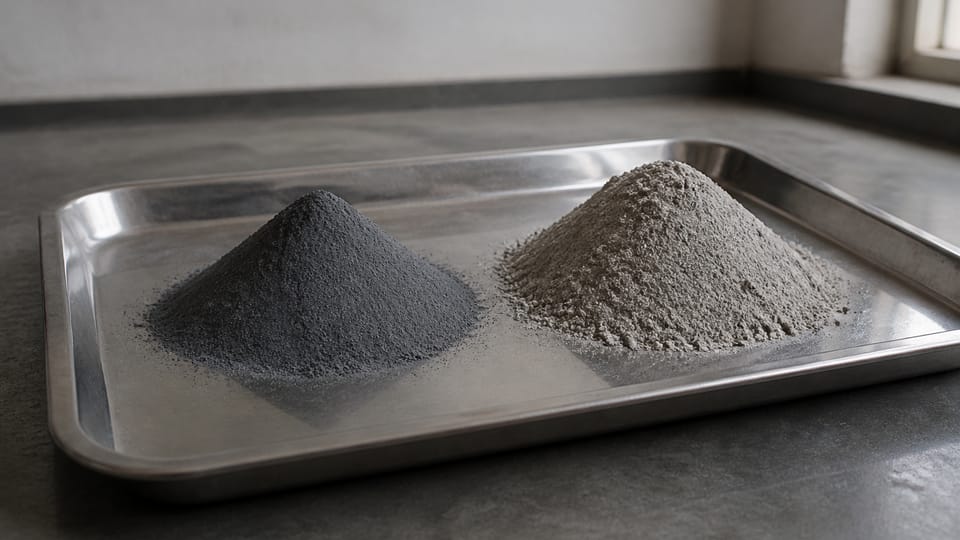
What is micro silica, and what does it do in concrete? Micro silica is silica fume, a very fine powder made as a by-product of silicon and ferro-silicon furnaces. IS 15388 sets its quality, and IS 456 says it may be used as part replacement of cement. It helps make concrete denser and less permeable, but the mix can be sticky and needs trials and careful curing. No Indian code we read requires it for a house.
On this page (13)
- What is micro silica?
- How does it work in concrete?
- What does IS 15388 ask of it?
- What does IS 456 say about using it?
- What care does a mix with silica fume need?
- Is it the same as fly ash?
- Does a house need micro silica?
- What should I ask the supplier?
- Is micro silica dust harmful?
- What mistakes should I avoid?
- Frequently asked questions
- Related guides
- Sources
A ready-mix slip, a repair quote or a salesperson mentions “micro silica”, and you want to know what it is. This page explains what it is, how it works, what the Indian standards ask of it, and what to ask a supplier. It gives no prices and names no brands. It gives no dose for your concrete, because your mix designer sets that by trials. It also does not say your house needs it, because no Indian code we read says so.
What is micro silica?
Micro silica is another name for silica fume. IS 15388, the Indian Standard for this material, says: “It is also known as condensed silica fume and micro silica.”
Clause 3.1 defines it as a “Very fine pozzolanic material, composed mostly of amorphous silica produced by electric arc furnaces as a byproduct of the production of elemental silicon or ferro-silicon alloys.” A pozzolanic material is one that reacts with what the cement releases as it sets, and forms more binder.
So it is collected from furnaces, and you cannot make it on site. The standard’s foreword gives its average particle diameter as 0.10-0.15 µm. That is far finer than cement.
Do not confuse it with silica sand, quartz powder or silica flour. The Silica Fume User’s Manual, from a US producers’ trade body, says silica flour and silica dust “will not perform like silica fume in concrete”. They are also crystalline, unlike the amorphous silica in the IS 15388 definition.
How does it work in concrete?
It works in two ways, in the plain words of the US manual. The tiny particles act as a filler: “silica fume fills in the spaces between cement grains”. They also react with what the cement releases, and form more of the binding material.
NBCS 2026, the national building code, says in Annex C: “Addition of silica fume, GGBS and fly ash improve denseness and reduce permeability”. Notice that it names three materials, not only silica fume. IS 10262, the mix design code, says: “Use of silica fume is generally advantageous for grades of concrete M50 and above and for high performance concrete with special requirements, like higher abrasion resistance of concrete.”
That is a long way above the grades most houses use. See concrete grades for what those numbers mean.
What does IS 15388 ask of it?
IS 15388 is a material specification. It sets no dose and has no grades. It covers “the chemical and physical requirements of silica fume for use in concrete and other systems containing hydraulic cement.”
| Test | Requirement | Where |
|---|---|---|
| Silica (SiO2) | At least 85.0 percent | Table 1 |
| Moisture content | At most 3.0 percent | Table 1 |
| Loss on ignition | At most 4.0 percent | Table 1 |
| Alkalies as Na2O | At most 1.5 percent, where the aggregate is reactive | Table 1 |
| Specific surface | At least 15 m2/g | Table 2 |
| Left on a 45 micron sieve | At most 10 percent | Table 2 |
| Variation in the 45 micron result from the average | At most 5 | Table 2 |
| 7-day compressive strength | At least 85.0 percent of the control | Table 2 |
Note 1 to Table 2 says: “Any one of the tests specified in (i) or (ii) and (iii) indicated may be adopted.” So a sheet may show either the specific surface or the two sieve results. The 7-day strength line is not part of that choice. These limits are for the material, and a laboratory checks them. You cannot judge them by eye.
It comes in three forms, as clauses 3.2 to 3.4 describe: natural, densified and slurry. Densified powder is packed to a higher bulk density. Slurry is mixed with water, “typically with a dry content of 50 percent by mass”.
What does IS 456 say about using it?
IS 456, the concrete code, says in clause 5.2.1.2: “Silica fume conforming to IS 15388 may be used as part replacement of cement.” That is permission, not a requirement. Clause 5.2 adds: “Uniform blending of the mineral admixtures with the cement should be ensured.”
These clauses were changed by amendments. We read them through Amendment 5 of 2019, and we could not read Amendment 6. Your engineer should check the latest text.
The codes also describe the usual range, and they do not agree. The note in IS 456 says it is “usually used in proportion of 5 to 10 percent of the cement content of a mix”. NBCS 2026 says “3 percent to 10 percent of the cementitious content of a mix”. Both describe common use. Neither is a dose for your concrete, and “10 percent” is not a limit in the IS 456 text we read. The mix designer fixes the amount by trials.
The US manual says silica fume “is rarely used as a direct replacement material for portland cement”. So US practice and the IS wording can differ. Your engineer decides.
What care does a mix with silica fume need?
IS 456 lists the care points, and they matter more than the powder.
- It can be hard to finish. Clause 5.2.3.4 says mixes with very fine mineral admixtures “can be sticky and difficult to finish”.
- Admixtures need trials. Clause 5.2.3.1 says: “The compatibility of chemical admixtures and cementitious materials should be ensured by trials.” The US manual says it is “necessary” to use it with a water-reducing admixture or superplasticizer.
- The surface can crack early. Clause 5.2.3.2 says it “may exhibit an increase in plastic shrinkage cracking because of its low bleeding characteristics”, and asks for protection “against drying, both during and after finishing.”
- Curing lasts longer. Clause 13.5.1 says “at least 10 days where mineral admixtures or blended cements are used”, and recommends that this may be extended to 14 days. See how long to cure concrete.
Do not add water because the mix feels sticky. See our page on the water-cement ratio.
Is it the same as fly ash?
No. Both are mineral materials used with cement, but they differ.
| Point | Micro silica | Fly ash |
|---|---|---|
| Comes from | Silicon and ferro-silicon furnaces | Coal-fired power stations |
| Indian Standard | IS 15388 | IS 3812 (Part 1) |
| IS 456 clause | 5.2.1.2 | 5.2.1.1 |
| Where you may meet it (practice) | Special high-grade mixes and some repair products | Blended cement and ready-mix concrete |
This table gives no ranking. Each suits a different job. For more, read what fly ash is. Silica fume is a mineral material, so it is not one of the chemical types covered on our admixture page.
Does a house need micro silica?
No Indian code we read requires it for a house. Our view, which your engineer should confirm, is that an ordinary house seldom calls for it. If someone proposes it, ask what problem it solves, and why good materials, compaction and curing would not be enough.
Be careful with claims that it makes plaster or mortar waterproof. The scope of IS 15388 speaks broadly of “other systems containing hydraulic cement”, but the Indian plaster, masonry mortar and waterproofing codes we read (IS 1661, IS 2250, IS 2645) do not mention it. The US manual says undensified silica fume is mainly used in pre-bagged products such as grouts and repair mortars. For site waterproofing additives, see integral waterproofing compounds.
What should I ask the supplier?
The first two points and the chloride point come from IS 15388. The rest are practice.
- Ask for the test certificate. Clause 10 says the supplier, “if requested by the purchaser, shall furnish a certificate to this effect, indicating the results of the tests”.
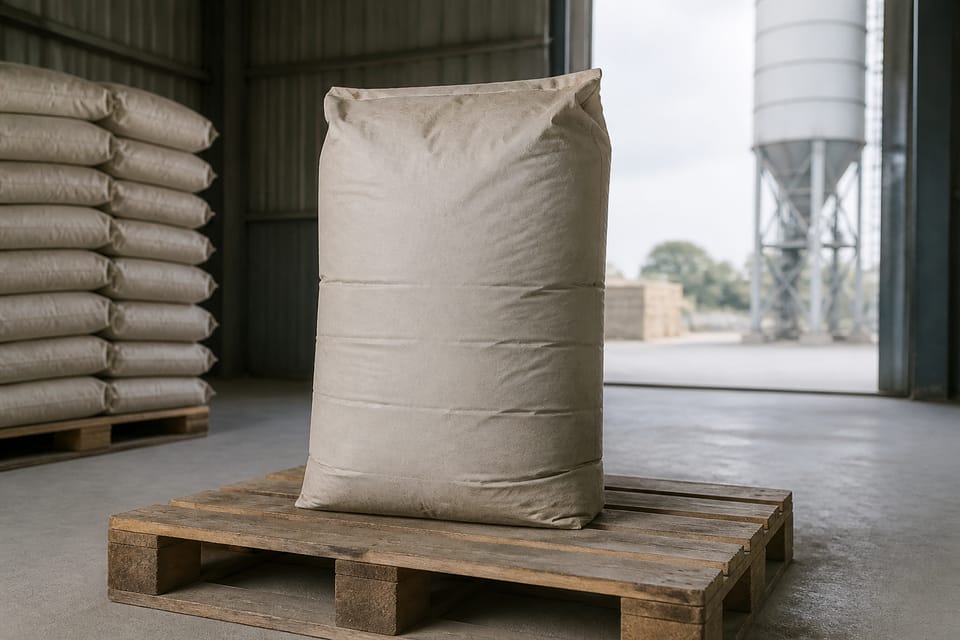
- Read the bag. Clause 11 asks for source, net mass, batch or control unit number, and month and year of packing. The Standard Mark “may also” be marked, so it is not always there.
- Check that the sheet names IS 15388. A high silica figure on a listing does not prove that it is silica fume.
- Ask for the chloride content. The foreword says it “shall be declared by the manufacturer”, although no clause or table repeats this.
- Ask for the safety data sheet.
Is micro silica dust harmful?
Treat it with care. IS 15388 clause 12.1 says the amorphous material “should therefore be less dangerous than a crystalline material. However, it is advisable to take all necessary precautions while handling and using the material.” The US manual says: “An appropriate dust mask or respirator must be worn when handling dry silica fume before it is added to concrete.” Follow the maker’s safety sheet. IS 15388 says slurry reduces “the dust problem virtually to zero”.
What mistakes should I avoid?
These are practice points unless a code is named.
- Tipping a bag into a site mixer by guess. IS 456 clause 5.2 asks for uniform blending.
- Skipping trials with the chemical admixture. IS 456 clause 5.2.3.1 asks for them.
- Curing it like a plain mix.
- Adding water to a sticky mix.
- Treating it as a cure for a poor mix.
- Buying “silica” powder with no standard named on its sheet.
- Storing it carelessly. Clause 8.2 says to store it “similar to cement/fly ash storage”.
Frequently asked questions
Is micro silica the same as silica fume?
Yes. IS 15388 says silica fume is also known as condensed silica fume and micro silica.
How much micro silica is added to concrete?
There is no single answer. IS 456 and NBCS describe usual ranges that differ, as quoted above. The mix designer sets the amount by trials, and it is not a site decision.
Can I make micro silica at home or on site?
No. It is a furnace by-product, collected and processed at the plant.
Does it make concrete waterproof?
No. NBCS says it helps improve denseness and reduce permeability, but that is not the same as waterproof. A good mix, compaction and curing still matter.
What is micro silica used for?
IS 10262 links it with grades of M50 and above and with high performance concrete with special requirements.
Related guides
- Concrete grades M15 to M25: what the number means on your drawing
- IS 456:2000 explained: what the concrete code covers
- Types of cement in India and their IS codes: OPC, PPC, PSC and more
This guide is general information. Read the disclaimer. Your structural engineer and mix designer decide whether a mix should use micro silica.
Sources
- IS 15388:2003, Silica fume, specification: Foreword, clauses 1, 3.1 to 3.4, 8.2, 10, 11, 12.1, Tables 1 and 2 (tables read on page images). BIS shows validity to 30 April 2027.
- IS 456:2000, Plain and reinforced concrete, code of practice: clauses 5.2, 5.2.1.1, 5.2.1.2 and Note, 5.2.3.1, 5.2.3.2, 5.2.3.4 and 13.5.1, read through Amendment 5 (July 2019). Amendment 6 was not read.
- SP 7:2026, National Building Construction Standards (NBCS) 2026, Part C Section 5, Annex A-4.2.2 and Annex C-2.1. From an unofficial archive.org copy.
- IS 10262:2019, Concrete mix proportioning, guidelines: Annex D-0.
- IS 3812 (Part 1):2013, Pulverized fuel ash, specification, Part 1: named as the fly ash standard.
- IS 1661, IS 2250 and IS 2645: read only to confirm that they do not mention silica fume.
- Silica Fume Association, Silica Fume User's Manual, second edition. A US producers' trade body, not an Indian standard.
General information only. It is not a structural design or professional advice. Ask a licensed structural engineer or architect to check your plans and site.