
Short answer
What should I fill a wall crack with: crack filler, putty or white cement? First find out whether the crack is still moving. Wall putty is a thin skim coat, not a crack repair. A crack filler is made for plaster cracks that have stopped moving, within the limits on its own sheet. White cement can repair small defects, but we expect it to crack again if the crack moves. No filler fixes a structural crack, so show widening cracks to your engineer.
On this page (10)
- What is the difference between crack filler, putty and white cement?
- Is the crack still moving?
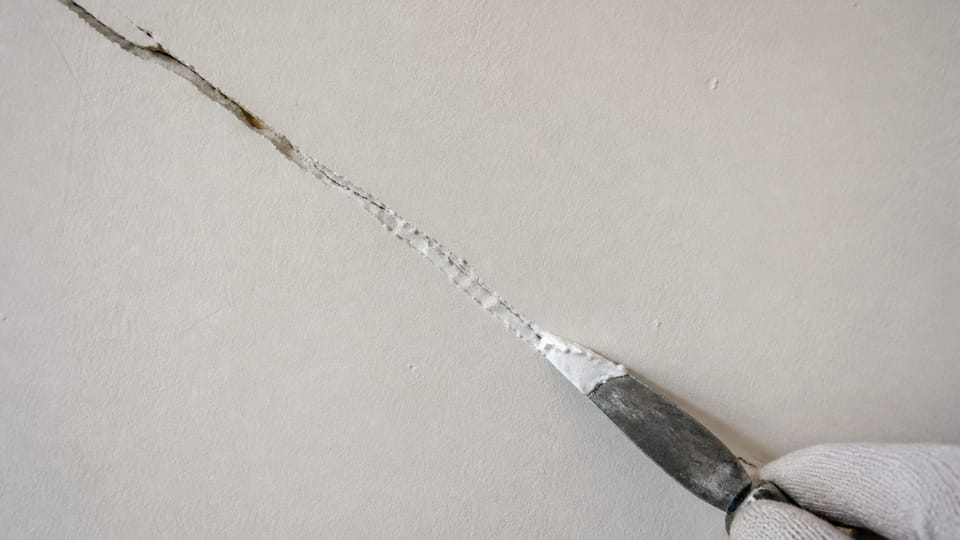
- How is a plaster crack filled?
- Why did the crack come back?
- What about the crack between a wall and a column?
- When should I not fill it?
- What mistakes should I avoid?
- Frequently asked questions
- Related guides
- Sources
A crack has come through the paint, and the painter offers a bag of putty, a tin of crack filler or some white cement. The right choice depends less on the material than on the crack. This page compares the three, and explains why a filled crack comes back and when not to fill at all. It covers cracks in plastered walls, not wood. It names no brand, gives no price, and is not a structural repair guide. For how to read a crack, see types of cracks in house walls.
What is the difference between crack filler, putty and white cement?
Each one does a different job.
| Point | Crack filler | Wall putty | White cement paste |
|---|---|---|---|
| What it is | A ready paste or powder made to fill cracks | A thin skim coat for the wall | White cement with water, with no sand |
| Indian Standard | We found none for a wall crack filler | IS 17545 for white cement based polymeric putty | IS 8042 covers the cement, not its use on cracks |
| Made for cracks? | Yes, within the limits on its own sheet | IS 17545 does not list it. Some putty sheets say not to | No, but CPWD uses white cement to repair cracks before new exterior paint |
| Takes movement? | Some sheets claim minor movement; others say still cracks only | Do not rely on it | Rigid, in our reasoning |
| Where it fits | A plaster crack that has stopped moving | Over the whole wall, for smoothness | Small defects, where your painter or engineer accepts it |
IS 17545 says putty is “for use as a finished skim coat on internal or external plastered surfaces.” It does not list crack filling, and the word crack does not appear in it. That is not a ban. It simply means crack filling is not what the standard covers. Some putty sheets go further and tell you not to fill cracks with that putty. One reads the other way and others are silent, so read your bag.
Crack filler has no Indian Standard that we could find in a BIS title search. So each product’s width limit comes only from its own sheet, and the sheets differ. We print no width for that reason. Read yours.
White cement needs a fair word. CPWD clause 13.22.2, for new exterior painting, says: “surface imperfections such as cracks, holes etc. should be repaired using white cement.” So it is not wrong for every small defect. Our concern is a different one. White cement paste has no sand, so we expect it to shrink as it dries, and to crack again if the crack moves. That is our reasoning, not a code statement. SP 25, the BIS handbook on cracks, says generally: “richer the mix, greater the drying shrinkage.”
Is the crack still moving?
This is the question to settle first. SP 25 asks “whether the cracks are active or static”. It then says: “Before carrying out any repairs to cracks, it should be examined whether cracks have stabilized, that is, are not widening further. No useful purpose is served in repairing cracks when these are still developing.”
To check, mark the ends of the crack with a pencil and date, and look again after some weeks and after the rains. Our page on hairline cracks gives the method.
SP 25 gives three more lines that matter:
- Heat movement. “Cracks due to thermal movement generally recur when repaired with mortar”, and “should be filled with some mastic compound.” SP 25 is writing of masonry walls and does not define mastic compound. It does not mean any shop filler, so ask your engineer.
- Thin shrinkage cracks in plaster. They “could be left unattended up to the normal time for renewal of finishing coat when these will get filled up.”
- Soil movement. Corner cracks on shrinkable clay “should not be filled up with rigid material until remedial work to prevent further movement has been done.”
SP 25 also has a “commonly known classification” by width: thin is “less than 1 mm”, medium “1 to 2 mm” and wide “more than 2 mm”. It describes cracks. It does not tell you which material to use.
How is a plaster crack filled?
This is general practice. IS 2395, the painting code, gives the core of it in clause 7.2: “any major cracks in the cement concrete or plaster background shall be cut out in V shape and made good and the repairs allowed to dry thoroughly before painting is commenced. Minor repairs may be made with cement mortar.” It gives no width for major or minor.
- Find the cause first. IS 1661 says: “It is essential to determine the cause of any defects of plasterwork before any attempt is made to remedy or repair them”.
- Stop any damp. IS 1661 says that to patch a damp wall without first stopping the damp “would be useless.”
- Tap the plaster. If it sounds hollow, the patch needs replacing, not filling. CPWD 14.1.2 removes plaster that has “cracked, crumbled or sounds hollow when gently tapped”.
- Take off old loose coats. Several filler sheets say to scrape off old putty or POP down to the plaster. Follow your sheet.
- Open the crack and clean it. Fill as the sheet says, and let it dry for the time the sheet gives.
- Then putty, primer and paint. IS 2395 Part 2 says: “Normally stopping or filling as required should be carried out before any painting is done”. See painting interior walls for the order.
Under emulsion paint, avoid oil-based stoppers. CPWD 13.31.2.3(b) says: “no oil base putties shall be used in filling cracks, holes etc.”
Why did the crack come back?
Usually because the movement did not stop. IS 1661 says plaster cracking “is usually caused by movement in the background or the surrounding structure.” A filler only sits in the gap. SP 25 is frank: “in many cases there may be no satisfactory method of repairing the cracks after they have appeared.”
Sheets differ on movement. Some claim minor movement, others say still cracks only, and none that we read promises to hold a crack that keeps moving. “Flexible” on a tin is not a promise for your crack.
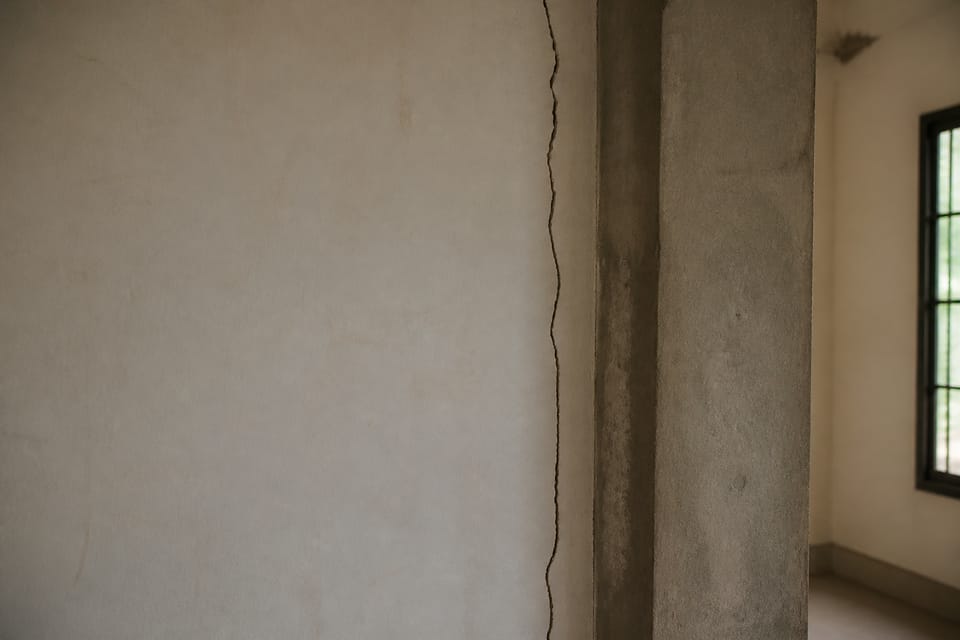
What about the crack between a wall and a column?
This is a common crack, and the sources do not agree. SP 25 says of cracks at an RCC column and masonry junction: “These cracks are generally thin and could be filled in at the time of renewal of finishing coat”. At least one filler sheet we read rules out cracks at that junction, and most exclude structural cracks and joints. Read your sheet, and ask your engineer if the crack is more than a thin line.
When should I not fill it?
Do not fill and paint over it. Show it to your engineer first if:
- It is still widening or returns soon after filling.
- It runs through a beam, column or slab, or shows rust or spalling.
- It runs stepped through the brickwork or sits at a corner of the building.
- Doors start to jam, the floor is out of level, or the wall bulges.
- It lets in water.
These are practice points, not code limits. IS 2212 says: “The nature of repairs mainly depends on whether it is structural damage or surface cracking only.” Where cracks are likely to go on widening, it says “it would be advisable not to repair the cracks with mortar”, and an oil based mastic is applied if filling is needed to keep rain out. That clause sits in its section on structural damage, so that is a case for your engineer. No filler fixes a structural crack, and width alone does not clear one.
What mistakes should I avoid?
These are practice points unless a code is named.
- Trying to hide a crack with extra coats of putty.
- Using runny white cement paste on a wide crack.
- Filling over old putty or POP that the sheet says to remove.
- Painting before the fill has dried. IS 2395 7.2 asks for the repairs to dry thoroughly.
- Using an interior product on an outside wall.
- Putting crack filler or putty in an expansion joint. It is meant to move, and its filler and sealant are your engineer’s choice. See expansion joints.
- Skipping the dated pencil mark.
Frequently asked questions
Can wall putty fill cracks?
It is not made for that. IS 17545 calls it a skim coat, and some makers’ sheets say not to fill cracks with it. For more, see wall putty coverage, coats and cracks.
Can white cement fill wall cracks?
It can repair small defects, and CPWD uses it before new exterior paint. It is a weak choice for a crack that moves.
Does crack filler go before or after putty?
Before. Fill the crack on the plaster, let it dry, and then putty and paint, unless your sheet says otherwise.
What is the difference between a crack filler and a sealant?
No Indian wall standard we found draws the line. On the sheets we read the words overlap, so go by what the sheet claims, not the name. IS 17124 on crack sealants is for pavements, not walls.
Which is the best crack filler?
We do not rank products. Compare the sheet’s width limit, surface, inside or outside use, and what it excludes.
Related guides
- Wall putty vs POP vs white cement: which goes where
- Plaster vs putty: what each does on a wall and the order
- How wall cracks are repaired: filling, injection and stitching
This guide is general information. Read the disclaimer. Your engineer decides whether a crack is safe to fill.
Sources
- SP 25(S&T):1984, Handbook on causes and prevention of cracks in buildings: clauses 1.5, 2.3.3(a), 9.1, 9.4, 9.5.1(n), 9.5.2(c), 9.6.1 and 9.9(a) (page images read). A handbook, not a code.
- IS 2395 (Part 1):1994, Painting concrete, masonry and plaster surfaces, code of practice: clause 7.2.
- IS 2395 (Part 2):1994, Painting concrete, masonry and plaster surfaces, schedule: clause 5.2.2.
- IS 2212:1991, Brick works, code of practice: clauses 14.1 and 14.3.3.3.
- IS 17545:2021, White cement based polymeric putty: clause 1.
- IS 8042:2015, White Portland cement: scope only.
- IS 17124:2019, Crack sealants: scope only (pavements).
- IS 1661:1972, Application of cement and cement-lime plaster finishes: clauses 17.1.1, 18.1.1 and 18.2.3.
- CPWD Specifications 2019, Volume 2: clauses 13.22.2, 13.31.2.3(b) and 14.1.2. For CPWD works, used here as a reference.
- BIS catalogue title search, 1 November 2026: no Indian Standard found for a wall crack filler. A title match only.
- Indian paint and chemical makers' data sheets for crack fillers and putties, read for this page. Described in general terms; no maker is named and no maker's figure is printed.
General information only. It is not a structural design or professional advice. Ask a licensed structural engineer or architect to check your plans and site.