
Short answer
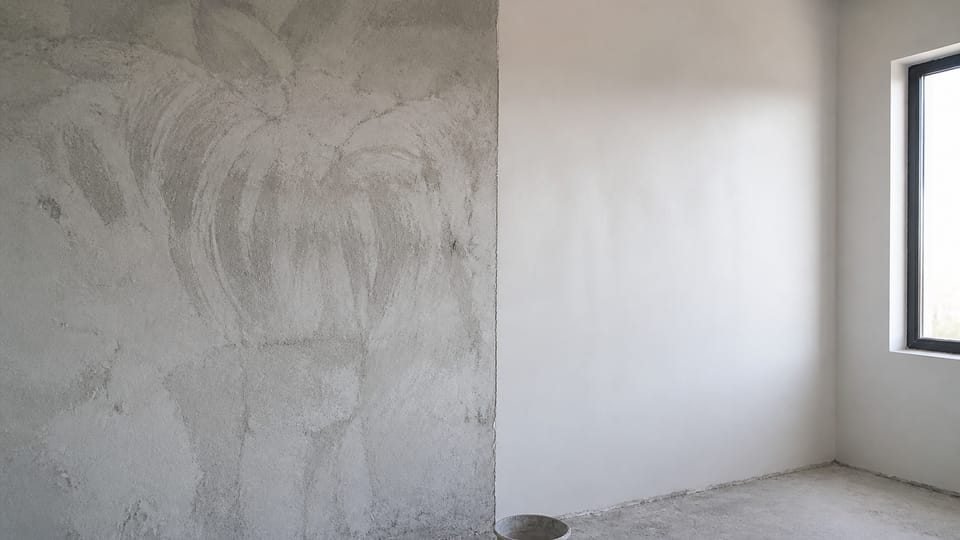
What is the difference between plaster and putty? Plaster is the coat that covers brick, block or concrete and brings the wall to a true surface. Putty is a thin skim coat over cured plaster or concrete to give a smooth surface for paint; IS 17545 covers white cement based polymeric putty for this. Putty is not a levelling or crack-repair coat, and no standard we read sets the waiting time.
On this page (9)
“Plaster” and “putty” are two layers on the same wall, and owners often hear them as one job. They are not. This page says what each is for, which standard covers which, and the order in which the layers go on. It gives no price, brand, coverage, coat count, thickness or waiting time. Coverage and coats are on wall putty coverage, coats and cracks, and the three-way comparison of putty, POP and white cement is on wall putty vs POP vs white cement.
What does each layer do?
| Layer | What it does | Standard we read |
|---|---|---|
| Plaster | Covers brick, block or concrete and brings the wall to a true, even surface; applied in single-coat or multi-coat work | IS 1661:1972 for cement and cement-lime plaster |
| Crack filler or repair | Local repair of holes and cracks before painting | IS 2395 (Part 1) clause 7.2 for cut-and-make-good |
| Putty | A thin skim coat over plaster or concrete to give a smooth even surface for paint | IS 17545:2021 for white cement based polymeric putty |
| Primer | Seals and evens out the suction of the surface under the paint | IS 2395 (Part 1) clause 5.2.2 and Part 2 |
| Paint | The finish | IS 2395, and the paint’s own standard |
IS 1661 says it covers “the application of cement and cement-lime plaster finishes to walls, columns, ceilings and similar surfaces on backgrounds normally met with, such as brick, stone or concrete” (clause 1.1). In three-coat work the floating coat is brought to “a true and even surface” before the finishing coat (2.3.4), and the finished plaster is checked with a straight edge (15.1). So a wavy wall is a plaster problem and it belongs to the plasterer. See how to plaster a wall and how to check plastering work.
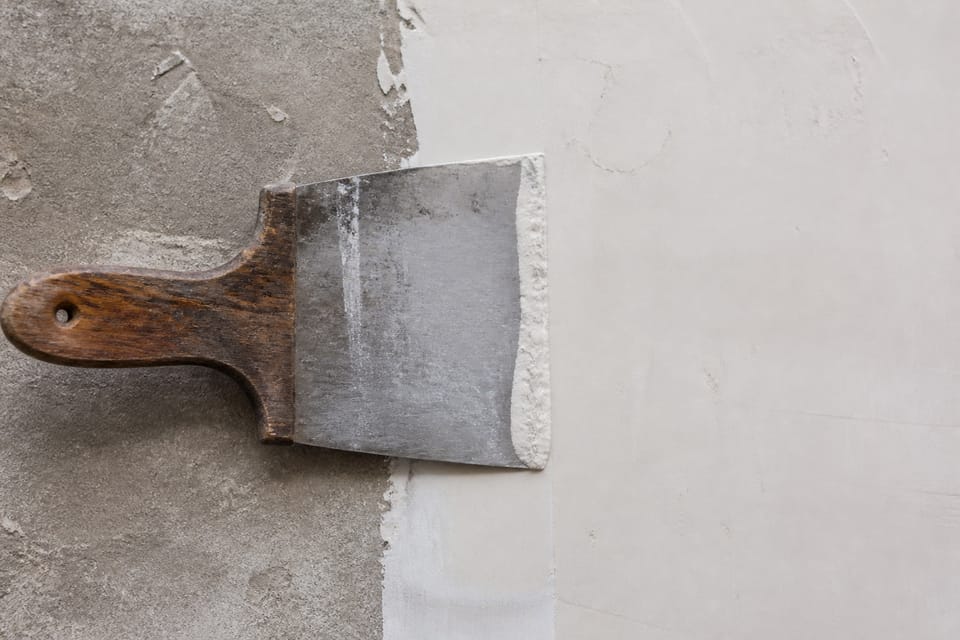
IS 17545 says its putty is “for use as a finished skim coat on internal or external plastered surfaces” (clause 1). Its foreword describes a thin layer applied on concrete or on a render to get “a smooth even surface suitable for application of internal or external decorative paints”. The standard gives requirements for the product, such as tensile adhesion strength, water retentivity, setting time, polymer content, whiteness and cement content. It gives no site application guidance on surface preparation, number of coats, waiting or sanding; its test annexes use a laboratory procedure that is not advice. It also does not mention gypsum plaster.
Can putty replace plaster or level an uneven wall?
It cannot replace plaster. We found nothing in IS 17545 that says putty may be used to level a wall, and its own foreword describes a thin layer over a plaster or a concrete surface. Makers’ data sheets, as summarised on the coverage page, say thick coats shrink and crack. In practice, small undulations are sometimes filled with putty or POP before painting (see painting interior walls in a new house, which cites CPWD), but a wavy wall is a plaster problem and belongs to the plasterer.
Makers’ data sheets also say not to use putty as a crack filler (see the coverage page). IS 2395 (Part 1) clause 7.2 says that loose, uneven areas or major cracks on a cement surface are “cut out in V shape and made good”, and the repairs are allowed to dry thoroughly before painting. In IS 1661, “skimming coat” is a plaster term for the final coat of plaster (clause 2.3.1), and it is not the same as polymeric putty.
In what order do the layers go?
The usual trade order is plaster, cure and dry, repair cracks, putty, sand lightly, primer, then paint. The standards support some of these steps, and the order as a whole is trade practice. In particular, IS 2395 does not use the word putty for this layer, and its schedule puts any filler after the primer coat (see below).
- Plaster, then cure it. IS 1661 asks for the coats to be kept damp: see plaster curing: how long and how.
- Dry. IS 2395 (Part 1) clause 5.2.2 says painting may be done “when the surface has properly set and cured and when all excess moisture has dried out”. Clause 5.2 says that any paint system which will seal in the moisture “shall be avoided” on new walls.
- Repair cracks and holes. IS 2395 (Part 2) clause 5.2.2 says stopping or filling should be carried out before any painting is done.
- Prepare the surface for a smooth finish. IS 2395 (Part 1) clause 5.5 asks for “any necessary rubbing down, sealing, stopping or filling” where smooth finishes are required. Putty is one common way to do this (practice), with light sanding.
- Primer, then paint. IS 2395 selects an alkali-resistant primer for solvent paints on plaster (5.2.2). The emulsion schedule in Part 2 (Table 1, row iv for interiors, Table 2, row iii for exteriors) shows a primer-coat column of one coat of emulsion paint, then an under coat of “filler to be used, if required”, then emulsion finishing coats. So the schedule puts any filler after the primer coat. Part 2 clause 5.2.2 adds that minor defects are often more apparent once the first coat is on, and filling done over it is brought forward with paint.
IS 2395 does not mention wall putty or polymeric putty; it mentions only an old repair putty of enamel, water and whiting powder for fine cracks in lime plaster (Part 1 clause 7.1). The trade order of putty before primer is therefore not what the schedule shows, and makers’ systems differ. Follow the maker’s system sheet for the putty, primer and paint you are using. See painting interior walls in a new house for the full painting sequence.
What about gypsum plaster?
IS 2395 (Part 1) clause 7.3 on gypsum plaster says to test the alkalinity, and if the suction is patchy, a paint primer is applied before the paint system. IS 17545 does not mention gypsum plaster, so whether a white cement putty goes on gypsum plaster is for the maker’s sheet and your engineer. See gypsum plaster vs cement plaster.
What should I check before the putty goes on?
This is practice, not a standard, unless a clause is named.
- The plaster is cured and dry, with no damp patches: see damp walls if you see any.
- The plaster is sound: no hollow sound when tapped, no dust that comes off on the hand.
- The wall is even. Ask for waviness to be corrected in the plaster before the putty, not hidden under it.
- Cracks are repaired as the standard says, and the cause is understood.
- The putty, primer and paint are from a system the maker names, and the data sheet says what surface each is for.
- For exterior walls and wet areas, the product is rated for them, and gypsum plaster is not used outside.
What mistakes should I avoid?
These are practice, not code rules.
- Putty on damp or uncured plaster.
- Putty over powdery, loose or hollow plaster.
- Thick putty to hide a wavy wall.
- Putty used as a crack filler, or over cracks whose cause is not fixed.
- Skipping the primer, or using one that does not suit the paint.
- Hard sanding that wears the putty away.
- Mixing unrelated putty, primer and paint products without checking the sheets.
- Paying for putty as if it were the levelling layer.
Frequently asked questions
What is the difference between plaster and putty?
Plaster covers the masonry or concrete and brings the wall to a true surface. Putty is a thin skim coat over cured plaster or concrete to give a smooth surface for paint.
Can wall putty replace plaster?
No. Plaster covers the wall and brings it to a true surface. IS 17545 describes putty as a finished skim coat over plastered surfaces, and its foreword as a thin layer over plaster or concrete.
Is putty needed after plastering?
Not always. IS 17545 describes putty as giving a smooth even surface for paint. Whether it is needed depends on the finish you want and the paint system, and on gypsum plaster, ask the engineer.
Which comes first, putty or primer?
The usual trade order is putty, sand, then primer. IS 2395’s schedule for emulsion paint places any filler after the primer coat and does not call it putty. Makers differ, so follow the system sheet.
Is skim coat the same as putty?
In IS 1661, a skimming coat is the final plaster coat. In common use, “skim coat” is also used for the putty layer.
Related guides
- Wall putty vs POP vs white cement
- Painting interior walls in a new house: steps
- How to plaster a wall
This guide is general information. Read the disclaimer. Your contractor and the product maker’s data sheets decide the system for your wall.
Sources
- IS 17545:2021, White Cement Based Polymeric Putty: clause 1 scope, the foreword on composition, clauses 4.1 to 4.3 and Tables 1 and 2 property names, clause 5 marking (text read). BIS lists it as in force, valid to 2031-03-25.
- IS 1661:1972, Code of Practice for Application of Cement and Cement-Lime Plaster Finishes: clauses 1.1, 2.3.1, 2.3.4 and 15.1 (text read).
- IS 2395 (Part 1):1994, Painting of Concrete, Masonry and Plaster Surfaces, Part 1 Operations and Workmanship: clauses 5.2, 5.2.2, 5.5, 7.1, 7.2 and 7.3 (text read).
- IS 2395 (Part 2):1994, Part 2 Schedules: clause 5.2.2, Table 1 row iv and Table 2 row iii, the emulsion paint schedules (schedule table checked on a page image).
General information only. It is not a structural design or professional advice. Ask a licensed structural engineer or architect to check your plans and site.