
Short answer
What plumbing fittings go into a bathroom, and which IS standard covers each? NBCS 2026 asks only for a bathroom tap and a floor trap, plus a water closet with a flush and an ablution tap. Most other fittings have their own Indian Standard: IS 2556 for vitreous sanitaryware, IS 774 and IS 7231 for cisterns, IS 8931 and IS 781 for taps. We could not confirm which of these must legally carry the Standard Mark, so check the IS number printed on each product.
On this page (8)
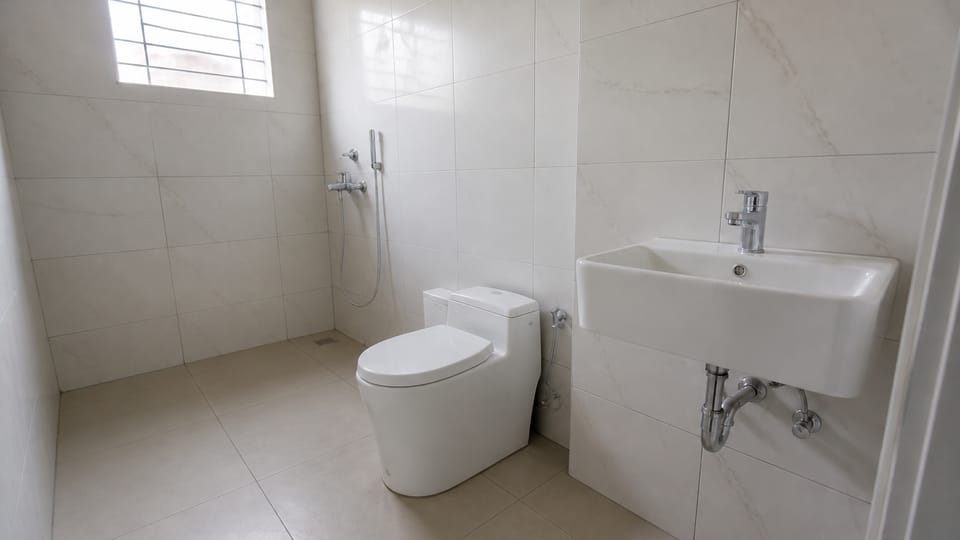
People ask for a “bathroom plumbing list” and get catalogues full of brand names. This page is a plain checklist: the plumbing items in a normal Indian bathroom, what the national building code actually asks for, the Indian Standard that covers each fitting, and what to check before the tiles go on. It gives no prices, no brand names, no sizes and no choice of toilet type. For waterproofing and slope, see bathroom waterproofing.
What does the building code require in a bathroom?
Less than most lists suggest. NBCS 2026 (Part E, Section 2, clause 4.2.4.1) says a dwelling with individual convenience shall have at least “one bathroom provided with a tap and a floor trap”, and one water closet with a flushing apparatus and an ablution tap. Clause 4.2.2 says each dwelling unit shall have at least one water closet, one kitchen wash place or sink, and one bathing place or shower. Clause 4.2.1 says there should be at least one water tap and arrangement for drainage near each water closet.
NBCS does not list a wash basin, a mixer or a hand-held spray as required fitments for a home, and it accepts a bathing place or a shower. The rest is your choice. It also says, where only one water closet is provided, that it is desirable to have the bath and water closet separately accommodated.
What are the items, and which standard covers each?
An Indian Standard describes a product. It does not say that you must buy it. NBCS 2026 says that all materials, fittings and sanitary appliances shall conform to Part B, “Building Materials”. The standards we found are below. Editions are those BIS lists as current.
| Item | What it is | Indian Standard found |
|---|---|---|
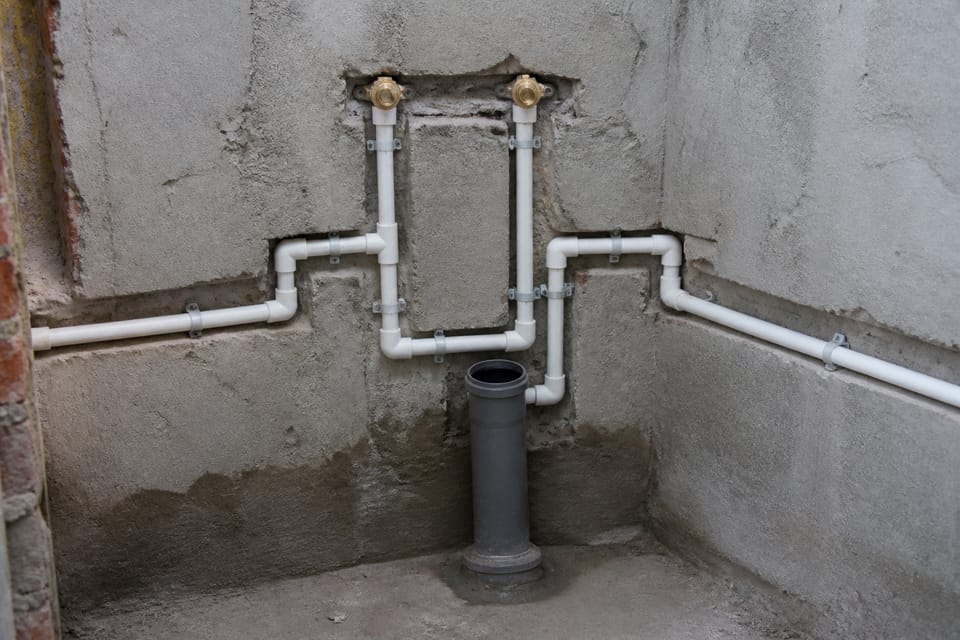
| Concealed supply pipes | Pipes in the wall that feed the taps | CPVC (IS 15778), UPVC (IS 4985). See CPVC vs UPVC |
| Floor trap | The trap in the bathroom floor drain | NBCS asks for one. IS 2556 Part 7:1995 covers vitreous china floor traps |
| Wash basin | The basin | IS 2556 Part 4:2004 |
| Wash basin waste and trap | The waste fitting and the trap under the basin | IS 2963:2013 (waste fittings and waste plug), IS 5219:2013 (cast copper alloy traps) |
| Water closet pan | The toilet pan | IS 2556 has a part for each kind of pan; this page does not choose a type |
| Toilet seat and cover | Plastic seat | IS 2548 (Parts 1 and 2) |
| Flush cistern | Ceramic or plastic cistern | IS 774:2021 (ceramic), IS 7231:2021 (plastic) |
| Float valve | Fills the cistern and shuts off | IS 1703:2000 (copper alloy), IS 12234:2021 (plastic) |
| Taps and stop valves | Wall tap, basin tap, stop valve | IS 8931:2021 (taps, stop valves, single lever mixers), IS 781:1984 (bib taps and stop valves), IS 1795:1982 (pillar taps) |
| Shower and hand-held spray | Shower head, health faucet | We found no product standard for the spray itself. IS 17650 Part 2:2021 covers only water efficiency, for taps, shower heads and the hand-held ablution spray |
| Waste, soil and vent pipes | The drain pipes | IS 13592 for UPVC pipes; IS 5329 is the code of practice. See house drainage |
| Geyser point | The hot water outlet | NBCS defines a geyser as an apparatus for heating water with a supply control on the inlet side. See solar water heater vs geyser |
Trade names such as “CP fittings” and “health faucet” are not standard terms. “CP” means chromium plated.
IS 2556 is a series of parts, one for each kind of appliance, so the number that matters is the part number and its year. BIS has withdrawn several older parts and older editions. Do not quote an old edition from a catalogue.
Does every fitting have to carry the ISI mark?
We could not confirm it. A 2023 draft order for ceramic tiles, sanitary ware and laboratory ware would make the Standard Mark compulsory for vitreous sanitaryware and ceramic cisterns, but we found no notified order, and nothing for taps, valves, plastic cisterns or waste fittings. The standards themselves treat marking as permitted: IS 2556 Part 7 says the product “may also be marked with the Standard Mark”. NBCS 4.3.1 points to Part B, and it is not a statement that the mark is compulsory.
So do not trust “ISI is compulsory” or “ISI is optional” claims on web pages. Practice: read the IS number and edition on the product or its box, and ask the dealer for the BIS licence details. A mark does not tell you the finish or how long it will last.
What should I check before the tiles go on?
- Pressure test before concealing. CPWD’s specification says pipes and fittings are to be pressure tested before concealing the chases (clause 18.9.9.1). For the stages of plumbing work, see plumbing work during construction.
- Traps and tests. NBCS says each fixture connected to the drainage system shall have a liquid seal trap, and that when a connection is through a floor trap no separate seals are required for individual fixtures. It also says the plumbing system shall be tested to disclose leaks, and that appliances are tested by simulating use and overflows examined (clauses 3.1.8, 3.1.10 and 4.10.2.1).
- Brackets before dado. CPWD says wash basin brackets “shall be fixed in position before dado work is done” (clause 17.11.1).
- Cistern. CPWD says a cistern shall be mosquito proof and have a removable cover that fits closely (clause 17.1.1.1). The standards we read do not rank concealed and exposed cisterns, and a cistern inside a wall needs an access panel (practice).
- Floor trap and slope. The floor must fall towards the trap. See the waterproofing guide and the nahani trap guide.
- Record. Photograph the concealed pipes and note where the cistern and valves are (practice).
What mistakes should I avoid?
These are practice, not code rules, unless a standard is named.
- Buying fittings before the pipe points are fixed, so the points do not match the product.
- Mixing taps, spouts and angle valves from different series without checking they fit.
- Taking an “ISI” sticker as proof without reading the IS number and edition.
- Closing the wall before the supply pipes are pressure tested.
- Burying a joint, or fitting a cistern inside a wall with no access.
- Fixing a hot-water line in the wrong pipe material: see CPVC vs UPVC.
- Tiling before the fixtures’ brackets and floor trap are in place.
Frequently asked questions
What is the minimum plumbing in a bathroom under NBCS?
A tap and a floor trap in the bathroom, and a water closet with a flushing apparatus and an ablution tap (Part E, Section 2, clause 4.2.4.1).
Is the ISI mark compulsory on taps and toilets?
We could not confirm it. We found a 2023 draft order for ceramic sanitaryware, and no notified order for taps. Read the IS number on the product and ask for the BIS licence details.
Which IS code is for taps?
IS 8931:2021 covers copper alloy single taps, combination tap assemblies, stop valves and single lever mixers. IS 781 covers screw down bib taps and stop valves, and IS 1795 covers pillar taps.
Which IS code is for a wash basin or a flush cistern?
IS 2556 Part 4 covers wash basins. IS 774 covers ceramic flush cisterns and IS 7231 covers plastic ones.
Is a health faucet covered by a standard?
We found no product standard for the spray itself. IS 17650 Part 2 covers only water efficiency, for taps, shower heads and the hand-held ablution spray, which is what a health faucet is.
Related guides
- Bathroom waterproofing: steps, wall height and the ponding test
- Bathroom drain smell from the nahani trap: causes and fixes
- Plumbing work during house construction: stages and inspection points
- Plumbing materials list for a house: pipes, valves, traps, IS marks
This guide is general information. Read the disclaimer. Your plumber and engineer decide the fittings for your house.
Sources
- SP 7:2026, National Building Construction Standards (NBCS) 2026, Part E Plumbing Services: Section 2 Drainage and Sanitation clauses 3.1.8, 3.1.10, 4.2.1, 4.2.2, 4.2.4.1, 4.2.4.1.1, 4.3.1, 4.10.2.1; Section 1 definition of fittings. Read from an unofficial archive.org copy of the text.
- IS 2556 (Part 1):2021 (vitreous china sanitary appliances, general requirements), Part 4:2004 (wash basins) and Part 7:1995 (accessories: floor traps and shower rose); IS 774:2021 (ceramic flushing cisterns) and IS 7231:2021 (plastic flushing cisterns), scope clauses read. BIS lists all as not withdrawn.
- IS 8931:2021, Copper alloy single taps, combination tap assemblies, stop valves and single lever mixers for water services (scope read). The 1993 edition is withdrawn. IS 781:1984, IS 1795:1982, IS 1703:2000, IS 12234:2021, IS 2963:2013, IS 5219:2013, IS 2548 (Parts 1 and 2), IS 13592:2013, IS 5329:1983, IS 15778:2007 and IS 4985:2021 are named by their BIS titles and status only; their texts were not read.
- IS 17650 (Part 2):2021, Water Efficient Plumbing Products: Requirements, Part 2 Sanitary fittings (scope: water efficiency of faucets and showerheads, including the hand-held ablution spray). A water-efficiency standard that works alongside the product standards.
- Draft 'Ceramic Tiles, Sanitary Wares and Laboratory Wares (Quality Control) Order, 2023' (undated, with no gazette number), as hosted by a certification consultancy. It would make the Standard Mark compulsory for IS 2556 parts and IS 774; we found no notified order. The BIS lists of products under compulsory certification, fetched on 2026-10-29, showed no sanitaryware, tap or cistern entry.
- CPWD Specifications 2019 Vol 2, clauses 17.1.1.1, 17.11.1 and 18.9.9.1 (sanitary installations and water supply). A government works specification, used here as description of practice.
Change log
- : Added Related guides link to newly published article(s): plumbing-materials-list-for-a-house-pipes-fittings-valves-traps-and-the-is-mark. No other text changed. Approved by the reviewing engineer.
General information only. It is not a structural design or professional advice. Ask a licensed structural engineer or architect to check your plans and site.