
Short answer
Which pipe material suits a house sewer line, and what should I ask? Indian standards cover several sewer pipe materials. UPVC for underground drainage (IS 15328), stoneware (IS 651), structured-wall polyethylene (IS 16098) and concrete pipes (IS 458) each have their own standard. IS 1742 prefers stoneware where possible and asks for cast iron under buildings. Your plumber and engineer choose the material for your ground and layout.
On this page (8)
The sewer line carries waste from the house to the public sewer or to a septic tank. Its pipe material affects how long the joints last and how the line copes with the ground around it. This page sets out what the Indian standards say about the main materials, where each standard puts its use, and what to ask your plumber and engineer. It gives no pipe sizes for the house line, no ratings, no prices and no lifespans. The only diameter it cites is the 150 mm threshold for concrete pipes in IS 1742. Those depend on the design and on the maker’s data sheet.
Which standards cover house sewer pipes?
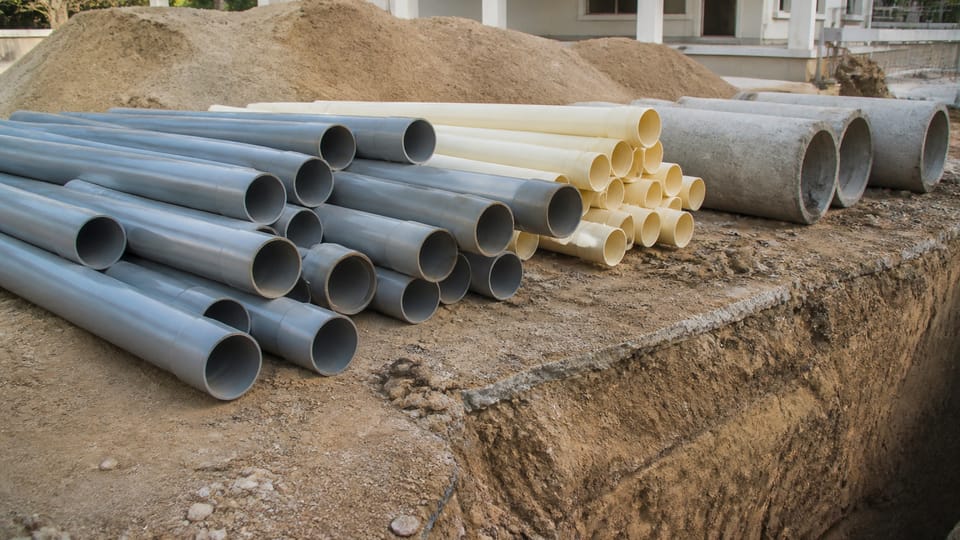
Each material has its own Indian standard, and the standards describe the uses they cover:
| Material | Standard | What the standard covers | Joints |
|---|---|---|---|
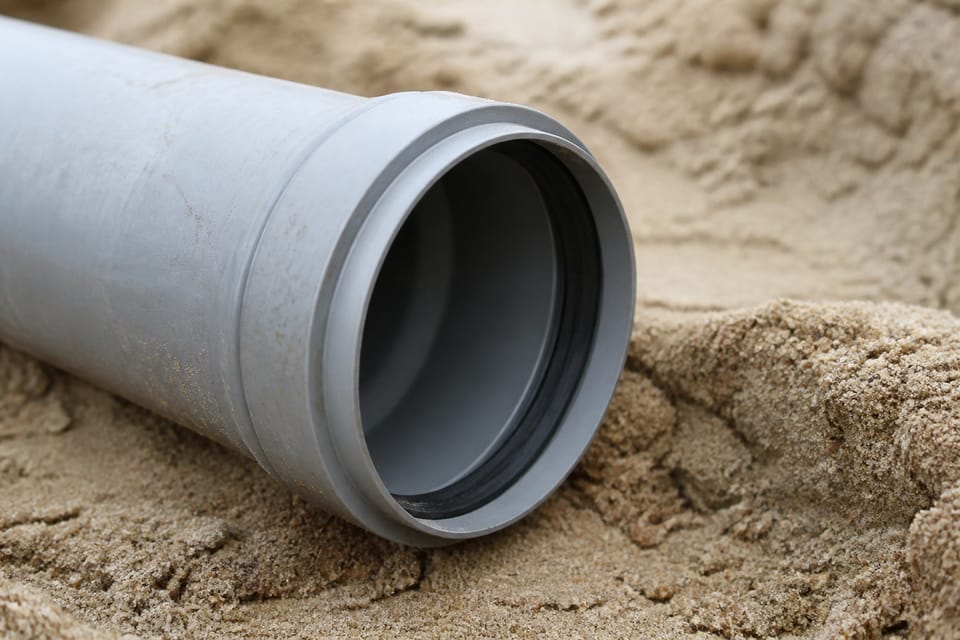
| Unplasticized PVC (UPVC) | IS 15328 | Pipes for buried, non-pressure gravity drains and sewers | Solvent-cement sockets or elastomeric sealing rings |
| Glazed stoneware | IS 651 | Stoneware and vitrified clay pipes and fittings. Not meant for potable water. | Conical sockets, grooved joints, or rubber rings as agreed between maker and buyer |
| Structured-wall polyethylene or polypropylene (sometimes called DWC) | IS 16098 (Part 2) | Non-pressure underground drainage and sewerage, with a non-smooth outer surface | Elastomeric sealing rings, or welded or fused joints |
| Precast concrete | IS 458 | The standard exists and is current. Its scope was not read for this page. | Not read for this page |
The table paraphrases the scope of each standard in plain English. It does not rank the materials. IS 1742 points drainage UPVC to IS 4985 in one of its references, and IS 4985 is the potable-water UPVC standard; the drainage pipe itself is covered by IS 15328. Check which standard a pipe is marked to. A standard that covers a material does not say the material is the best choice for your house.
What does IS 1742 say about pipe materials?
IS 1742 is the code for building drainage. It prefers glazed stoneware where possible for drains: its clause 4.7.1 says stoneware pipe “shall be used as far as possible in preference to other type of pipes”. The same code asks for cast iron for drains under buildings (clause 4.3.4.4(a)). Clause 4.7.3 says cast iron shall be used in bad or unstable ground where soil movement is expected, in made-up ground, where a sewer is laid at insufficient depth or exposed, and under buildings. Asbestos cement is “not recommended for underground situations” (clause 4.7.4). Concrete is acceptable for sewers over 150 mm diameter when it is properly ventilated and jointed with spigot-and-socket or collar joints, but it should not carry acid effluent (clause 4.7.2). Unplasticized PVC may be used for drainage. Where hot water is expected, clause 4.7.6 asks for a wall at least 3 mm thick, whatever the size and flow load.
These are general clauses. They do not say which material is right for your site. Your engineer and plumber decide.
What does this mean for a house?
- Use the standard’s scope. A UPVC or structured-wall pipe is for buried gravity drainage. A stoneware pipe is not for drinking water. Check the marking on the pipe against the standard it claims.
- Pipes under the house. IS 1742 asks for cast iron for drains under buildings (clause 4.3.4.4(a)). Ask the plumber how the line passes under the house before the trench is dug.
- Unstable or made-up ground. IS 1742 says cast iron shall be used in bad or unstable ground where soil movement is expected, and in made-up ground (clause 4.7.3). A soil test helps here. See soil test before building a house.
- Joints. The joint type matters as much as the material. Check that the joints are the type the standard describes, and that the plumber tests the line before the trench is filled. See plumbing work during house construction: stages and inspection points.
What about the rest of the drainage system?
The house drain is only one part of the system. Soil, waste and rainwater lines are kept apart, and access points are needed where the line changes direction. See house drainage system explained for the layout and inspection chamber vs manhole for the access points. For the disposal end, see septic tank vs STP for a house.
For the pipe sizes used in the SWR system, see PVC pipe sizes in mm and inches. This page gives no sizes.
What mistakes should I avoid?
These are practice points, not code rules:
- Using a drinking-water pipe for the sewer line. The water-supply standards are different from the drainage standards.
- Running the drain close to the water supply pipe without a clear gap. Keep the lines apart.
- Choosing a material from a seller’s claim about lifespan. This page gives no lifespans, and no standard does either.
- Not asking the plumber which standard the pipe follows, and whether it is marked for underground use.
- Filling the trench before the joints have been tested.
Frequently asked questions
Is UPVC better than concrete for a house sewer?
Each has a standard, and each standard describes its own scope. Neither standard ranks the materials. Ask your engineer which material suits your ground and layout.
Is DWC the same as HDPE?
Not quite. Structured-wall pipes are a wall design, and the standard for them (IS 16098 Part 2) names polyethylene or polypropylene. For a house, the question is which pipe, to which standard, with which joints. Ask for the standard and the joint type in writing.
Can I use the water-supply HDPE pipe for the sewer?
No. The water-supply standards are for pressure water lines. See HDPE pipe in a house service line and where not to use it.
Which pipe lasts longest?
This page gives no lifespan. No standard in the sources read states one, and the claims in the sales literature are not standards.
These answers are practice guidance, not code quotes.
This guide is general information. Read the disclaimer. Your plumber and engineer decide the material and the layout for your house.
Related guides
- House drainage system explained: soil, waste and rainwater pipes
- PVC pipe sizes in mm and inches: what the numbers mean
- Plumbing work during house construction: stages and inspection points
Sources
- IS 15328:2003, Unplasticized PVC-U pipes for underground drainage and sewerage (scope, clause 1; joints, clauses 9.1 and 9.2). Read from an OCR text copy; check against a printed copy.
- IS 651:2007, Glazed stoneware pipes and fittings (scope, clauses 1.1 and 1.1.1; joints, clauses 14 and 15). Read from an OCR text copy; check against a printed copy.
- IS 16098 (Part 2):2013, Structured-wall plastics piping systems for non-pressure drainage and sewerage, non-smooth external surface (scope, clause 1). Read from an OCR text copy; check against a printed copy.
- IS 1742:1983, Code of practice for building drainage (second revision), clauses 4.3.4.4(a), 4.7.1 to 4.7.6. Read from an OCR text copy; check against a printed copy.
- IS 458:2021, Precast concrete pipes (with and without reinforcement). Status only: the scope and clauses were not read for this page.
General information only. It is not a structural design or professional advice. Ask a licensed structural engineer or architect to check your plans and site.