
Short answer
What do CPVC, UPVC, MCB and RCCB stand for? CPVC is chlorinated polyvinyl chloride (IS 15778). UPVC is unplasticized PVC (IS 4985). MCB is miniature circuit-breaker (IS 13032). RCCB is a residual current operated circuit-breaker without integral overcurrent protection (IS 732). Some short forms, such as SWR and ELCB, are trade names; no standard read for this page uses them.
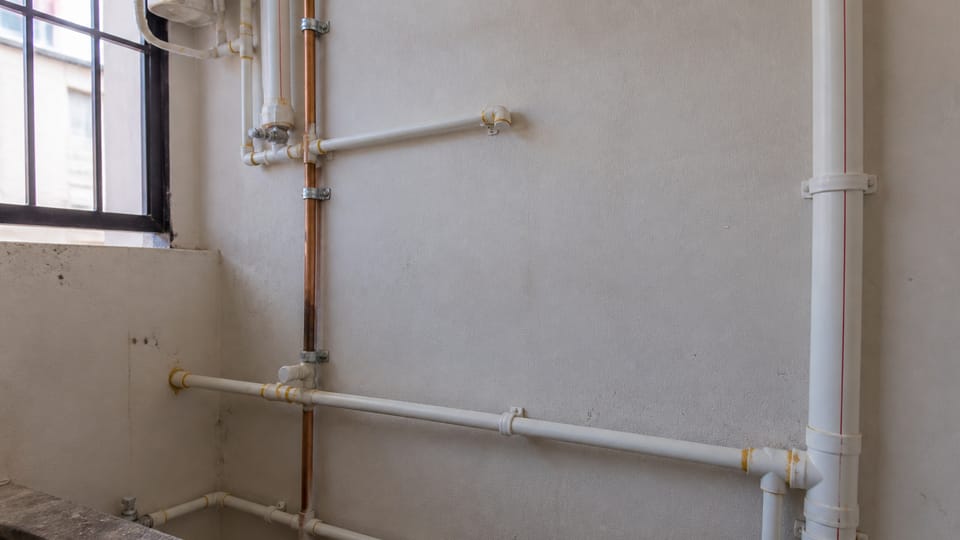
On this page (7)
A pipe or a breaker often has a short name printed on it, such as CPVC, UPVC, MCB or RCCB. Most of these stand for a longer name in an Indian Standard. A few are trade names that a shop or a maker uses, and no standard uses them. This page gives the full name, says where it comes from, and links to the page that explains each term. It gives no price, no brand and no ranking.
Which short forms are standard names?
Where a standard names a material or a device, this page uses the standard’s words. The short form is the abbreviation of those words.
| Short form | Full form | Where it comes from | Page that explains it |
|---|---|---|---|
| CPVC | Chlorinated polyvinyl chloride | IS 15778 title; clause 1 scope for hot and cold water | CPVC vs UPVC |
| UPVC | Unplasticized polyvinyl chloride | IS 4985 title: “Unplasticized PVC Pipes for Water Supplies” | CPVC vs UPVC |
| PPR | Polypropylene-random copolymer | IS 15801 title | PPR pipe |
| MCB | Miniature circuit-breaker | IS 13032 clause 3.2 (MCB way; the clause uses the term ‘miniature circuit-breaker’) | MCB, RCCB and RCBO |
| RCCB | Residual current operated circuit-breaker without integral overcurrent protection | IS 732:2019 clause 3.159 | MCB, RCCB and RCBO |
| RCBO | Residual current operated circuit-breaker with integral overcurrent protection | IS 732:2019 clause 3.158 | MCB, RCCB and RCBO |
| SPN, TPN | Single pole and neutral; triple pole and neutral | IS 13032 clause 5.1 | MCB box and distribution board |
| FR-LSH | Flame retardant low smoke and halogen | IS 694 scope, category FR-LSH | Wire types for house wiring |
Which short forms are trade names?
Some terms are used in shops and by makers, but no standard read for this page uses them as a name.
- HDPE stands for high density polyethylene. IS 4984:2016 dropped that naming: its foreword says the standard’s pipes are “designated by their minimum required strength”, and the title is “Polyethylene Pipes for Water Supply”. The standard’s own term is polyethylene (PE) pipe. See the HDPE page.
- GI stands for galvanised iron. The standard that covers the zinc coating, IS 4736, is titled “Hot-Dip Zinc Coatings on Mild Steel Tubes”. The word “galvanised iron” is trade usage. See the GI and MS pipe page.
- SWR is the shop name for soil, waste and rainwater pipe, usually UPVC. No standard read uses “SWR” or the phrase “soil, waste and rainwater”. IS 13592 is titled “Unplasticized Polyvinyl Chloride (PVC-U) Pipes for Soil and Waste Discharge System for Inside and Outside Buildings including Ventilation and Rain Water System”. Its clause 3 names Type A for ventilation and rainwater and Type B for soil and waste. See the pipe types page.
- ELCB is an older term for an earth leakage device. No standard read for this page uses it. The MCB, RCCB and RCBO page explains what a shop may mean by it.
- DB is the shop short form for distribution board. The codes use “distribution board” and “MCB board”. The MCB box page explains the terms.
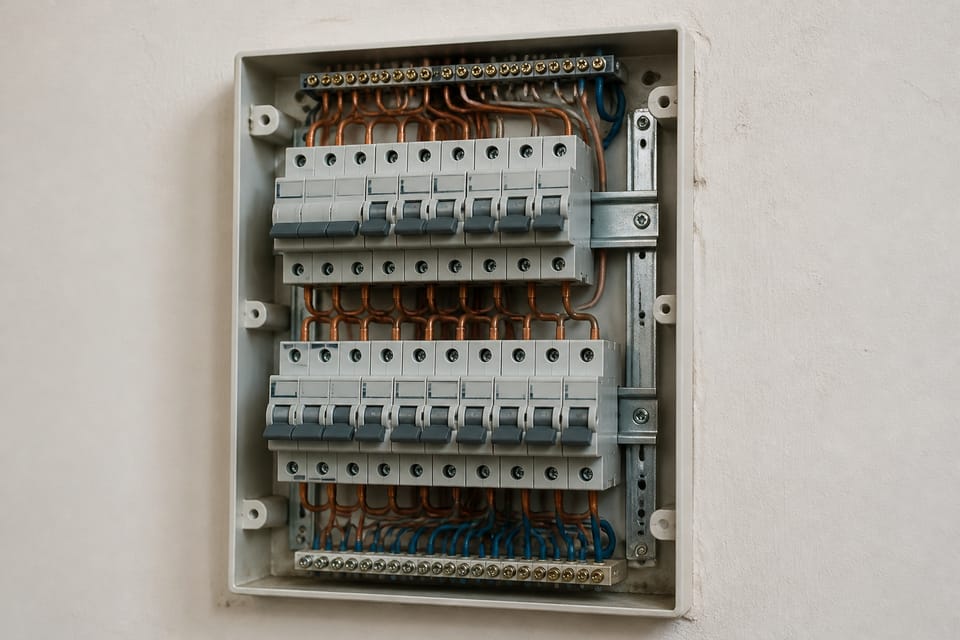
What is the difference between an MCB and an RCCB?
An MCB is a miniature circuit-breaker. It switches off a circuit when too much current flows, from an overload or a short circuit. An RCCB is a residual current device. It switches off when current leaks to earth, which is the shock risk. IS 732 defines the RCCB as a device “not designed to perform the functions of protection against overload and/or short-circuit” (clause 3.159). An RCBO does both jobs.
What mistakes should I avoid?
- Reading a trade name as a standard. Check the standard number when a seller says a pipe or a breaker “meets IS”. The full name must match the standard’s title. This is practice.
- Mixing up CPVC and UPVC. Both are PVC family pipes, but IS 15778 and IS 4985 cover different materials and uses. The CPVC vs UPVC page explains which is for hot water.
- Using an RCCB name for an MCB. An RCCB does not protect against overload. An MCB does not protect against leakage to earth. Ask for both where the design needs both.
- Reading the number of ways as a rule. IS 13032 (clause 3.2, note 2) says a board is designated by its number of outgoing ways. It does not say how many a house needs. Your electrician decides.
Frequently asked questions
Is SWR a standard term?
No standard read for this page uses it. It is a manufacturer and shop term for the UPVC drainage pipe covered by IS 13592.
What does FR mean on a wire?
IS 694 lists categories for PVC cables, including FR (flame retardant) and FR-LSH (flame retardant low smoke and halogen).
Do I need the full form to buy the right item?
Yes, in practice. Ask for the standard’s name, the standard number and the size. The short form alone can mean more than one product.
Where can I check a standard’s current edition?
BIS publishes the current status of each standard. Use the standard number and year in the BIS portal, and ask your engineer if the edition matters for your job.
Related guides
- CPVC vs UPVC pipes for home plumbing
- MCB vs RCCB vs RCBO
- MCB box, distribution board, 4-way, 8-way, SPN and TPN
This guide is general information. Read the disclaimer. Your plumber and electrician decide what goes into your house, and the standard named on the product is the reference.
Sources
- IS 15778:2007, Chlorinated Polyvinyl Chloride (CPVC) Pipes for Potable Hot and Cold Water Distribution Supplies: title and clause 1 (scope).
- IS 4985:2021, Unplasticized PVC Pipes for Water Supplies (fourth revision): title and clause 1.1 (scope).
- IS 15801:2008, Polypropylene-Random Copolymer Pipes for Hot and Cold Water Supplies: title and clause 1 (scope).
- IS 4984:2016, Polyethylene Pipes for Water Supply (fifth revision): title, foreword (renaming from high density polyethylene) and clause 1.1.
- IS 13592:2013, Unplasticized Polyvinyl Chloride (PVC-U) Pipes for Soil and Waste Discharge System for Inside and Outside Buildings including Ventilation and Rain Water System (first revision): title and clause 1 and 3 (Type A and Type B).
- IS 4736:1986, Hot-Dip Zinc Coatings on Mild Steel Tubes (first revision): title.
- IS 732:2019, Code of Practice for Electrical Wiring Installations: clause 3.158 (RCBO) and 3.159 (RCCB).
- IS 13032:1991, AC Miniature Circuit-Breaker Boards for Voltages not Exceeding 1 000 V: clause 3.2 (MCB way), its note 2 (boards designated by the number of outgoing ways), and clause 5.1 (board types). BIS records show this edition valid to 31 March 2021; check the current edition before relying on its wording.
- IS 694:2010, Polyvinyl Chloride Insulated Unsheathed and Sheathed Cables/Cords with Rigid and Flexible Conductor for Rated Voltages up to and including 450/750 V: scope and categories (FR, FR-LSH). Edition as read.
General information only. It is not a structural design or professional advice. Ask a licensed structural engineer or architect to check your plans and site.